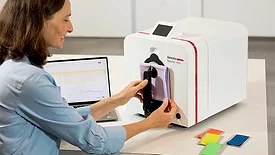
Manufacturers are increasingly turning to digital color management tools to set their products up for success — achieving greater precision, improving formulations, and streamlining production.
It starts with a question: “What’s the worst that can happen?” Sounds like the sentiment underlying any over-the-top movie centered on a buddy’s bachelor party.
Simple changes to how you use color measurement technology and the right training can significantly impact quality control and your bottom line. Here are seven questions every quality control manager should be asking.
Color is a critical part of any product. It’s the first thing your customer sees. Whether you are manufacturing components for assembly or finished assembled goods, the color has to be right every time or you risk scrapping, reworking, or discounting the product. This impacts your bottom line.
Color is just one of the many aspects of an effective quality control program that needs to be strategically managed to ensure accurate and consistent end products. However, color can be surprisingly challenging to get right.
In the world of machine vision, as in any tech field, there is a distinct divide between hardware and software. The hardware includes components of machine imaging systems such as the physical camera, lensing, cable interfaces, the PC or processor, etc. and are defined by rigid specifications (i.e. resolution of a camera, processing power, bandwidth of interface).
Uniformity has long been associated with quality perception, and color can be one of the most striking visual giveaways if products are inconsistent. As a result, consumers are more likely to associate these color flaws with inferior, low-quality products or brands.
The first step to ensuring the right color is communicated from concept to consumer is color specification.
August 1, 2019
Regardless of your industry, manufacturers face similar challenges—increasing costs of raw materials, labor and talent shortages, global competition, and other factors limiting profitability. More than ever, manufacturers must create products more quickly and efficiently while maintaining the highest quality standards.