When I was a college senior, I devoted much of my free time to searching for a job. Up until that point, I had believed that one goes to school, earns a degree, and then simply gets a job.
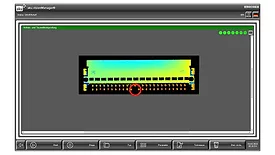
The biggest challenge when testing the pins is to ensure that they function perfectly even after assembly under a wide range of external influences, such as vibrations or moisture.
The connector application from aku.automation and AT Sensors, which inspects over 1.7 million pins every day with unprecedented precision, is setting a new benchmark in the electronics industry.
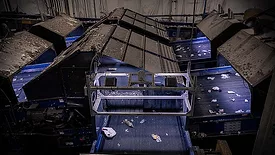
Computer vision algorithms and robotic sortation equipment are capable of seeing better than humans while sorting orders of magnitude more material at far lower costs than existing equipment.
Artificial intelligence (AI) has evolved far beyond a passing buzzword, powering diverse industries with applications ranging from predictive analytics to robotic automation.
New orders of metalworking machinery, measured by the U.S. Manufacturing Technology Orders Report published by AMT – The Association For Manufacturing Technology, totaled $538.9 million in October 2025.
There will be more information about potential upcoming changes to the ISO Management System Standards (MSS). One topic of note is that of Continual Improvement (CI).
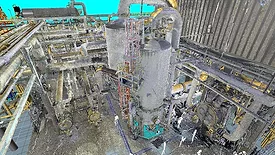
The phrase “digital twin” is everywhere these days, but it’s also widely misunderstood. Ask ten people what it means, and you’ll likely hear ten different answers. Many assume it’s simply a CAD model or a 3D scan. Those are important tools, but they’re not the whole story.
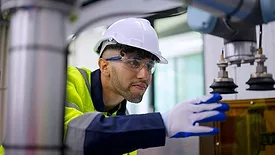
Across the global industrial landscape, nondestructive testing (NDT) faces a pivotal moment. The sector is grappling with two simultaneous forces: a shrinking and aging workforce on one hand and accelerating technological change on the other.
In 2026, quality manufacturing will focus on statistical process control (SPC) and on integrating AI and machine learning. However, outside of this industry hype, there is a focus on practical and sustainable progress.