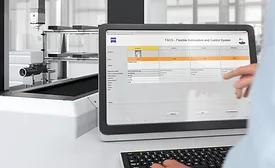
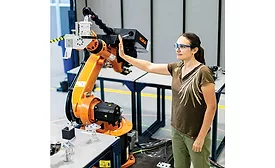
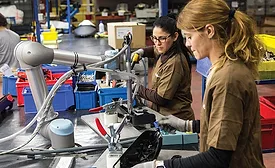
The quality lab is a critical component to manufacturing companies, especially when preparing parts for production, routine inspection and also product development.
The first thing we can do to understand revolution versus evolution is to turn to the pure definition of these two words. The word evolution˜refers to the gradual development or changes in something over a period.
The fundamental goal of automation is to reduce reliance on manpower. Whether for traditional manufacturing or additive manufacturing, it is important to understand the capabilities of supporting post-process manufacturing and metrology for validating that process.
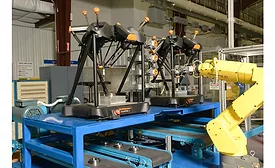
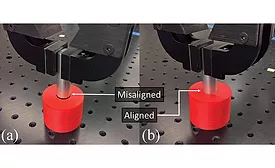
For decades, many manufacturers have counted on robots to tirelessly produce parts of predictable quality. One of the key attributes of robots is their repeatability, which means that their tool tip will return to the same pre-programmed location with a known and relatively small error.
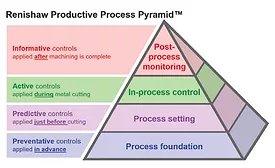
So, what do we mean when we talk of post-process monitoring? Quite simply, it is the process used to monitor both the process and the finished product against their specifications, which include logging process routines and results in order to inform the machining and finalizing of the product.
The leak testing process is a crucial quality control method that helps manufacturers ensure that their final product will be safe and reliable for end users.
No one wants to spend time making scrap, and automation is one way to avoid or at least minimize quality issues. Rather than spending time making products that aren’t up to specification, operators will make good parts and catch quality issues earlier.
The robotics industry is not slowing down. Last year the robotics industry shipped more robots to North America than ever before. And companies today are figuring out that they can utilize machine vision and robotics in many new applications.
At IMTS 2018, like at any industrial trade show, the predominant theme was Industry 4.0. Although Industry 4.0 still has not scaled up to cover a significant percentage of manufacturing setups, its vision of near-total automation—and the promise of resulting cost savings—has clearly captured the industry’s imagination.
Did you like the movie? Who is the better candidate? Is that coffee too strong? Clearly subjective decision-making has its place in today’s world. Imagine how boring things would be if everything was cut and dried. When it comes to quality, however, there is no room for guesswork or subjective interpretation. Manufacturers and suppliers must be certain that products meet customer expectations and rigid quality standards.