The first half of 2020 found manufacturers having to pivot in the face of unprecedented challenges. Many had to halt production or, at the very least, slow production due to decreased demand and onsite worker limits.
Those of us on the march towards Quality 4.0 in our manufacturing companies are grappling with the challenge of producing high quality parts with a minimal investment of time and resources into new inspection methodologies.
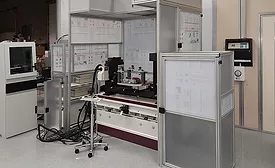
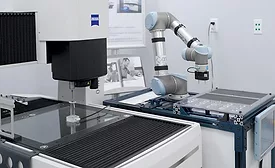
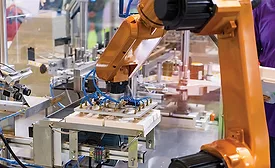
In this application case study, we look at how a manufacturer of precision optical manufacturing and metrology equipment uses collaborative robots and a new robotic gripper/caliper to provide a solution that helps its customers optimize quality control measurements in the quality assurance area of their factory.
Driven by the need to make parts faster, better, and for less, manufacturers of all sizes are embracing various forms of automation in the quest to lower costs, increase production, and reduce response times.
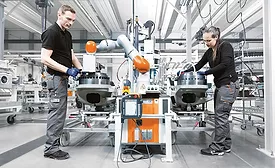
Originally made popular by the introduction of Rethink Robotics’ Baxter, so-called collaborative robots have created a lot of excitement around the industry over the last few years.
For decades, quality, low cost, and on-time delivery have been the primary demands of manufacturing customers. Recently, a new demand has been added to the mix—speed. Customers still want a quality product delivered on-time at a fair price. Only now they want it faster.
In manufacturing, the slightest deviation can have significant repercussions. This guide presents solutions, in the form of best practices, that will help quality and production managers solve their productivity issues and implement near-line and in-line automated dimensional inspections.
East meets west. It’s a common idiom that has been around for so long that it has evolved to both express agreement and collaboration as well as to describe polar opposites, and just about everything in between.
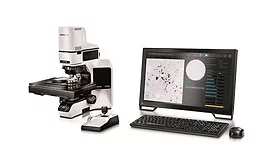
With the help of microscopy and imaging technologies, as well as automation, manufacturing is making great strides toward more advanced and efficient processes for building bigger and better things.
It all started with the wheel. Moving things, and ourselves, across distances became easier and more efficient with the wheel. Over the centuries, we progressed from carts we pushed ourselves to wagons pulled by animals we domesticated and trained.