Hyperspectral and multispectral imaging are transforming manufacturing by providing deeper material insights that enhance quality assurance, predictive maintenance, and safety. These technologies enable defect detection and equipment monitoring, allowing manufacturers to improve processes and reduce costs.
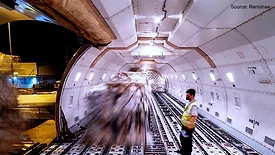
Renishaw has recently made a multi-million-dollar investment in a new dedicated facility, significantly enhancing the company’s ability to test its products under the environmental and electrical conditions encountered during transportation.
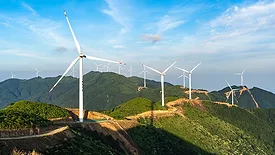
As global awareness of environmental issues has risen, manufacturers are increasingly under pressure to reduce their environmental impact while maintaining profitability.
The shift from environmental skepticism to optimism is driven by market demands for profitable, sustainable practices. Addressing environmental challenges is now essential for industries, impacting ecosystems, health, and corporate strategies.
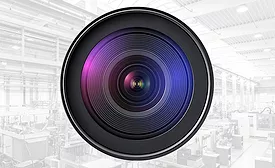
Imaging lenses enable machine vision systems to inspect, sort, and measure objects for a variety of applications including manufacturing, robotics, autonomous (self-driving) vehicles, and more.
The byko-test Fe/NFe gauge offers a unique solution to monitor environmental conditions while measuring dry film thickness. Air temperature and humidity sensors are built into the gauge.
Knowing the environment, or being aware of your surroundings, is key to many a task. It’s at least one of the ways we express the importance of having all the information we need in order to reach a goal.
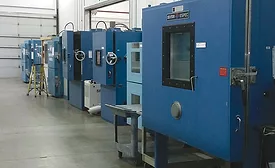
Environmental simulation is a critical part of the armory of product designers and manufacturers, ensuring that end-uses are viable in a whole host of complex and niche situations. In mature industries, a focus of environmental simulation testing is on pushing products and materials to ever greater resilience by upgrading and expanding measurement for more extreme ranges, increasing the resilience of products.
Automotive polymer coatings are designed not only to improve a vehicle’s appearance, but to provide a protective barrier against destructive environmental forces.
The rapidly increasing ownership and production of automobiles in emerging markets such as China, India and Brazil is gradually transforming all stages of the supply chain.
Manufacturers of products ranging from military airplanes to lawnmowers all have something in common; each needs to be confident that their product can withstand the environmental conditions that their materials and components might be exposed to.