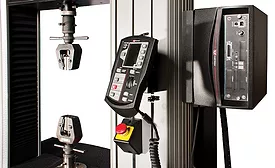
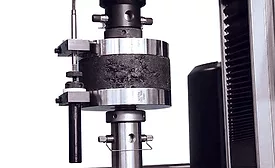
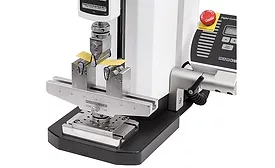
Whether you work in a quality control laboratory at a major automotive manufacturer or are performing research at a university, it is common to encounter a universal testing machine that was manufactured before the 21st century.
In your day to day life, you take it for granted that the car you drive, the elevator you ride, and even the mug you sip your coffee out of will work as intended.
They’re as common as dandelions in the spring, and as universal as a Swiss army knife. Sometimes they gather dust, condemned to a dark corner, other times they’re polished to a mirror finish from intensive everyday use. We’re talking, of course, about universal testing machines (UTMs).
The purpose of tensile or mechanical testing is to measure the effect of force on a particular material or component, or on the adhesive or fastener that bonds two materials together.