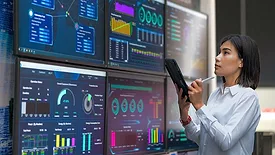
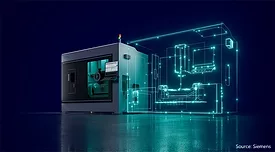
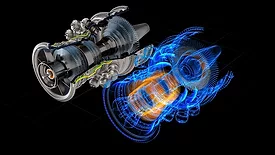
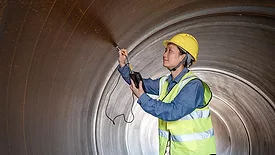
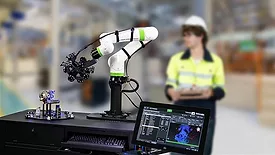
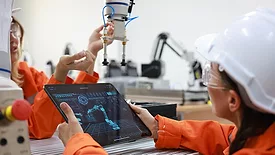
With the open digital business platform Siemens Xcelerator, IoT-enabled hardware and software, the company demonstrates how the physical world can be connected to the digital world.
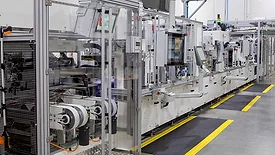
AeroFlexx, a pioneer in sustainable liquid packaging, partnered with Factory Systems to enhance data visibility on its high-speed converter line. Renowned for disrupting traditional rigid packaging with a flexible yet rigid bottle design, AeroFlexx relies on a highly engineered converter system to shape and seal its innovative packages. As they refined this process, a key issue emerged.
Digital twins, once a concept of speculative fiction, are now essential in manufacturing and quality control. These virtual replicas of physical assets enable organizations to simulate and optimize processes, allowing for precise predictions and error detection far beyond traditional trial-and-error methods.
The transition to NDE 4.0 presents a host of technical and non-technical challenges that need to be overcome for the industry to realize its full potential.
Nondestructive testing (NDT) assesses structures like bridges and pipelines without damage, ensuring safety in construction, manufacturing, and energy for over a century. NDT has evolved from basic tools (NDE 1.0) to smart systems (NDE 4.0), adapting alongside industrial revolutions.
As industries advance, metrology—the science of measurement—becomes essential for innovation. With a growing need for precision and efficiency, the field is evolving to enhance quality control. This summary highlights key trends shaping metrology today.
Quality 4.0 transforms manufacturing by integrating digital technologies with quality management, enhancing visibility and traceability throughout the production process. By leveraging data from interconnected machines, it helps manufacturers proactively manage risks and reduce waste, leading to a safer and more efficient future.
Quality 4.0 combines technologies like AI and IoT with quality management, enhancing real-time monitoring and decision-making. It supports continuous improvement in Lean Six Sigma, helping organizations achieve operational excellence and stay competitive.
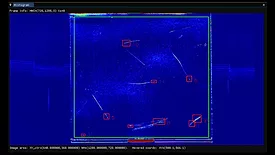
Event-based vision technology addresses challenges in industrial machine vision, such as data overload and the need for real-time processing, by efficiently capturing changes in a scene with high speed and low power consumption.
Manufacturing is evolving through Industry 4.0, advanced robotics, and additive manufacturing, enhancing efficiency, customization, and rapid prototyping while posing challenges around employment and data security.