Quality Magazine logo
search
cart
facebook twitter linkedin youtube
  • Sign In
  • Create Account
  • Sign Out
  • My Account
Quality Magazine logo
  • NEWS
  • PRODUCTS
    • FEATURED PRODUCTS
    • SUBMIT YOUR PRODUCT
  • CHANNELS
    • AUTOMATION
    • MANAGEMENT
    • MEASUREMENT
    • NDT
    • QUALITY 101
    • SOFTWARE
    • TEST & INSPECTION
    • VISION & SENSORS
  • MARKETS
    • AEROSPACE
    • AUTOMOTIVE
    • ENERGY
    • GREEN MANUFACTURING
    • MEDICAL
  • MEDIA
    • A WORD ON QUALITY PUZZLE
    • EBOOK
    • PODCASTS
    • VIDEOS
    • WEBINARS
  • EVENTS
    • EVENT CALENDAR
    • IMTS
  • DIRECTORIES
    • BUYERS GUIDE >
      • Supplier Insights
    • NDT SOURCEBOOK
    • VISION & SENSORS
    • TAKE A TOUR
  • INFOCENTERS
    • Digital Quality Management Systems
    • NEXT GENERATION SPC & QUALITY ANALYTICS
  • AWARDS
    • ROOKIE OF THE YEAR
    • PLANT OF THE YEAR
    • PROFESSIONAL OF THE YEAR
  • MORE
    • Expert Columns
    • NEWSLETTERS
    • QUALITY STORE
    • INDUSTRY LINKS
    • SPONSOR INSIGHTS
  • EMAG
    • eMAGAZINE
    • ARCHIVES
    • CONTACT
    • ADVERTISE
  • SIGN UP!
NDT

NDT

Beyond the Surface: Overcoming Challenges in Nondestructive Testing

The transition to NDE 4.0 presents a host of technical and non-technical challenges that need to be overcome for the industry to realize its full potential.
By Kuldeep Sharma, Vineet Yadav
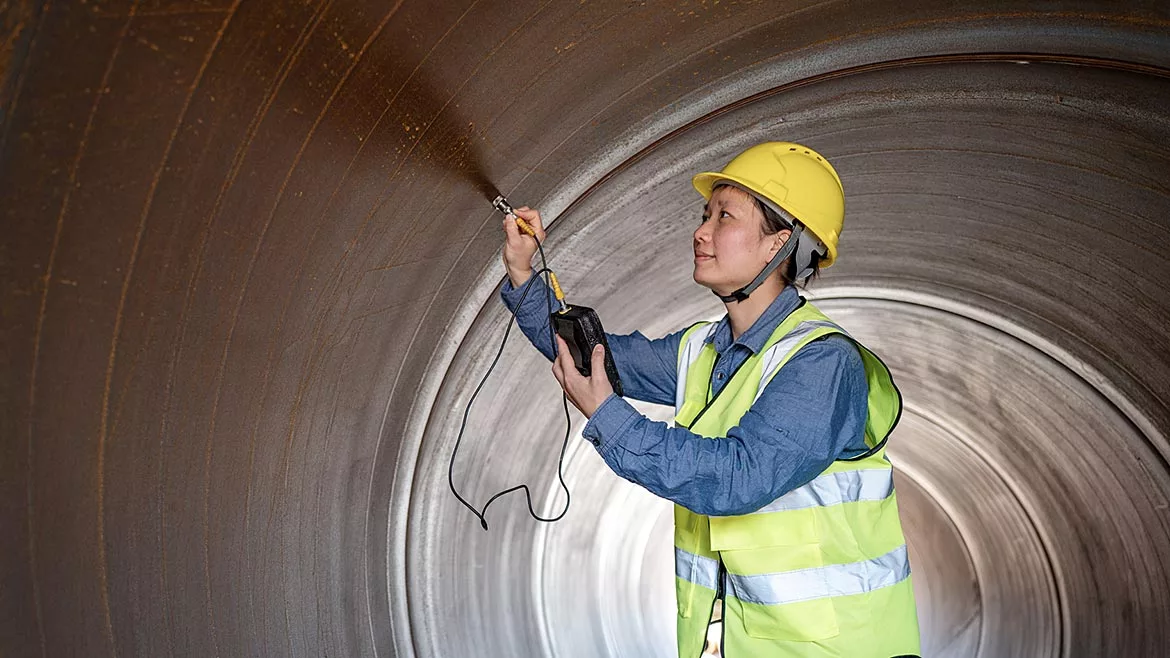
A female engineer in a hardhat and safety vest uses a hardness tester to test steel inside the steel pipe

Image Source: Chun han / E+ / Getty Images Plus

April 30, 2025
✕
Image in modal.

Imagine being able to assess the health of a bridge, pipeline, or airplane wing without causing any damage. This is the essence of nondestructive testing (NDT) or nondestructive evaluation (NDE) - a technique that has quietly ensured safety in industries such as construction, manufacturing, and energy for over a century. Think of it as a superhero’s X-ray vision - detecting hidden cracks, rust, or material weaknesses while leaving the structure fully intact and operational. NDT doesn’t only help prevent catastrophic failures; it guarantees the safety of everyday infrastructure; from the roads we drive on to the buildings we work in. As technology has evolved, NDT has transformed alongside it—from its humble beginnings with basic tools (NDE 1.0) to today’s era of smart, connected systems (NDE 4.0) - growing in parallel with each industrial revolution.

The Evolution of NDT: From Traditional to Smart Technologies

READ MORE

  • Nondestructive Testing: Is there an ethics problem?
  • AI: A Game-Changer for Automated Defect Detection in NDT
  • Advances in Automated NDT: Viable Inspection Solutions for Aerospace Applications
  • PODCAST | The Evolution of NDT Education and Training

Nondestructive testing (NDT) has come a long way, evolving alongside technological advancements to improve both efficiency and accuracy. Below is a simplified breakdown of this progression:

  • NDE 1.0 (Manual Inspection & Visual Testing) – Early inspections were conducted purely by human observation. Inspectors visually checked materials for defects, but this process was slow, subjective, and prone to errors.
  • NDE 2.0 (Emergence of Specialized Techniques) – By the mid-20th century, more advanced methods like ultrasonic testing, magnetic particle testing, and dye penetrant testing were introduced. These techniques allowed for more precise defect detection, even below the material’s surface.
  • NDE 3.0 (Digitalization & Automation) – The late 20th century marked the arrival of digital radiography, phased array ultrasonics, and automated systems. These advancements significantly enhanced testing speed, reliability, and reduced dependence on human judgment.
  • NDE 4.0 (Smart & Connected Systems) – Today, NDT is powered by artificial intelligence (AI), the Internet of Things (IoT), augmented reality (AR), and machine learning (ML). These innovations have enhanced both the accuracy and efficiency of NDT. However, they also present new challenges related to workforce adaptation and seamless integration across diverse industries.

As NDT continues to evolve, industries must balance technological advances with practical implementation and workforce training.

Figure 1: Flow Chart of NDT Challenges
Figure 1: Flow Chart of NDT Challenges Source: Dura-Bond Industries

Technical Challenges in NDT

The evolution of NDT to NDE 4.0 has been rapid, integrating sophisticated technologies like AI, IoT, and automated sensors. However, this transition presents several technical challenges that must be addressed to ensure reliability and efficiency.

Data Volume & Processing: Advanced methods, such as phased array ultrasonic testing (PAUT) and digital radiography (DR), generate massive amounts of data. Efficient storage, processing, and analysis of these data sets are becoming increasingly complex.

Data Quality & Interpretation: Poorly captured or misinterpreted data can lead to inaccurate assessments, which could jeopardize safety. Developing automated data analysis tools to ensure accuracy is crucial.

Integration & Interoperability: Different NDT technologies often produce data in incompatible formats. To achieve a holistic view of inspections, systems must be able to integrate and communicate seamlessly, which requires standardized platforms.

Cybersecurity: As more NDT systems become connected to the internet, the risk of cyberattacks increases. These systems could be vulnerable to breaches, leading to data manipulation or disruption of automated processes. Implementing robust encryption, secure communication protocols, and routine cybersecurity audits is essential.

Sensor Reliability & Calibration: Sensors in NDT systems can experience drift over time due to environmental factors, leading to decreased accuracy. Regular calibration is necessary but can be costly. Developing self-calibrating and more durable sensors will be essential in addressing this issue.

Standardization: With the rapid emergence of new technologies in NDE 4.0, a lack of universal standards for new methods and tools remains a challenge. Industry-wide collaboration with standardization organizations will help ensure consistency.

Cost & ROI: The financial investment required for NDE 4.0, including expensive equipment and training, can be a significant barrier. Clear return-on-investment (ROI) calculations and innovative funding models will help make these technologies more accessible to a wider range of industries.

Non-Technical Challenges in NDT

While technical issues dominate the conversation, non-technical barriers are equally important and significantly affect NDT implementation.

Limited Cross-Method Expertise: Many NDT technicians specialize in only one or two methods. This limitation can result in missed defect detections when another method would be more effective. Comprehensive training programs encouraging multi-method expertise can enhance detection capabilities.

Lack of Awareness among Stakeholders: Many non-NDT stakeholders, such as senior management and engineers, view NDT as a procedural hurdle rather than a critical quality assurance tool. Raising awareness through educational content and case studies can help highlight the essential role of NDT in ensuring safety and operational integrity.

Industry-Specific Training: Generic NDT training programs often fail to address the specific needs of particular industries such as aerospace, oil and gas, or civil engineering. Customized, industry-focused modules will equip professionals to deal with sector-specific challenges.

Competency & Stress Management: NDT professionals often work in high-pressure environments where their decisions can have significant consequences. Continuous skill assessments, practical evaluations, and stress management training will help maintain high standards and improve decision-making under pressure.

Collaboration & Knowledge Sharing: The lack of a centralized platform for professionals to share insights, report violations, and discuss industry trends limits innovation. Developing such a platform can foster collaboration and knowledge-sharing.

Generational Gaps in Technological Adoption: Many experienced NDT professionals face challenges when adapting to new technologies. Targeted training programs will help bridge the gap between experienced technicians and the new generation of digital tools, ensuring a smooth transition to modern NDT methods.

Conclusion: Navigating the Path to NDE 4.0

The transition to NDE 4.0 presents a host of technical and non-technical challenges that need to be overcome for the industry to realize its full potential. On the technical side, issues such as data management, cybersecurity, sensor reliability, and system integration demand urgent attention. Investing in advanced data analytics, cybersecurity protocols, and open-source platforms will facilitate smoother transitions. On the non-technical front, addressing training gaps, raising awareness, and fostering collaboration will ensure the workforce is well-prepared for the evolving landscape.

By striking a balance between technological progress and human-centered strategies, the industry can unlock the full potential of NDE 4.0, enhancing both safety and reliability across diverse sectors.

KEYWORDS: Internet of Things (IoT) manufacturing metrology smart manufacturing

Share This Story

Looking for a reprint of this article?
From high-res PDFs to custom plaques, order your copy today!

Kuldeep Sharma, NDT manager, Dura-Bond Industries, McKeesport, PA. For more information, email [email protected].

Vineet Yadav, quality manager, Born Inc., Tulsa, OK. For more information, email[email protected].

Recommended Content

JOIN TODAY
to unlock your recommendations.

Already have an account? Sign In

  • 2024 Quality Rookie of the Year Justin Wise 1440x750px banner with "Quality Rookie of the Year" logo inset

    Meet the 2024 Quality Rookie of the Year: Justin Wise

    Justin Wise is an exceptional individual who has been...
    Aerospace
    By: Michelle Bangert
  • Man with umbrella and coat stands outside while it rains at night looking at a building.

    Nondestructive Testing: Is there an ethics problem?

    I was a whistleblower who exposed fraudulent activities...
    NDT
    By: Dale Norwood
  • Unraveling Deflategate: Football stadium with closeup of football on field

    Unraveling the Tom Brady Deflategate

    The Deflategate scandal erupted following the 2014 AFC...
    Measurement
    By: Greg Cenker and Henry Zumbrun
Manage My Account
  • eMagazine Subscriptions
  • Newsletters
  • Online Registration
  • Subscription Customer Service
  • Manage My Preferences

More Videos

Sponsored Content

Sponsored Content is a special paid section where industry companies provide high quality, objective, non-commercial content around topics of interest to the Quality audience. All Sponsored Content is supplied by the advertising company and any opinions expressed in this article are those of the author and not necessarily reflect the views of Quality or its parent company, BNP Media. Interested in participating in our Sponsored Content section? Contact your local rep!

close
  • Key Takeaways for Quality Leaders
    Sponsored byComplianceQuest

    Key Takeaways for Quality Leaders from the 2026 Gartner Magic Quadrant™ for QMS

  • This image shows a person seated next to a Bobcat T66 compact track loader.
    Sponsored byPolyWorks by InnovMetric

    Supercharging Digital Gauging at Bobcat North America

  • Dorsey Calibration Lab photo by Tom LaBarbera Picture this Studios
    Sponsored byDorsey Metrology International

    Ensuring Product Quality in a Competitive Manufacturing Landscape

Popular Stories

This image shows a person seated next to a Bobcat T66 compact track loader.

Supercharging Digital Gauging at Bobcat North America

a professional in the aviation field performing maintenance, repair, and overhaul (MRO) work

Manufacturing Retention: Strategies for Improving Company Culture, Engagement and Skill Development

Dorsey Calibration Lab photo by Tom LaBarbera Picture this Studios

Ensuring Product Quality in a Competitive Manufacturing Landscape

2026 Quality Professional of the Year!

Events

June 22, 2026

Automate 2026

Automate is North America's largest robotics and automation event — and the best place to take your ideas from insight to impact.
 
Our show floor features the world’s leading automation solutions, from AI and robotics to motion control, vision systems, and more. Plus, our educational conference is second to none, led by the brightest minds in automation today.
 
Ready to transform the way you work? Take the next step at Automate.
July 14, 2026

Quality Leaders Forum: Better Communication, Better Quality Data

The Quality Leaders Forum is a quarterly, editor-moderated fireside chat series hosted by Quality Magazine, featuring candid conversations with senior manufacturing and operations executives shaping enterprise-level quality.

View All Submit An Event

Products

Lean Manufacturing and Service Fundamentals, Applications, and Case Studies

Lean Manufacturing and Service Fundamentals, Applications, and Case Studies

See More Products
Quality Podcast Channel Custom Content

Related Articles

  • Worker using the SciAps X-550  handheld XRF analyzer.

    Enhancing Material Analysis: The Role of XRF and LIBS in Nondestructive Testing

    See More
  • The inspectors are checking defect in welded of steel plate add joint with process Ultrasonic testing (UT) of Non-Destructive Testing(NDT) at industrial factory.

    Trends in Nondestructive Testing (NDT)

    See More
  • A female engineer using an instrument to measure inside a pipe.

    A Bright Future for Terahertz in Nondestructive Testing and Condition Monitoring

    See More

Related Products

See More Products
  • Juran Institute's Six Sigma Breakthrough and Beyond Quality Performance Breakthrough Methods

  • ZEuCDwAAQBAJ.jpg

    Lean Six Sigma In The Age Of Artificial Intelligence: Harnessing The Power Of The Fourth Industrial Revolution

See More Products

Events

View AllSubmit An Event
  • July 29, 2025

    Beyond the Checklist: Restoring Integrity in Aerospace Quality Assurance

    On Demand As aerospace systems become increasingly digitized, it’s more important than ever to uphold the proven value of hands-on Quality Assurance (QA) and nondestructive testing (NDT).
View AllSubmit An Event

Related Directories

  • American Institute of Nondestructive Testing

    The American Institute of Nondestructive Testing offers online and hands-on training in RT, UT, ET, MT, PT and VT nondestructive testing methods. Let us customize an NDT training program that fits your company's needs. We offer training online, at your facility or at our 22,000 Sq Ft facility.
  • American Society for Nondestructive Testing (ASNT)

    ASNT is the association for nondestructive testing (NDT) professionals committed to making the world a safer place. NDT professionals detect irregularities, flaws, and defects in materials, components, and structures that could compromise the safety, reliability, or functionality of an object or structure. Established in 1941, ASNT supports members with certifications, professional development, industry insights, advocacy, events, publications, and networking opportunities and is focused on fostering the growth of future generations of NDT professionals through the ASNT Foundation. Serving more than 22 000 members and certificate holders worldwide, ASNT is the largest technical society for NDT professionals. ASNT is based in Columbus, Ohio, with offices in Houston, Texas, and Chennai, India.
×

Stay in the know with Quality’s comprehensive coverage of
the manufacturing and metrology industries.

Newsletters | Website | eMagazine

JOIN TODAY!
  • RESOURCES
    • Advertise
    • Contact Us
    • Directories
    • Manufacturing Division
    • Store
    • Want More
  • SIGN UP TODAY
    • Create Account
    • eMagazine
    • Newsletters
    • Customer Service
    • Manage Preferences
  • SERVICES
    • Marketing Services
    • Market Research
    • Reprints
    • List Rental
    • Survey/Respondent Access
  • STAY CONNECTED
    • LinkedIn
    • Facebook
    • YouTube
    • X (Twitter)
  • PRIVACY
    • PRIVACY POLICY
    • TERMS & CONDITIONS
    • DO NOT SELL MY PERSONAL INFORMATION
    • PRIVACY REQUEST
    • ACCESSIBILITY

Copyright ©2026. All Rights Reserved BNP Media, Inc. and BNP Media II, LLC.

Design, CMS, Hosting & Web Development :: ePublishing