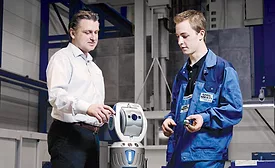
Avox Systems Division uses CMMs to complete certification
June 1, 2016
In March 2014, I was moved to a new position within Zodiac Aerospace at Avox Systems. Almost immediately after I started we had an ISO audit (ISO is a series of standards developed by the International Organization for Standardization).
Call it Industry 4.0, the Connected Enterprise, or the Industrial Internet of Things, but this fourth manufacturing revolution is just getting started.
To find out more, Quality spoke with John Nesi, Vice President of Market Development at Rockwell Automation, and Bryce Barnes, Senior Manager of Cisco Systems’ Machine and Robot Segment globally under Cisco’s Internet of Things Manufacturing Solutions Group.
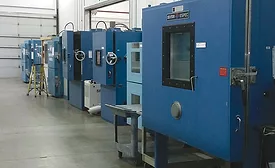
Environmental simulation is a critical part of the armory of product designers and manufacturers, ensuring that end-uses are viable in a whole host of complex and niche situations. In mature industries, a focus of environmental simulation testing is on pushing products and materials to ever greater resilience by upgrading and expanding measurement for more extreme ranges, increasing the resilience of products.
When purchasing coordinate measuring machines (CMM) and vision or flexible gaging systems, fixturing is often overlooked until the inspection equipment has been commissioned and the first parts need to be measured.
X-ray computed tomography (CT) is an important industrial tool that enables us to see not only external surfaces but also internal features of an object without cutting or disassembling the sample.
In psychological terms, perception is defined as our recognition and interpretation of sensory information, as well as how we respond to the information.
To understand perception, information technology and literacy instructor Yolanda Williams asks us to think of it “as a process where we take in sensory information from our environment and use that information in order to interact with our environment. Perception allows us to take the sensory information in and make it into something meaningful.”
The 2015 revision of ISO 9001 has debuted with mixed reviews from smaller registrars and suppliers. The question arises: is there going to be any measureable benefit from these changes other than increased income for the ISO bureaucracy? One of the early reasons for change was to align ISO standards with Annex SL. Not sure all the interested parties are excited with this reason.
This month the ASQ/APQC Global State of Quality 2 Research will be released. ASQ and APQC have partnered again to examine the Global State of Quality. As the research did in 2013, the Global State of Quality 2 Research once again aims to further advance the world’s understanding of quality’s impact. The goal of this year’s report is to examine trends that have continued to evolve from the 2013 Discoveries report, as well as identify new trends within the quality industry.
 RSS
RSS