These two choices for bore measurement come into play when close tolerances are the order of the day and speedy, repeatable measurements are required in a production environment. Keeping these requirements in mind, instrument makers usually offer options such as hard chromed bodies or carbide pads and contacts where needed to keep wear at a minimum.
Six Sigma is still one of the most popular methodologies in use today. As proof all one has to do is read the periodicals and textbooks or attend an ASQ section meeting or conference.
One of the most promising surgical options for treating spinal injury and deterioration of spinal discs is the use of artificial discs to replace the patient’s natural spinal disc.
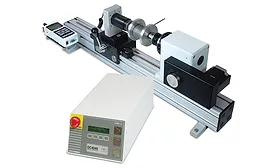
Torque testing is an important quality-control step in nearly every manufacturing sector. Properly testing rotary parts for torque with handheld or automated gages can prevent everything from un-openable bottle caps to loose fasteners. Or, in a grave example, if GM properly acted on failed rotational torque tests of ignition switches in some of its mid-2000s models, 13 lives would have been saved.
Forget Hamlet. What’s going on? That is the question.
Data collection is about addressing this most important question in strategy. Maybe “What’s going on?” is the greatest question ever asked. Right up there with “Where are we?” and “Who are you?”
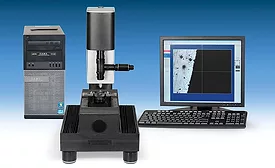
We’ll cover some of the common problems associated with microhardness testing and address some of the techniques and technologies that can be used to avoid them.
The Vickers and Knoop microhardness testing methods have become invaluable for the testing of a variety of parts, which have what can be referred to as “shallow layer hardness.” Such characteristics as surface hardness, thin cross section, coating hardness, and case depth are measured using the microhardness testing methods. These methods also can be useful for selective testing of particular grains or constituents such as those found in powdered metal parts.
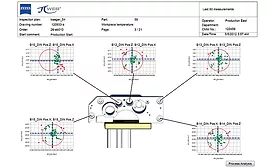
Modern manufacturing relies on consistency, and tolerances are tighter than they’ve ever been. Production capabilities are up to the task, and CMM systems help ensure that completed or in-process parts are within tolerance. The real challenge comes when anything goes wrong.
In order to help us better understand supply and demand, economists have placed the things we buy into different categories. One such category is a positional good, described by Dr. Sheldon Cooper as “an economic concept in which an object is only valued by the possessor because it’s not possessed by others.”
Organizations have always been faced with making sure that they have the knowledge to carry out the work of the company. Sometimes referred to as “tribal knowledge,” organizations are frequently challenged with the obstacle that there is knowledge within the company that is not passed on or only available to one or a few people. This lack of knowledge could lead to ineffective performance of the quality management system.
 RSS
RSS