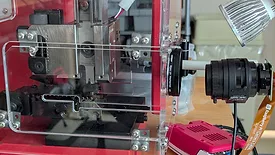
Hexicurity in Boerne, Texas, provides high-security access integration solutions for doors, turnstiles, and elevators. The company manufactures wire crimps for its TransVerify System, with around 100 crimps needed per system. Hexicurity has encountered ongoing challenges with wire crimping quality.
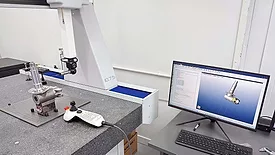
Rodwell Powell in Basildon, England, has invested $339,187 in a comprehensive renovation of its inspection department. The centerpiece of the upgrade was the acquisition of two coordinate measuring machines (CMMs) manufactured by LK Metrology.
After three years and many meetings, ISO 10012: 2025 Measurement Management Systems has reached the status of Final Draft International Standard, also referred to as FDIS.
Would you accept a project that paid very little for two years and required you to wait two years for the ultimate windfall? Since quality professionals serve at the behest of senior management, we must do what we can to help them succeed. Quality professionals need to shift to improvement methods that give short-term results.
Explore how manufacturers can drive alignment between their quality goals and those of control system integrators. The ultimate goal is to support compliance, promote operational excellence, and enable long-term success.
Frontline leaders bridge the gap between leadership's vision and daily execution, helping teams identify and resolve quality issues at the source. To be effective, they should be developed as coaches instead of just enforcers.
ASQ has a broad publishing program that includes Quality Progress magazine, Lean & Six Sigma Review, and four technical journals: Journal of Quality Technology, Quality Engineering, Quality Management Journal, and Technometrics. The Quality Press catalog has over 200 books available in print and ebook formats, with annual sales exceeding 30,000 books.
Andy Nichols is a managing partner of Quality Nation Incorporated with more than 40 years of experience in quality. He's been involved in implementing quality management systems since 1985 and has experience with many quality standards, including ISO 9001.
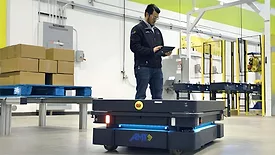
Manufacturing leaders prioritize quality, as customers expect consistency, safety, and performance. While companies have long relied on lean initiatives and Six Sigma programs, automation has emerged as a crucial tool for enhancing these efforts. In the last two decades in automation, I've seen it evolve from a cost-saving measure to a means of achieving consistency and precision throughout production, focusing on supporting quality at every stage rather than just integrating robots.
Michelle Bangert talks with Marcel Minutolo, professor of strategic management at Robert Morris University. He's also taught and conducted research in Chile, Tajikistan, Taiwan, China, Israel, Slovakia, and Spain. He's a former military intelligence company commander with multiple deployments and has written several popular articles for Quality.
 RSS
RSS