The uncertainty in this era of global trade and commerce has pushed American manufacturers to re-evaluate their strategic approaches and even to reinvent themselves.
Economic uncertainty is at a record high, surpassing pandemic levels. A Manufacturers Alliance and Roland Berger study indicates that U.S.-China tensions and complex global supply chains are hindering the manufacturing recovery.
Michelle Bangert talks with Bill Soller, President and Lean Six Sigma Master Black Belt of the Corporate Advantage Network. He's also a Senior Facilitator for the Deming Institute.
In many organizations, improvement teams celebrate faster lead times or lower defect rates but struggle to translate these outcomes into financial terms that resonate with executives.
Organizations often celebrate faster lead times and lower defect rates but struggle to express these benefits in financial terms, leading to the undervaluation of continuous improvement efforts.
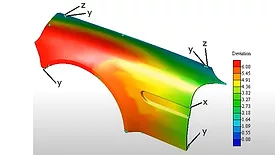
Early design optimization is vital in manufacturing to ensure quality and cost-effectiveness. Delaying it until production can drastically increase costs and risks. Digital optimization before production enables cost-efficient design changes, while late-stage modifications can be exponentially more expensive, emphasizing the need for early optimization.
The latest Rules 6th Edition changes represent the most significant enhancement to the IATF certification scheme in nearly a decade. As the industry prepares for the next revision of the IATF 16949 standard, the upgrades appear to be laying a foundation for future requirements in digitalization and sustainability.
Maintaining the 19 ASQ certification exams involves hundreds of SME volunteers annually as well as a dedicated staff within ASQ to keep the exams current, accurate and fair.
ASQ follows ISO/IEC 17024 requirements to ensure impartial, competency-based certifications. The ASQ Certification Council manages the certification process and addresses related issues. Exam development involves a systematic process with volunteer Subject Matter Experts (SMEs), psychometricians, and ASQ staff.
Drift, as defined by NIST, refers to a slow change in a gauge's response. When measurement equipment drifts beyond specifications, it can result in inaccurate data, negatively affect product performance, and potentially lead to recalls. Drift can occur simply through normal use over time.
External audits are essential for organizations aiming for excellence. At ASQ, we view them as a strategic resource that validates quality systems, identifies growth opportunities, and fosters accountability. When well-integrated, audits enhance sustainable performance and resilience.
In today's fast-paced manufacturing environment, quality management is more than a compliance issue; it's a strategic advantage. Unfortunately, many buyers rely on longstanding relationships, certification checkboxes, or approved vendor lists when making sourcing decisions, which can obscure more critical questions about true quality assurance.