Frontline leaders bridge the gap between leadership's vision and daily execution, helping teams identify and resolve quality issues at the source. To be effective, they should be developed as coaches instead of just enforcers.
ASQ has a broad publishing program that includes Quality Progress magazine, Lean & Six Sigma Review, and four technical journals: Journal of Quality Technology, Quality Engineering, Quality Management Journal, and Technometrics. The Quality Press catalog has over 200 books available in print and ebook formats, with annual sales exceeding 30,000 books.
Andy Nichols is a managing partner of Quality Nation Incorporated with more than 40 years of experience in quality. He's been involved in implementing quality management systems since 1985 and has experience with many quality standards, including ISO 9001.
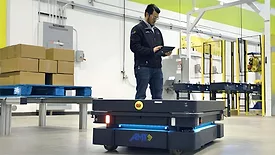
Manufacturing leaders prioritize quality, as customers expect consistency, safety, and performance. While companies have long relied on lean initiatives and Six Sigma programs, automation has emerged as a crucial tool for enhancing these efforts. In the last two decades in automation, I've seen it evolve from a cost-saving measure to a means of achieving consistency and precision throughout production, focusing on supporting quality at every stage rather than just integrating robots.
While computed tomography (CT) has garnered attention for its volumetric imaging capabilities, 2D DR remains a faster and more cost-effective option for many production environments. As component complexity and production volumes grow, DR systems with automated image processing provide an effective and efficient solution for quality assurance workflows.
Michelle Bangert talks with Marcel Minutolo, professor of strategic management at Robert Morris University. He's also taught and conducted research in Chile, Tajikistan, Taiwan, China, Israel, Slovakia, and Spain. He's a former military intelligence company commander with multiple deployments and has written several popular articles for Quality.
As high-performance industries adopt additive manufacturing (AM), the demand for harmonized standards is growing. This drives organizations and regulatory bodies to develop consistent protocols, moving away from conflicting standards.
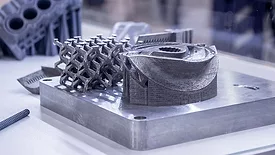
Additive manufacturing (AM) has long intrigued engineers with its design freedom and rapid prototyping. However, as it shifts to full-scale production, quality has become a critical bottleneck. Meeting the consistency, functionality, and cost expectations of conventional manufacturing is essential, making finishing as important as printing.
While the need for skilled workers continues to grow, many companies are learning that traditional approaches to hiring and training no longer resonate with early-career professionals.
The demand for skilled workers is rising, but traditional hiring and training methods are not appealing to early-career professionals. For Gen Z, job satisfaction involves more than just pay; they value growth, purpose, and access to advanced technology. In response, manufacturers and industry organizations are changing their hiring and training practices.
The manufacturing industry is overwhelmed with claims of "AI-powered" solutions that promise to transform quality management. However, there's little clarity on what this truly means. Learn how to move past the buzzwords and focus on what matters: how AI can transform quality management from a compliance-driven necessity to a strategic driver of manufacturing excellence.