Gear inspection has significantly evolved since the early 20th century. What began as basic evaluations for high-precision gears in the 1920s has now become a complex field with standardized protocols and advanced technology. This evolution continues to transform quality assurance in gear manufacturing.
Visual SLAM (Simultaneous Localization and Mapping) is an AI-driven, 3D vision-based method that marks a departure from conventional navigation systems.
In addition to significantly boosting productivity in factories and warehouses by autonomously moving raw materials, parts, or finished goods between workstations or storage areas, Autonomous Mobile Robots (AMRs) handle tedious, non-value-added tasks like cart pushing, allowing human employees to focus on higher-skill activities.
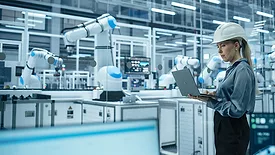
In a joint Assembly/Quality podcast, Jennifer Pierce, multimedia editor with Assembly Magazine and the host of Assembly Audible, and Michelle Bangert, managing editor of Quality, explore an area where assembly and quality intersect: machine vision, with David Dechow, founder and owner of Machine Vision Source.
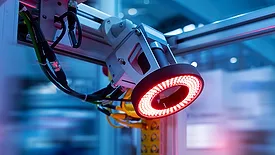
Inline machine vision systems improve efficiency, product quality, and traceability, but challenges like installation complexities and data issues can increase false positives and negatives, leading to frustration and distrust. This article outlines strategies to address these common hurdles.
Ensuring adequate light for high-speed applications involves more than measuring lux; it depends on how much light the sample reflects and absorbs and whether it captures direct or scattered light. High-intensity light may still fail if the sample doesn't reflect enough to the camera, making brighter lights essential for short exposure times to prevent blur.
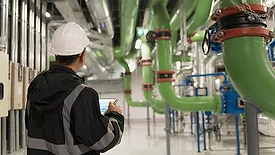
The Industrial Internet of Things (IIoT) is essential for digital transformation in manufacturing, with the market expected to grow from $194 billion in 2024 to $286 billion by 2029. This growth is fueled by the need for process optimization and cost reduction, making it crucial to understand the key technologies shaping the sector.
The debate sparked by the "One Big, Beautiful" agenda bill highlighted the uncertainty of AI regulation and the absence of a national standard. A proposal was discussed to block state-level AI rules for the next ten years.
As global awareness of environmental issues has risen, manufacturers are increasingly under pressure to reduce their environmental impact while maintaining profitability.
The shift from environmental skepticism to optimism is driven by market demands for profitable, sustainable practices. Addressing environmental challenges is now essential for industries, impacting ecosystems, health, and corporate strategies.
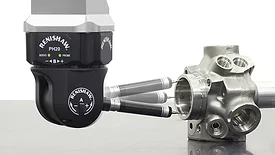
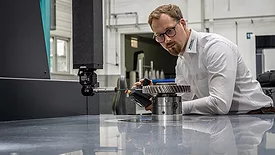
In modern manufacturing, precision is crucial as complex parts become standard across various industries. Coordinate measuring machines (CMM), especially with 5-axis technology, are essential for meeting quality assurance demands.
 RSS
RSS
--Mover-(right).webp?height=168&t=1754956392&width=275 "AMR-Tug (left) and Mover (right)")