With ISO 21920 bringing a myriad of changes for metrology professionals, it is critical that all elements of the standard are understood for accurate measurements.
ISO 21920 introduces many changes for quality inspectors, engineers, and metrology professionals, requiring understanding of all standard elements for accurate measurements. The sections in the article highlight key parts and their practical measurement applications.
Lean teaches us the importance of delivering value to the customer and emphasizes that companies must recognize their quality deliverables don’t end after the sales transaction is complete. In Lean, we define value from the customer’s perspective.
I have learned that quality is meeting and/or exceeding customer requirements and doing things right the first time. Customer corrective action is an example of poor quality, losing customer satisfaction, and profit. The blame game is the opposite of accountability. Accountability is taking ownership of the results.
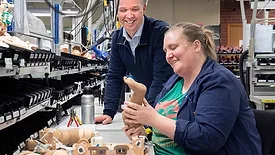
Laerdal Medical is one of the world’s leading suppliers of models for teaching people how to do CPR, intubate a patient or even deliver a baby. To ensure that each bust is assembled correctly and shipped with the right auxiliary components, Laerdal engineers implemented Tulip Vision, a vision-based error-proofing system from Tulip Interfaces Inc.
This article reviews the role, necessity, and format of education and training for quality professionals, offering insights for their professional development and decision-making.
A simple cable or a wireless system? Each path has clear strengths, and neither is universally “better.” Understanding the tradeoffs helps quality engineers pick the proper setup for the job.
As parts become smaller, more complex, and increasingly performance-critical, traditional measurement tools are reaching their limits. The solution? A shift from tactile to optical metrology — and with it, from reactive troubleshooting to predictive quality assurance.
Machine vision is transforming with advances in AI, deep learning, and 3D imaging, boosting inspection and accessibility. Tasks once needing expert programming are now handled by AI-powered systems.
From the streets of Jersey City to the Navy to nondestructive testing and his own company, Joe Sorrentino of Lean Quality Systems, passes along the knowledge of what he has excelled at−quality assurance, leadership, and management training. Joe sat down with Michelle Bangert to talk about, in part, his latest article for Quality.