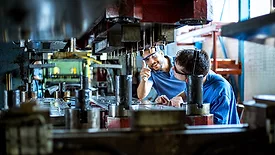
Manufacturers struggle with product quality and throughput due to increasing assembly complexity from automation, connectivity, and electric vehicle parts. Process engineers face challenges like strict documentation, short cycles, and safety concerns, emphasizing the need for more efficient manufacturing and quality inspection.
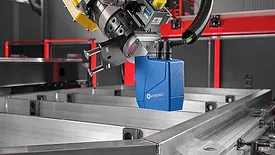
Integrated digital inspection ecosystems eliminate manual programming, accelerate reporting, and empower teams to act on live data before parts drift out of specification.
Speed and traceability are vital in fast-paced manufacturing. Automation and digital integration enhance inspection workflows by streamlining CMM programming, generating compliant reports, and enabling real-time quality monitoring.
Here are four factors that I believe we as an industry need to closely study, honestly evaluate our contributions to, and commit to work towards—today.
Here are four factors that I believe we as an industry need to study closely, honestly evaluate our contributions to, and commit to working towards today.
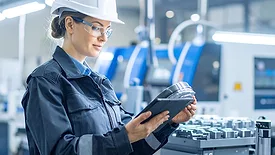
The medical device industry is evolving with AI and automation affecting production and quality management. Quality engineers are moving towards systems thinking and proactive decision-making, as AI becomes integral to production, presenting challenges and opportunities for innovation while ensuring safety.
It's not difficult to see the importance of studying and understanding cycles. There are many important cycles worth understanding, not just the so-called natural ones. These are important to success in our personal lives, in business, and in manufacturing.
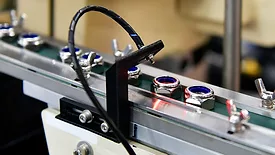
Most pipelines still rely on real data—thousands of expertly labeled images captured under every possible condition. A quiet revolution is transforming this approach. Instead of photographing every potential defect, we now generate realistic images on demand, guided by software that mimics human understanding at pixel level.
Students at Ohio State's capstone program have led successful projects with various sponsors in manufacturing, service, healthcare, non-profit, and education. These projects create win-win outcomes, with sponsors reinforcing students’ learning and students driving positive change.
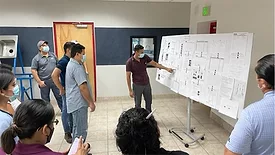
By creating the value stream map and overlaying each quality process, we were able to see missing data, key constraints, balance of labor, waste in each process and time constraints.
A quality auditor would be amazed if they saw your entire system from supplier to customer on one wall or in one big picture. Details and improvements are then easy to assess for planned actions. Quality stream mapping helps any organization.
This year Marlin Steel incorporated several autonomous machines that enable technicians to multi-task instead of being tied to a particular machine for the duration of the operation.
Small to medium manufacturers like Marlin Steel lead a shifting industrial landscape. While traditional large-scale production relied on economies of scale and centralization, modern companies focus on precision, customization, and sustainability.
 RSS
RSS