Vision & Sensors | Vision
Seeing What Isn’t There: How Synthetic Data Is Re-wiring Machine Vision for Quality
Synthetic data flips the script on machine vision.
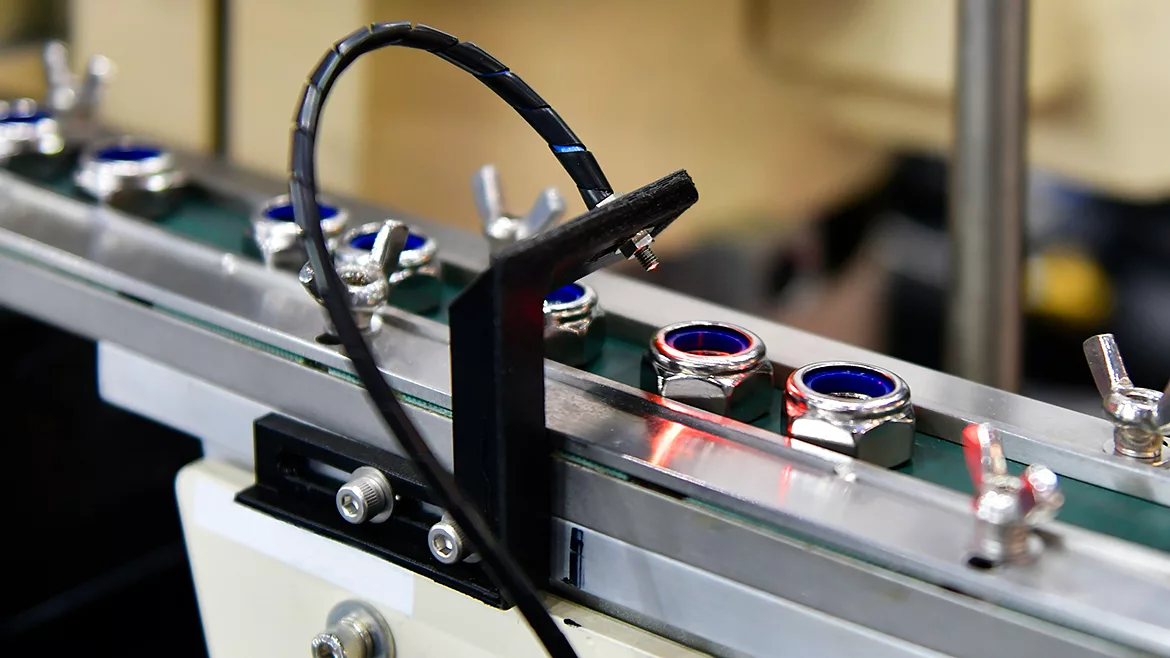
"We spent four months labelling photos and the algorithm still panicked when the lighting changed."
"One new variant pushed the defect rate through the roof—no one had images to retrain in time."
"Try explaining a hair-line scratch on shot-peened titanium to a camera."
If any of those laments sound familiar, you’re not alone. Vision systems have taken eyestrain, subjectivity and cycle time out of countless processes, yet engineers still whisper that their smart camera is the most temperamental operator on the line.
Why data-hungry vision stalls
Most pipelines are still addicted to real data—thousands of expertly labelled images captured under every conceivable condition. Whenever parts are non-uniform, volumes are small or designs change faster than the camera budget, that data diet dries up. The system sprints to about 80% accuracy, then stalls; each extra percentage point demands exponentially more images, time and staff.
The synthetic data flip
A quiet revolution is changing the equation. Instead of photographing every possible defect, we now generate lifelike images on demand, guided by software that mimics human comprehension at pixel precision. High-fidelity renderers—borrowed from film CGI and gaming engines, or purpose-built for industry—can simulate surface finish, scatter, glare, dust and geometry. Need a crack 327 µm wide viewed 14° off-axis? Click. Want 10,000 overspray examples by lunch? Press Render. Every pixel arrives with perfect ground-truth labels, so network training becomes almost push-button.
The impact is spreading—from aerospace composites to EV batteries, medical disposables and precast concrete. Fraunhofer Institutes are publishing open frameworks for photorealistic defect simulation, automotive Tier-1s are funding consortia to standardize synthetic datasets, and GPU vendors are baking real-time ray-tracing into industrial hardware expressly for data generation. Momentum is building, and quality professionals need to know what’s possible.
Learning like a human—only faster
Think of how you train a new inspector. You don’t show them a million photos; you walk them through a few carefully chosen examples, hand them the defect catalogue and let them watch an expert. They internalize the meaning of "scratch," "void" or "delamination" and can extrapolate. Synthetic data replicates that process digitally. A small, curated seed set establishes the semantics; the generator fills in the rest.
Where the approach shines
- Low-data scenarios Specialty lenses, turbine blades, implantables—rare but costly defects.
- Texture chaos Cast iron, sand-blasted concrete, carbon-fibre lay-ups—surfaces that defy laboratory uniformity.
- High variation Custom aesthetic panels, frequent design refreshes, agile production with endless SKU churn.
If your corrective-action reports include lines such as "we simply don’t have enough images," "we can’t possibly build new data sets every time," or "false positives make this unusable," synthetic data deserves a pilot. One aerospace-glass maker recently swapped its manual, variation-plagued checks for a synthetic-first vision loop; inspection time fell from 20 minutes to 20 seconds and first-pass yield climbed 5 percent—proof that the approach can tame even the most unpredictable parts while pushing real-time insights straight back to the line.
A three-step pipeline
- Seed wisely. Capture a small but representative set of images and tap the knowledge of your best QC engineer.
- Generate at scale. Let the renderer create tens of thousands of labelled variations and train the initial model.
- Keep humans in the loop. Operators review borderline calls; their edits feed back, spawning new synthetic edge cases overnight.
The strongest projects today train on roughly 95% synthetic data backed by 5% meticulously curated real images.
What’s coming next
Research labs are already tying large-language-model "agents" to the pipeline. A technician might soon type:
"Check these battery pouches for edge burrs over 50 µm and punctures >0.1 mm²." The agent will spin the required synthetic edge cases, train the model and return a validation report—in hours, not weeks.
Getting started
- Audit the pain Where are you burning hours on re-labelling or fighting drift?
- Pilot a single bottleneck Pick one step where scrap, rework or inspection time is monetized.
- Pair expertise Domain knowledge plus synthetic data generation wins.
- Measure both accuracy and economics Yield uplift, labor hours saved, floor space reclaimed.
- Scale only after success Expand cameras or product families once the first cell is stable.
Most teams know within 6–12 weeks whether a synthetic data-based vision system can earn its keep.
Conclusion
Synthetic data flips the script on machine vision: instead of praying (and paying) for more data, you generate exactly the ones you need. Institutes, OEMs and Tier-1 suppliers are industrializing the technique right now. For plants wrestling with high-mix, rough-surface or low-volume inspection, the payoff is already visible on the bottom line. And with conversational, agent-driven vision on the horizon, configuring an inspection cell may soon be as simple as briefing a new hire.
Looking for a reprint of this article?
From high-res PDFs to custom plaques, order your copy today!