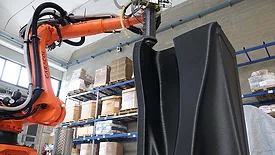
Large Format Additive Manufacturing (LFAM) is revolutionizing industries like aerospace and automotive by enabling the efficient production of complex parts with reduced waste. As its use expands in critical sectors, quality assurance must shift from a mere checkpoint to a comprehensive strategy that ensures reliability and builds trust in printed components.
Cloud-based digital color management solutions improve communication of colors between brands and suppliers. They integrate all phases of color management—from creation to production assessment—through a single, effective platform.
Color in manufacturing is essential for product integrity and consumer trust, going beyond visual appeal to require measurable consistency. Despite improvements in measurement tools, many manufacturers face challenges with color variation, leading to rework and approval delays.
PHILADELPHIA—Engineers at Drexel University have developed a benchtop tool that enables automakers and suppliers to get a better look at the electrochemical and mechanical functions of EV batteries.
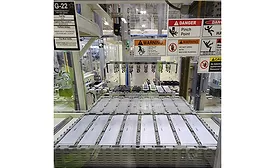
Many subcontract bureaus prioritize cost and delivery times over the essential need for high-quality output, hindering the adoption of Additive manufacturing (AM) for functional components. A shift in focus is needed, making quality a fundamental requirement for successful AM integration in production.
My editor at Quality asked for a piece on risk management for quality professionals, but I’ll focus instead on demonstrating value and profitability, sharing insights to help you thrive in the field.
How new tools—including 3D laser scanning and probing devices—can help the industry innovate and adapt in an increasingly competitive (and tariffed) world.
The future of manufacturing belongs to companies that can move faster, train smarter, and deliver consistent quality with fewer barriers to finished results. One key method of achieving this coveted four-way win is adopting portable 3D scanning and probing technologies.
Implementing X-Ray CT technology provides a pathway to increased efficiency by overcoming production bottlenecks, addressing issues related to a shortage of skilled labor, and navigating supply chain challenges.
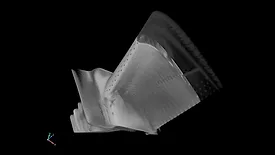
Advances in X-Ray computed tomography (CT) technology can enhance quality processes, improving inspection speed and accuracy, while the 3D data can help address industry challenges.