Industries like aerospace and automotive now require stringent quality assurance, focusing on proactive measures throughout the product lifecycle to ensure safety and continuous improvement.
Ibrahim Intabli had a passion for taking things apart and excelled in math and science, guided by a mentor in the field of engineering. While his path seemed typical for an engineering career, it took a twist when he returned to school in his thirties to earn a second degree in engineering.
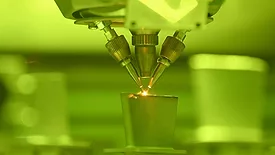
Traditional maintenance models in the aviation and aerospace industries often rely on costly part replacements with long lead times. New manufacturing technologies, especially additive manufacturing (AM) and Directed Energy Deposition (DED), are being reconsidered for repair applications.
Manufacturing Quality starts at the quoting stage, including quality costs. Don’t miss any critical requirements. It may be too late when you get the purchase order…
As CEO of GrowthHive, I assist manufacturers in overcoming growth challenges. Over the past decade, I've realized that requests for quotes on parts and assemblies increasingly involve tighter tolerances, extensive documentation, and difficult-to-spot “flow-down” requirements on 2D prints and 3D models.
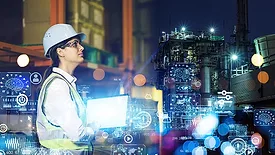
Manufacturing has long been crucial to innovation; however, a new technological revolution, driven by artificial intelligence and data solutions, is reshaping the industry.
Companies are turning to robotic automation for surface finishing tasks like sanding and polishing due to labor shortages. Advancements in AI enable robots to self-program and perform complex operations autonomously.
By “intelligent evolution,” I’m not talking about the simple adoption of automation and forms of machine learning, sort of a set-it-and-forget-it approach.
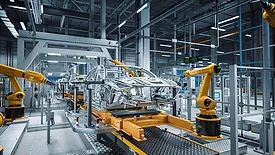
Manufacturing has evolved significantly with intelligent machines like robotics and automation working with humans. AI and predictive analytics help reduce equipment failures and optimize systems in real time, marking a major shift in traditional manufacturing practices toward a smarter future.
Muriel Magloire, a Level 2 NDT test inspector currently working in the energy sector, brings her career supporting the U.S. Navy through the Department of Defense, the private sector, and being a mom to a discussion of her article on the NDT worker shortage for Quality.
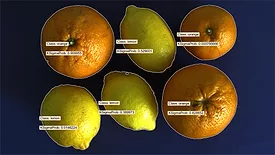
We define machine learning and explain how it works within machine vision, with a focus on where machine learning can be effectively applied to enhance inspection reliability and capability.
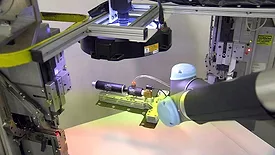
When you buy a cobot, you may have just one application in mind, but leading cobots are platforms for almost any number of quality applications - and not just quality applications.
I've noticed that operators and inspection workers often realize upon first meeting collaborative robots (cobots) that they aren't replacements for human labor. Instead, cobots signal a shift from traditional automation in quality and inspection, providing distinct advantages over traditional robots.
 RSS
RSS