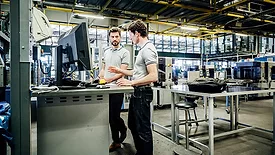
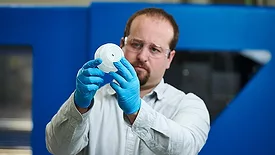
As demand for electric vehicles rises, the automotive industry must prioritize battery component quality. This article explores the critical role of how materials used in automotive battery manufacturing undergo rigorous mechanical testing to verify their quality and to maintain industry standards.
Atty Chakraborty, our 2025 Quality Rookie of the Year, discusses her work in the emerging field of AI in the medical industry, including examples, predictions for the future, and how it may apply in your work.
Does your organization need the world's first ISO/IEC 42001 Artificial Intelligence (AI) Management System? In a world now immersed in AI activities, the question could be rephrased as, "Can you afford not to use an AI management system?"
Jim Mayer, the Manufacturing Connector, explains how culture starts at the individual level, offers an example of culture from the world of F1 racing, and how the proposed ISO standards may include a cultural component as well.
The Egyptians utilized three cubits: natural, Elephantine, and sacred, with the sacred cubit being 1/400 of the pyramid of Cheops' base, linking it to nature. This system influenced many cultures, including the Hebrews and Greeks, and it has led to eight definitions of the meter.
Force measurement and material test systems, used for compression and tension testing, include a test stand, software, a load cell, and a fixture. This article guides the selection and specification of these systems.
Organizations must regularly update their ISO management systems to meet evolving standards and improve efficiency. Integrating multiple systems enhances compliance and supports strategic objectives. Our consulting and training services ensure clients maintain their systems proactively throughout the year.
I saw a discussion on building vs. buying Quality Management System (QMS) software. While many shared thoughts on specific products, few addressed the core decision between building or buying. Most agreed that available solutions didn’t fit their needs, revealing common issues in software acquisitions that start with this key choice.
Recent research shows significant manufacturing job deficits, particularly in Wyoming, while Illinois had many open roles but left 70% unfilled. This reflects a broader workforce shift post-pandemic, with millions retiring early and many changing jobs for better opportunities.
In 2025, medical device manufacturers are grappling with heightened regulatory uncertainty, leading to slower reviews and communication difficulties with the FDA. This situation drives them to reassess operations for compliance and risk management, with a strong emphasis on maintaining product quality, which is vital for patient safety.
 RSS
RSS