Quality assessments of parts often rely on a "yes" or "no" on a printed report, a "good" part versus "bad." However, advancements like 3D scanning allow engineers to visualize and analyze surface textures, revealing crucial insights beyond basic roughness values, which is vital for meeting increasing performance demands.
Periodic analysis in manufacturing is essential to avoid complacency and adopt the latest techniques. If corrective actions or improved training can reduce costs and enhance quality, it's time to make those investments.
America Makes, the National Additive Manufacturing Innovation Institute, recognizes the urgent need for education and workforce development initiatives.
The U.S. manufacturing supply chain faces challenges, especially for small- to medium-sized manufacturers (SMMs) in additive manufacturing. To tackle talent shortages, America Makes has partnered with organizations to develop education and workforce initiatives to enhance SMM capabilities and competitiveness.
Risk assessment is not a one-time exercise but a continuous cycle that must adapt to changes in organizational context, industry regulations, and emerging threats.
This article highlights the importance of risk management in Conformity Assessment Bodies (CABs). It discusses key principles and tools to help CABs identify and mitigate risks, enhancing resilience and assessment accuracy. Read one to see what practical insights are offered for integrating risk management into CAB operations.
Unlock the power of reflective self-talk to enhance your productivity and drive continuous improvement. Explore its benefits and discover practical strategies to integrate this transformative practice into your daily routine.
A vital shift is taking place in the workplace as we recognize the often-overlooked contributions of frontline team members. From warehouse workers to healthcare providers, their hard work is essential, reminding us that true quality starts with the people behind the results.
The search for a perfect match isn’t just for dating; it also applies to machine vision, where software accurately identifies objects in images. This technology enhances industrial processes by enabling safe robot handling, precise machining, and effective quality control. I’ll explore why matching is essential in machine vision and how to achieve it.
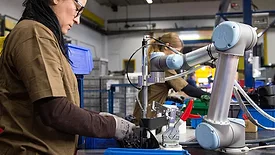
This article highlights how thoughtful automation can reduce variation, improve process stability, and support lean goals like flow and quality. When integrated within a lean framework, automation complements the human-centered philosophy of lean and enhances its effectiveness across the value stream.
High-speed machine vision technology, combining ultra high-speed imaging with advanced algorithms, is transforming industrial quality inspection by enhancing precision and efficiency. This article highlights its technical principles, applications, and development trends, as well as the challenges and breakthroughs in the field.
 RSS
RSS