Measurement
Handheld Gaging in the Digital Age: Balancing Cables, Wireless Transmitters and Data Driven Ambitions
Understanding the tradeoffs helps quality engineers pick the right setup for the job at hand.
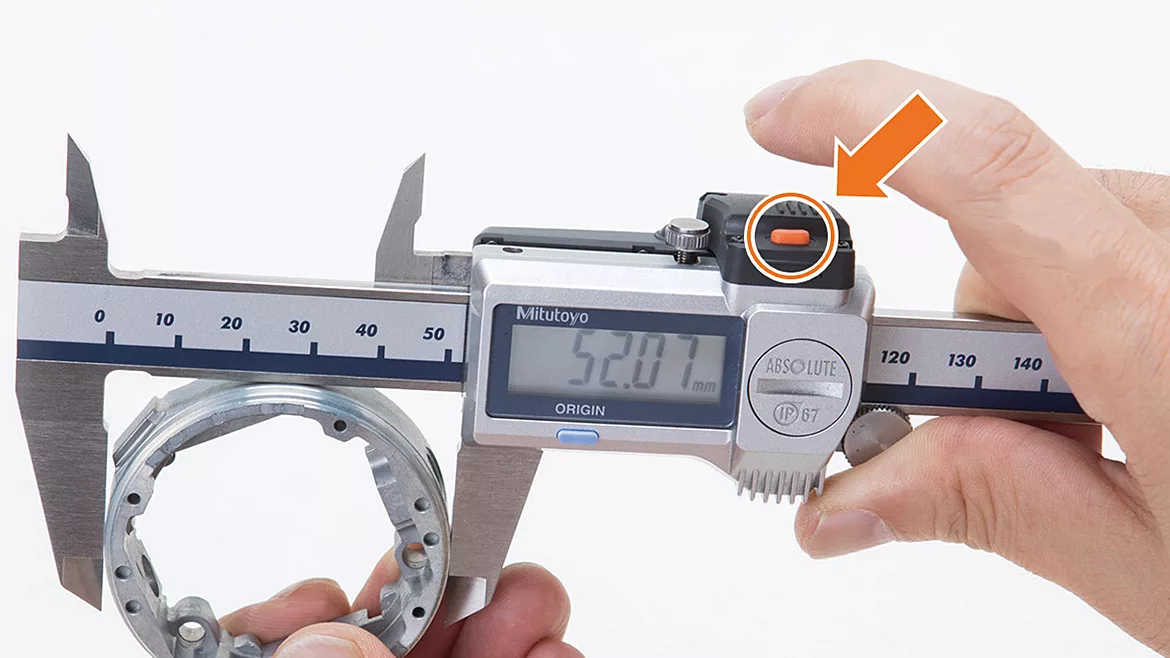
The greatest advantage of wireless data transfer is the elimination of cables and other equipment. A small, ergonomic transmitter on a micrometer or caliper can send measurement data to where you want and need it with a simple push of a button.
Handheld micrometers, calipers and indicators have been fixtures on manufacturing and shop floors for well over a century. Despite the increase in automated metrology cells, most manufacturers still lean heavily on these basic, yet important, hand measurement tools for routine inspections of part specifications.
The lasting appeal and subsequent use of hand measurement tools is no mystery as these precision instruments are relatively inexpensive, usually in stock, and intuitive enough for new operators to learn the basics in a short period of time. Today’s modern electronics let a pocket‑size micrometer resolve down to the millionths of an inch, a capability that once required far more resources and time in the past.
Yet a single measurement reading written on a clipboard does little for traceability, error reduction, or continuous improvement. The real value emerges when those numbers flow instantly and accurately into statistical process control (SPC) dashboards, part records, or enterprise databases. In practice, that means choosing between a simple cable and a wireless system. Each path has clear strengths, and neither is universally “better.” Understanding the tradeoffs helps quality engineers pick the right setup for the job at hand.
Cables: The Comfort of Certainty
A USB or RS‑232 cable delivers point‑to‑point communication that is practically immune to interference. Operators like the tangibility of a wire; supervisors like knowing a measurement can’t drift off into wireless limbo. Many protocols even allow software to push presets, calibration dates or tolerance tables back to the gage, so an entire fixture can be zeroed with one click. For stations that sit within arm’s reach of a PC and where a dangling cord will never snag on a part, nothing is cheaper, simpler, or more secure.
Cutting the Cord: Why Transmitters Win on the Move
Cables become liabilities the moment an operator must reach deep into a machine, swing a gage around a large component or wheel a cart between work cells. Short‑range Bluetooth or proprietary 2.4 GHz links remove that clutter, letting indicators or other small digital measurement instruments transmit readings without a bundle of cables. Early versions were plagued by drop‑outs, but today’s industrial transmitters use error‑checked packets; if a packet is corrupted, the transmitter simply refuses to confirm the send, so bad data never sneaks into the record. Typical range is still about ten meters in a metal‑rich environment, but proprietary “secure‑link” transmitters, a technology developed for military use, have doubled that by boosting power and hopping around congested channels.
Time savings pile up quickly. One automotive supplier that replaced clipboards with wireless input reported reclaiming several minutes per cycle, enough to free an extra machine every shift. Transcription errors, which are a harder cost to quantify, fell to virtually zero once humans stopped typing numbers copied from a dial face, a pattern echoed in multiple SPC case studies that tie automated data capture to measurable scrap reduction.
Security and the Push for Encryption
For most mid‑volume shops, the short range of Bluetooth is its own defense; an eavesdropper would need to stand on the production floor to sniff packets. High‑consequence sectors such as aerospace and defense take a stricter view, increasingly calling for link‑layer encryption and authenticated pairing. The U.S. National Institute of Standards and Technology (NIST) is finalizing guidelines that rank wireless options by latency, reliability, and security so integrators can document compliance as rigorously as they document gage R&R studies.
Counting the Dollars
When it comes to hardware, the cost is becoming less of a decision point. A basic wireless transmitter often lands within a few dollars of a USB cable or connection. Where wireless does add expense is usually when a dedicated receiver and long‑life battery pack are required. However, this premium is typically offset in the first few months by labor saved keying values and by the avoidance of bad parts quarantined on the strength of a fat‑fingered digit. In short, spend once on the transmitter or spend forever on avoidable rework.
Plugging into the Bigger Digital Picture
Whether the measurement values travel through copper or air, their destination is the same: data storage that can trigger alarms and track trends in charts. Once numbers arrive in real time, SPC software highlights drift long before it produces scrap, and advanced analytics can correlate subtle shifts across machines, materials, or shifts. Wireless tools accelerate Industry 4.0 ambitions because they can post directly to edge gateways without detouring through a human or a local PC, acting as true Internet‑of‑Things nodes.
Meanwhile, transmitter chipsets keep improving. Lower‑power silicon and energy‑harvesting schemes promise multi‑year battery life, and a new IEEE standard now in draft aims to formalize performance benchmarks, like latency, packet loss and coexistence, for “factory‑grade” wireless. Once those specs are ratified, expect handheld gages to gain fully bi‑directional control, letting technicians push presets or calibration reminders as easily as they download a playlist to earbuds.

Picking the Right Tool for Today
So which path fits your line? If operators never leave the workstation, batteries are a headache, and IT approvals for wireless could take months, run the cable and be done with it. If cords tangle on fixtures or faster cycle times is needed, go wireless and insist on documented packet integrity, battery‑life specs, and a migration path to encryption. In either case, it’s important to remember that a handheld gage’s real job no longer ends at the measured dimension; it begins when that number flows error‑free into the digital systems that keep machines producing parts and your customers happy. Whether you choose wired or wireless setups, either method can deliver a light-out data management strategy to make your manufacturing and quality processes more efficient and more powerful.
Looking for a reprint of this article?
From high-res PDFs to custom plaques, order your copy today!