Aerospace Measurement
The Wind Beneath Its Wings: Air Gaging in the Aerospace Industry
Next time you are above the clouds, remember the air gaging that helped get us there.
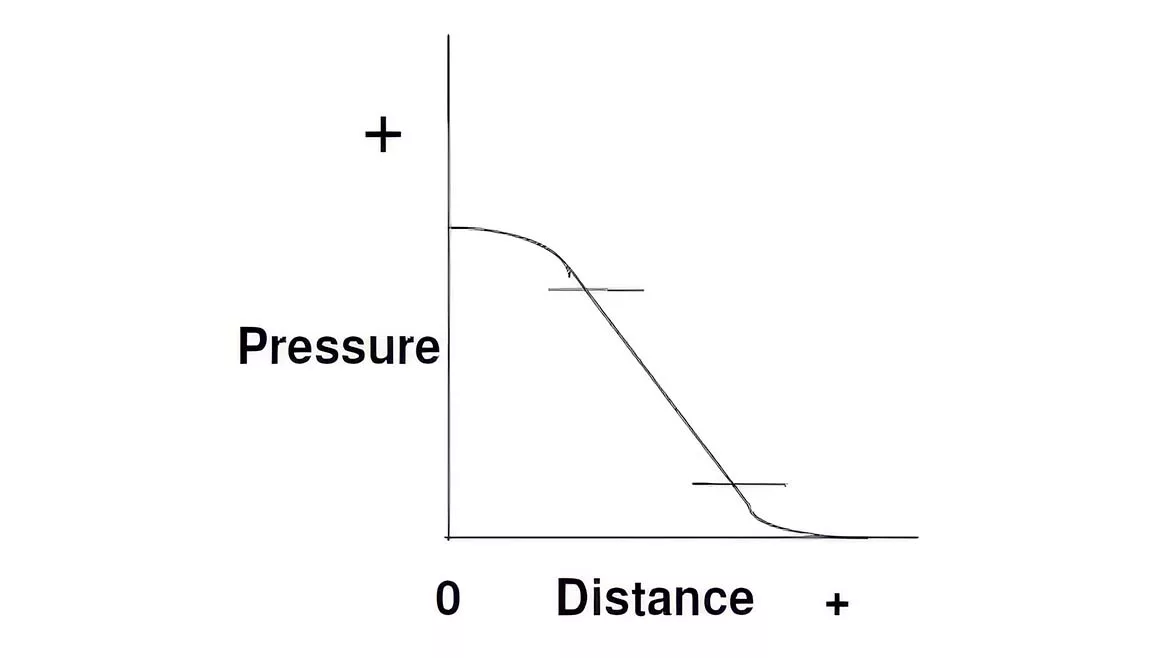
ID Polarity = D - to +, hole size increases as pressure decreases
(90% of air gage applications)
OD Polarity = D + to -, cylinder size decreases as pressure decreases
(10% of air gage applications)
The quality requirements for the aerospace industry are essential to human life, and any component used in the final craft is mission-critical for success. In that context, it may seem odd that a technology as old as air gaging is still a viable necessity for measuring aerospace components. However, its high-precision performance, along with simple gaging use, makes it an essential tool in any shop.
Air gaging provides manufacturers with accurate measurements in a manner that operators can easily obtain. Where tolerances fall under 0.001 inch (25um), precision must be 10x better or more. As tolerances increasingly become tighter, it is more common to see an air tool in use for measuring.
Application Versatility and Surface Integrity
Air gaging is practical for measuring bores, shafts, thickness, and even flow. Tools are typically made to measure specific features at specific locations, and the air tool does so with high precision. Tools can range from a simple cylindrical air plug to a complex square inverted width plug. Air rings and air snaps are available for OD applications, such as hubs or flanges.
Further, air gaging is a non-contact gaging method, so the surface of the part is properly represented in the measurement result. Since many of the components in use have highly controlled surfaces, air gaging is ideal for measuring without contacting those surfaces. Its self-cleaning feature also makes it ideal for point-of-manufacture inspection, ensuring reliable performance even when deployed directly alongside active machinery.
Mastering Methods: Single vs. Dual Mastering
At its core, air gaging is all about flow, or lack thereof, known as back pressure. It is purely a comparative measurement, meaning a minimum of one reference standard is required to qualify its value. Once set to a certified reference, all readings are now based on this value.
There are two methods of air gaging in practice: nominal master, commonly called “single mastering,” and min/max master, commonly called “dual mastering.” I am often asked which one is better to use. The answer is the one that best satisfies the application requirements. For example, if trying to make parts to a nominal size, then, statistically speaking, the accuracy of measurement required revolves around the nominal size. This is where single mastering is best used. However, if all I need is to know is that I’m within a passable range of sizes, then min/max mastering, often referred to as “Go/NoGo gaging,” may be the way to go.
These are the basic approaches, and the full requirements for each application should be reviewed before deciding which method to use. When the measuring span (or tolerance span) becomes so small (<0.0005”/7.5um), this is where worlds collide. The error in the air system becomes so small that either mastering method is sufficient.
A simple visual of this is based on the Pressure-Distance curve (below). The very center of the curve is “true pneumatic zero.” This is where nominal mastering systems live. By setting the air tooling and master reference combination to the central position on the curve, it is officially in the most linear part of the curve, where the error is well known. Single master systems are calibrated around the true zero position, thus ensuring both precise and accurate readings.
Air Gaging for Aerospace Applications
As stated above, 90% of air gaging applications measure bores or holes—virtually any kind of hole that can be manufactured. In aerospace, that means engine components such as blocks, rings, bearings, and housings, or control systems using actuators, pivot holes, and hinges. Landing gears and brake systems, as well as high-precision bolt mounting holes or fasteners, can also be measured. Hole measurement may further include tapers, straightness, and perpendicularity checks. It is not limited to holes or inside diameters (ID).
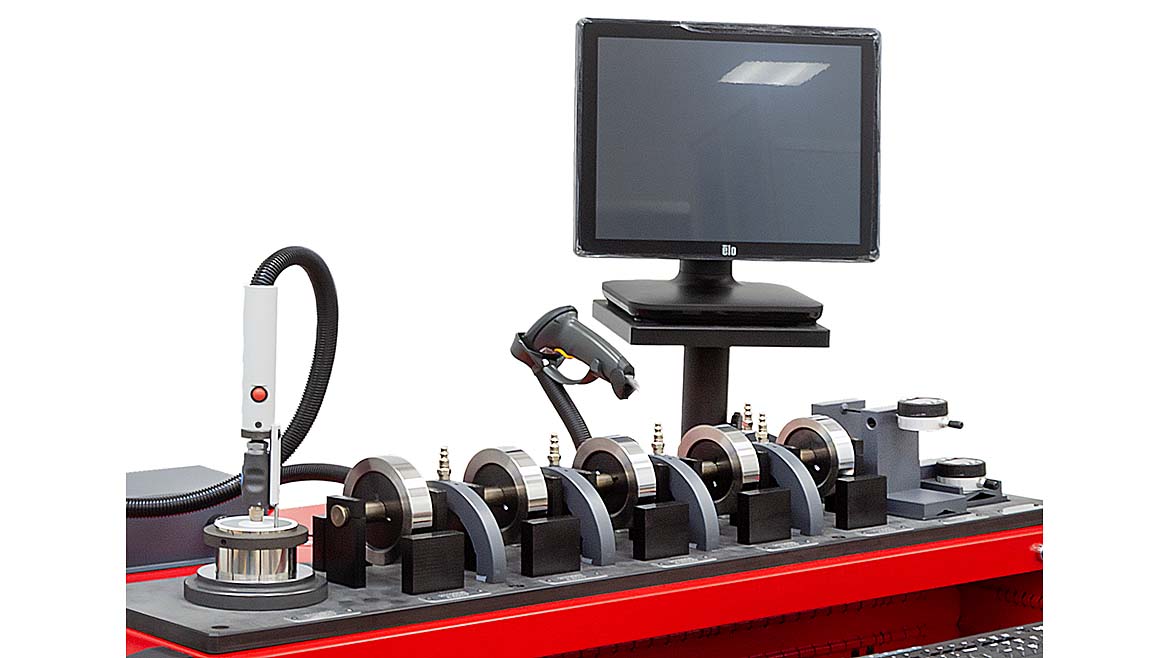
Source: Mahr
Some typical applications in aerospace that use air gaging include:
- Foil Thickness
- Rotor Hub Diameter(s)
- Sealing Rings (small and large)
- Bearings (ball, cylindrical, taper, roller, etc.)
- Shafts (steering linkage, axle, landing gear)
- Control Valve Body and Stems
- Brake Components (piston, rings, sealing surfaces)
- Valve Nozzle
- Mounts/Housings (multi-hole type components)
Air gaging, while dedicated to a feature, is also versatile: it can be used in both manual and automated applications, is ideally suited for unique parts and high-volume production, and is self-cleaning with well-maintained, clean, dry air. There are options as well for multi-diameter measurements within one air tool.
Outside diameter (OD) applications can measure shafts while still in the machine using air snaps, or inspect smaller shafts at the bench using an air ring. Thickness or width is another form of OD that can be measured by air gaging, either portable or benchtop, depending on the need. Using the combination of the two (ID & OD) can match mating parts for best-fit requirements as an assembly (as shown below). Typically, one part is measured by classification until it meets a clearance or fit requirement, and when paired, the assembly is established.
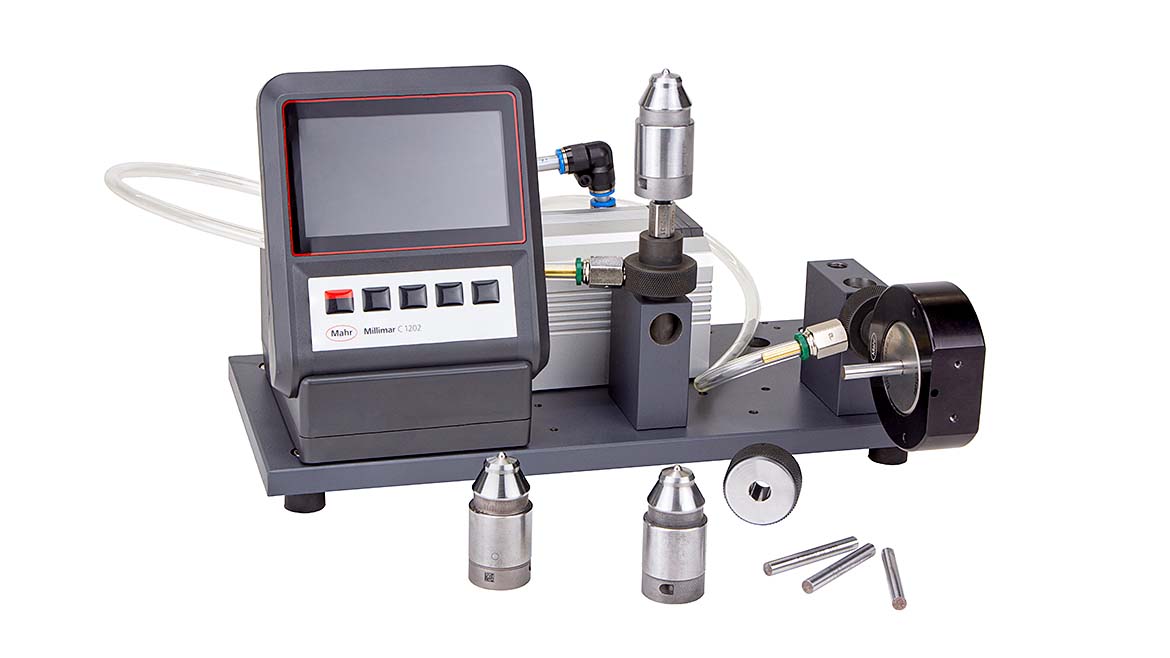
Source: Mahr
Evaluating Air Gaging for Your Operations
There are three words that best describe air gaging: quick, precise, and reliable.
- Quick – Efficient measurement control at or near the source of manufacture
- Precise – Precision as defined by the laws of physics
- Reliable – Proven performance across time, personnel, and high durability
When deciding whether air gaging is for your specific manufacturing operation, some practical questions include:
- Are my operators skilled enough to achieve repeatable data?
- Do I need quick checks while at the cutting machine?
- Is the feature a critical dimension requiring inspection, or can I achieve the precision needed by my process?
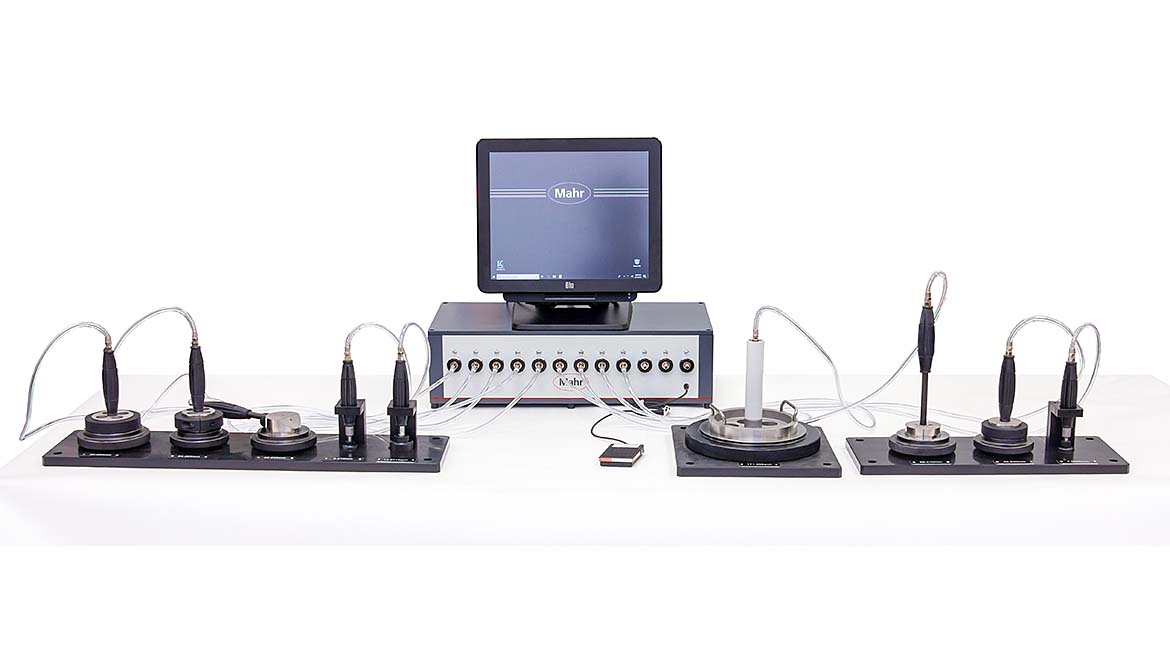
Source: Mahr
Like air gaging, this discussion could go on all day long. The best way to evaluate its impact is through your specific measurement challenges. Consult with an expert to determine the ideal configuration for your facility and ensure it is the right fit for your operations.
Next time you are above the clouds, remember the air gaging that helped get us there.
Looking for a reprint of this article?
From high-res PDFs to custom plaques, order your copy today!