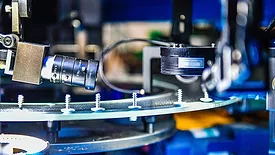
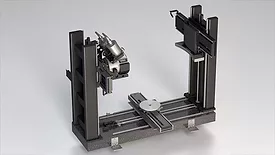
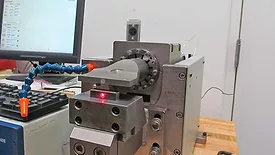
Challenges can arise after implementing a vision system, leading to frustration from inconsistent performance and hidden costs. Early planning and involving integration teams can help organizations fully leverage vision systems for quality improvement.
Used together, these technologies provide comprehensive coverage for complex applications, supporting traceability, audit readiness, and supply chain transparency.
In manufacturing and aerospace, ensuring material integrity is essential. Portable tools like handheld XRF and LIBS are streamlining certification with rapid, on-site analysis for better quality control.
Hyperspectral and multispectral imaging are transforming manufacturing by providing deeper material insights that enhance quality assurance, predictive maintenance, and safety. These technologies enable defect detection and equipment monitoring, allowing manufacturers to improve processes and reduce costs.
Configuration management refers to maintaining consistency in a product’s functionality, performance, and physical characteristics by managing its design, operational data, and requirements throughout its lifecycle.
The upcoming revision of ISO 10017: 2017 focuses on "Quality management — Guidelines for configuration management," aimed at maintaining consistency in a product’s functionality and characteristics throughout its lifecycle. The configuration management process includes five steps.
Dilip Shah has 45 years of experience in metrology and quality applications. He is president of E=MC3 Solutions and a fellow of ASQ. Michelle Bangert from Quality interviewed him about quality professionals' concerns.
Manufacturers and training providers are overhauling how they prepare nondestructive testing inspectors. New imaging technology, AI, simulation software and changing standards are reshaping training programs, while leaders are expanding their outreach and even changing their organizations’ internal cultures to attract and retain a new generation of inspectors.
Manufacturers and training providers are revamping nondestructive testing training with new technologies and standards, while leaders adapt outreach and culture to attract a new generation of inspectors.
QA/QC is essential in the automotive industry due to rapid product cycles and complex systems. Automakers must meet strict standards while enhancing quality, cost, and lead time, leading many to adopt advanced, data-driven approaches over traditional inspection methods.
Michael Mills, who writes for isoTracker QMS software, has been involved in quality systems in large and small companies for close to 30 years. He's a member of ASQ and ISO TC 76 and has audited to ISO 9001 since 1996. He's also written several articles for Quality. His latest is "The Seven Quality Management Principles."
Legacy systems in manufacturing lead to inefficiencies and quality risks, prompting companies to upgrade technology for tax savings. Evaluate your limitations, required infrastructure, necessary investments, manageable risks, and strategies for growth.
Manufacturing is swiftly adopting AI, with a 2024 survey indicating an increase from 59% to nearly total adoption in two years. A 2025 survey also shows 68% of manufacturers view AI as crucial for future competitiveness.
 RSS
RSS