Risk management has taken center stage in quality management, particularly with recent ISO updates. Organizations must recognize that risk encompasses both negative impacts and potential opportunities. By utilizing diverse analytical tools and effective brainstorming, businesses can navigate risks, minimizing downsides while capitalizing on growth opportunities.
Choosing the right tools and techniques is essential in manufacturing and quality control. This principle applies to language as well; our word choices influence responses. This was clear during a conversation at the ASQ Measurement Division event in Michigan this September.
Listen to the latest podcast with Sai Ranjith, a quality engineer with over eight years of experience in the medical device industry. He focuses on regulatory compliance and risk management. He has a Six Sigma green belt and is an ISO 13485:2016 Medical Device Auditor. He also serves as program chair for the Granite State Chapter of ASQ.
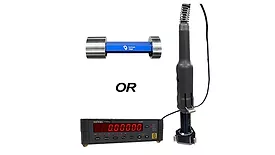
What should I be using to inspect an internal diameter (ID)? Should I use a Fixed Limit gage or some Variable gage? Is a Variable gage or a Fixed Limit gage more accurate? To answer these questions, we must begin with a few more clarifying questions.
Balancing technology significantly enhances the safety and efficiency of aerospace systems and machines. Properly balanced components reduce vibration, extend equipment life, and improve efficiency, evolving from manual processes to digital systems with real-time monitoring.
Successful Lean Six Sigma (LSS) deployment requires management leadership. Trained as LSS Champions, leaders sponsor and oversee projects, aligning them with strategic objectives and allocating resources.
Explaining control charts is difficult due to the unappealing terminology in quality management. Terms like “control charts” and “Statistical Process Control” can deter understanding. Alternative names like “process behavior charts” haven't improved appeal either. Given the popularity of user-friendly tracking on smart devices, there’s a need to rebrand these tools to make them more accessible and engaging.
AI is transforming manufacturing, with major companies enhancing quality and smaller firms like Composiflex Inc. reducing inventory and improving delivery through business intelligence. With 72% of manufacturers using AI reporting cost reductions and increased efficiency, these tools present essential growth opportunities in the face of evolving supply chain risks.
 RSS
RSS