In an ideal situation, every contaminant and raw material would have its own XRF and FTIR spectrum, which can be used to compare to unknown contaminants or incoming materials.
FTIR is the primary method for material and contaminant identification but lacks sensitivity to metallic components. X-ray fluorescence (XRF) can fill this gap and improve identification accuracy.
Fatigue testing has made significant progress in recent years, especially in test and environmental conditions. Remote monitoring has advanced with the use of AI-enabled camera systems, making it easier to integrate legacy instruments.
Selecting the correct LED lighting for machine vision can be challenging, even for experienced professionals. While red LEDs are commonly used, blue LEDs can be a superior choice for certain applications.
NDT certification is essential for professionals in industries where material and structural integrity is critical. It demonstrates expertise and professionalism, benefiting individuals and organizations by improving career prospects, quality control, and compliance with industry standards.
As high-energy systems become more powerful and AI-driven analysis becomes more sophisticated, CT will continue to play a crucial role in ensuring the safety, reliability, and performance of aerospace components.
X-ray CT is crucial for the aerospace industry, offering nondestructive insights into components' inner structure, aiding in defect detection, maintenance, and research. High-energy CT is advancing the technology, allowing for detailed imaging and shaping the industry.
Quality assurance (QA) meets artificial intelligence (AI). How can they coexist safely? Integrating AI into QA brings opportunities and risks, especially in safety-critical environments. Balancing rigorous standards and human oversight is crucial.
As industries increasingly adopt the principles of Industry 4.0, the need for reliable, real-time communication between sensors, actuators, and control systems becomes crucial.
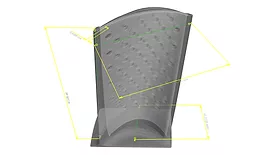
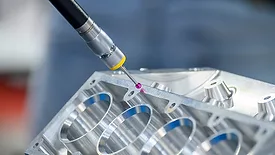
Coordinate measuring machines (CMMs) play a crucial role in verifying the dimensions of manufactured parts with precision control. CMM controllers are central to coordinating movements and processing data, driving technological advancements in the metrology industry.
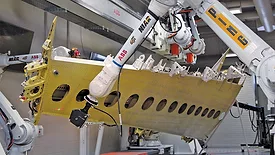
In modern manufacturing, it's crucial to validate parts immediately after manufacturing or assembly and detect defects before further processing. Automation in manufacturing has outpaced inspection processes, creating a challenge and opportunity for the metrology industry.