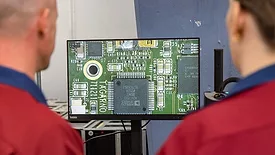
At some point in the creation of any product, whether it be plastic moldings, consumer electronics, or even welds on nuclear power plant steel, it undergoes magnified and optical visual inspection.
In manufacturing, microscopes and magnified viewing systems are crucial for inspecting products. Digital microscopes offer enhanced capabilities and AI-assisted inspections, revolutionizing the way manufacturers view and interact with macro and microscopic details.
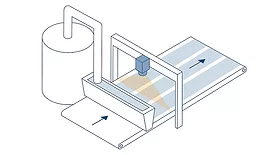
Backlit video metrology systems offer high-speed and precise inspection capabilities by analyzing digital part shadow images to determine feature position and size. Advancements in computing power and algorithms enhance precision, speed, and feature detection, while integration with part positioning systems allows for composite part images, rotating part profile examination, and rapid part sorting.
Today 3D optical profiling can provide an ever-growing range of measurements in medical devices, semiconductors, automotive production, aerospace, materials, machining, and more.
3D optical profiling, developed in the early 1990s, is crucial for high-resolution measurement of optics, semiconductors, medical devices, and precision machining. Recent developments have expanded its capabilities, allowing high-resolution surface texture measurements over many square millimeters in minutes.
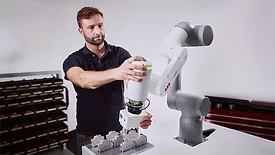
No robot can replace a person, but they can handle dull, dangerous, or repetitive tasks, freeing up employees for more fulfilling work. Businesses need to embrace robotics to efficiently adapt to production cycles and address supply chain backlogs and labor shortages.
In battery cell production, maintaining high quality and reducing material waste is crucial. Digital image processing and machine vision solutions enable reliable defect detection, ensuring the production of safe, high-quality battery cells for electric mobility.
The growing use of AI in manufacturing has revolutionized quality control. Traditional inspection methods struggle to keep pace with complex production processes, but AI augments accuracy and efficiency, upholding high-quality standards.
In real-world use, a material only needs to be as strong as necessary, with other properties such as lightness, manufacturability and sustainability influencing its selection.
When discussing material strength, a material only needs to be as strong as necessary. Other properties like lightness, manufacturability, and sustainability also matter. Paper can be the ideal choice with resourceful processing and innovative design, despite being seemingly weaker as a raw material.
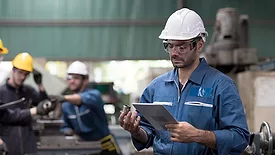
Manufacturing compliance goes beyond ticking boxes; it's about trust and excellence. Small manufacturers can navigate complex regulations by understanding compliance history, using technology, and implementing effective strategies for success.
Automation requires precise data and careful attention to uncertainty, especially in longer processes with less human involvement, according to Chris Gordon from Optronic Laboratories.
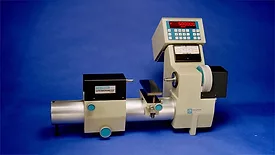
Making high-precision surface roughness, waviness, and profile measurements doesn’t always require that large system in the back corner of the manufacturing area.
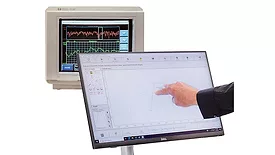
To simplify the interface, touchscreen monitors were integrated with metrology software. This eliminated dedicated controllers and made the system much easier to use, leading to the revolution of touch metrology. Today, touch technology and controllers are widespread on the manufacturing floor.