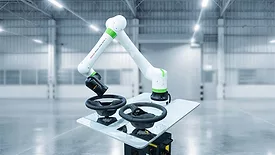
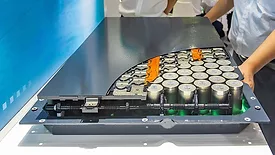
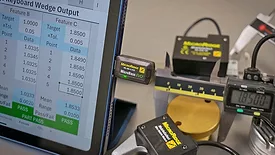
Check out the June 2026 edition of Quality! Read our cover story on Standardized Cobot Inspection. Also in this issue: features on Building Quality Systems, Scaling Battery Production, and much more!
Manufacturers today face a paradox: quality expectations continue to rise, yet the labor available to perform consistent, repeatable inspection continues to shrink.
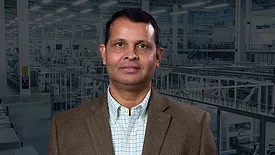
Mukesh Kumar discusses how high-stakes regulatory environments have shaped his approach to building resilient quality systems, and how AI and automation are now extending those capabilities across modern enterprise operations.
Mukesh Kumar, a SAP Premium Engagement Leader and enterprise transformation strategist, has spent more than two decades designing and delivering large-scale quality, compliance, and digital transformation programs across regulated industries.
Nearly 90% of material resources across the European Union are lost after their first use, highlighting how linear today’s manufacturing economy remains.
For an electric vehicle, probing and scanning play complementary roles to ensure that physical parts are aligned and maintained with the precision required.
For a seemingly unassuming U.S. state, known as much for its friendly, can-do residents and a passion for cherries (looking at you, Traverse City), Michigan has often punched above its weight. Both in terms of cultural and technological significance.
Like many professionals, my introduction to ASQ began with a very practical goal: certification. At the time, I was focused on strengthening my technical foundation and building credibility in the field of quality.
It’s called the principle of two weaknesses. It is a strategy in chess. It was developed by Grandmaster Aron Nimzowitsch and detailed in the book, “My System,” back in 1925 and still considered a core strategy in chess to this day.