Measurement
How 3DLaser Probing and Scanning Solutions are Helping Supercharge Michigan’s Electric Vehicle Manufacturing Market
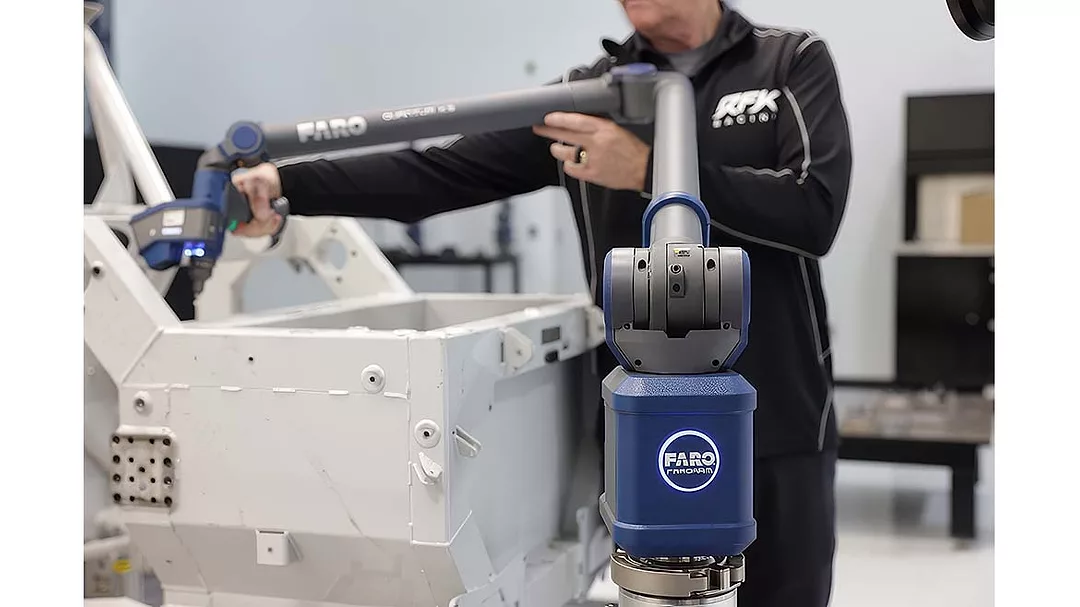
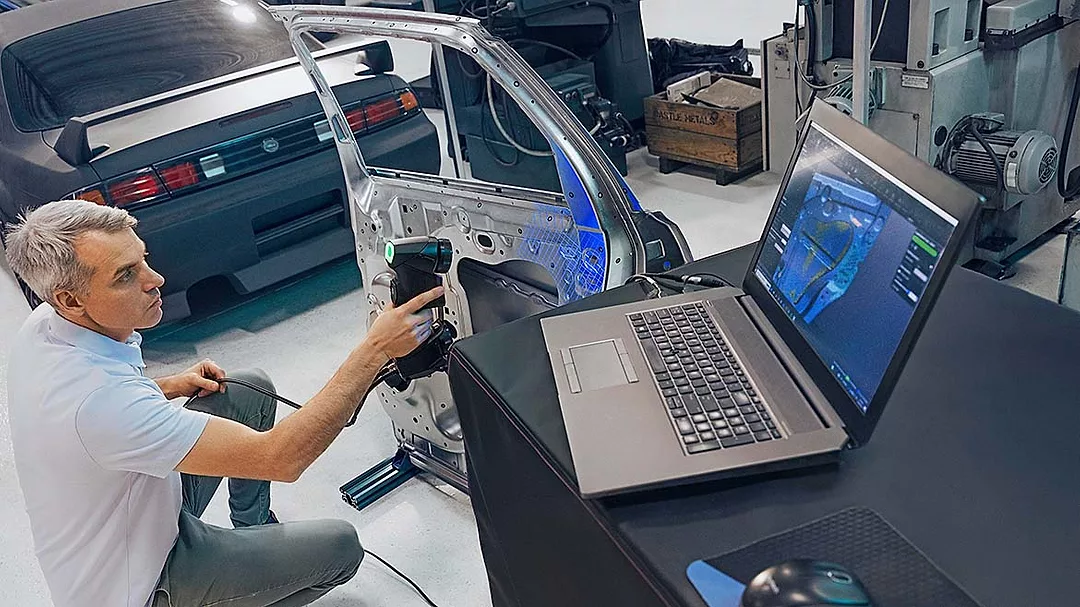
For an electric vehicle, probing and scanning play complementary roles to ensure that physical parts are aligned and maintained with the precision required.
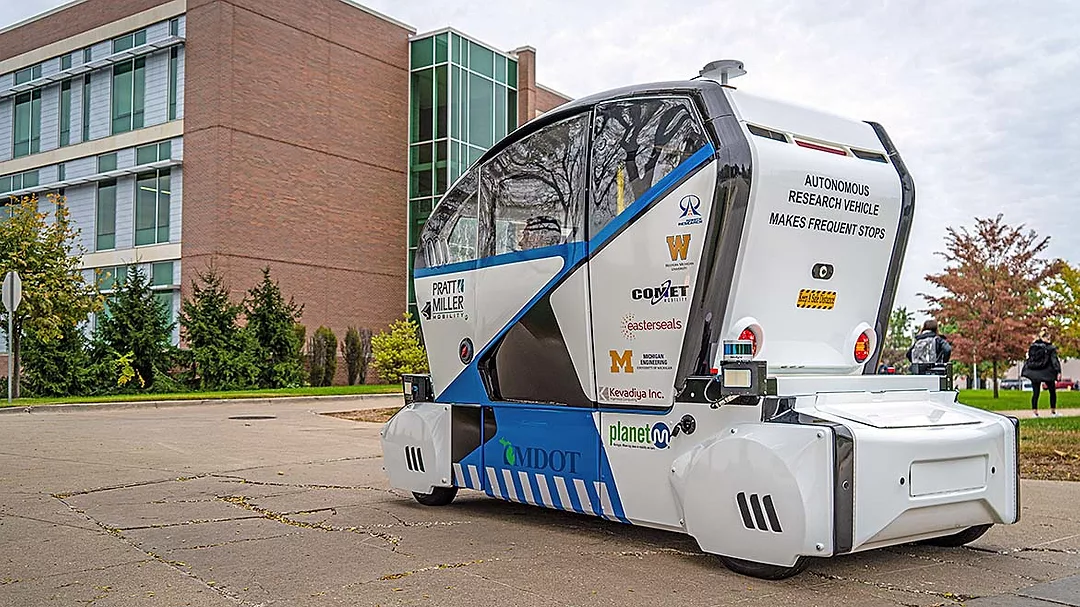
For a seemingly unassuming U.S. state, known as much for its friendly, can-do residents and a passion for cherries (looking at you, Traverse City), Michigan has often punched above its weight. Both in terms of cultural and technological significance.
From its data center devotees to its music industry moguls, today the state’s biggest venture might be in the manufacture of electric vehicles – a fact noted by the Michigan Economic Development Corporation on a state webpage dedicated to EV’s burgeoning growth:
“Michigan's vast electric vehicle ecosystem encompasses all facets from mobility and energy to infrastructure and battery development. Add that to the state's automotive heritage and manufacturing strength, and it’s no surprise Michigan is leading the next generation of transportation.”
The Future of EV Manufacturing, Today
Bold statements like this are more than Michigan government PR spin.
That’s because in 2020, Governor Whitmer created the Office of Future Mobility and Electrification and the Council on Future Mobility and Electrification. Its goal: to advance the state’s leading role in mobility and electrification, maximizing the public, private and nonprofit sectors to achieve those aims.
For purveyors of 3D laser scanning and probing equipment, the regional and national EV market is an opportunity to demonstrate the technology’s multifaceted worth, both from a quality control and inspection standpoint.
As solutions that save time and money? Yes. But also, as must-have tools ensuring that the mechanical components that constitute a modern vehicle (combustion or electric) are built to tolerance and assembled with tight tolerances modern manufacturing demands.
When to Scan? When to Probe?
Before addressing electric vehicles specifically, however, the question of when to probe and when to scan, is as fundamental as the technology itself.
While 3D laser measurement has become an essential part of modern manufacturing and inspection workflows, the reality is that choosing between one or the other isn’t always black and white. After all, probing is by no means a “new” invention. Mechanical probing, that is, physically touching a part to measure dimensional accuracy with gages, calipers or jigs, goes back centuries.
Each method excels under different conditions, and understanding their strengths helps ensure the right tool is applied to the right measurement challenge.
Probing Pluses
Probing is best when the goal is precise, discrete measurements of well-defined geometric features. Think: holes, edges, pins, and other critical inspection points where accuracy and repeatability are paramount.
Because probing establishes a direct physical contact point, it offers highly reliable results on prismatic parts and features governed by Geometric Dimensioning & Tolerancing (GD&T) requirements. Often this is the go-to choice in early alignment steps, functional checks, first-article inspections, and any scenario where the feature in question is small, sharply defined, or requires certified traceability. (Albeit, this is not always the case, as accuracy and repeatability often comes at the expense of speed.)
Probing also performs well on reflective, transparent, or highly challenging surfaces that might scatter or distort laser data. In environments where the measurement objects are stable and accessible, probing excels.
When the Plan is to Scan
On the other hand, scanning is preferred when capturing complex geometry, freeform surfaces, organic shapes, or large areas is the goal. A laser line probe (LLP), for example, can collect millions of points of data in seconds, making it ideal for reverse engineering, high-resolution surface analysis, or rapid inspection of castings, molded parts, or large assemblies.
Scanning is also useful when deviations must be visualized and inspected across entire surfaces as probing will be impractical and tediously slow.
Often, the most effective metrology strategies are a hybrid of the two. A workflow might begin with probing to establish accurate alignments, then transition to scanning for full surface evaluation.
Alternatively, probing might validate a selection of key features after a scan-based inspection, with the choice depending on the part, the tolerances, the inspection objective, and the production environment.
Probing/Scanning an Electric Vehicle
For an electric vehicle, probing and scanning play complementary roles to ensure that physical parts are aligned and maintained with the precision required for mass-produced consumer transport.
Probing is most valuable when technicians need to verify discrete, high-accuracy reference points tied to the structural and mechanical foundations of a facility. But when to probe or when to scan often breaks down on the part size in question. Examples include:
- Battery pack inspection: Can be a combination of the two. For deformation inspection, a handheld scan might be best.
- Battery pack fitting and mounting: This is where an arm would be ideal.
- Battery pack layouts: To ensure correct thermal management, channel geometries/simulations, heat-sink surface, scanning might be best.
- Heat-sink surface and geometry analysis: Best to use a handheld because of their excellent performance for free-flow surfaces.
- Housings/casing: For parts <500mm, an arm would be best.
- Vehicle interiors: While still in common with current combustion cars, most components are molded plastics and have organic shapes. Scanners excel at this and can even be brought into the vehicle to perform a complete scan of an assembled interior.
- Large panel/Body in White (BIW) Inspection: A BIW inspection is a critical automotive manufacturing process that verifies the dimensional accuracy, structural integrity, and welding quality of a car’s assembled sheet metal framework before painting. For these inspections, premium handheld solutions are best.
In the above examples, all must meet strict positional tolerances to ensure the final vehicle will come together properly while maintaining all the characteristics that customers care about.
Probing allows teams to capture the precise XYZ coordinates of these features, confirming that surfaces are level, anchor points are straight up and down, and structural elements align with design intent.
Scanning Characteristics to Consider
When considering a 3D laser scanner for metrology-grade applications, the most critical variables include accuracy needs, surface quality, environmental stability, and the integrity of both the measurement workflow and the resulting data.
- Step 1: First, accuracy requirements and scanner capability must be aligned: different scanners vary in resolution, volumetric accuracy, and noise performance, so the device must be chosen based on the tolerances and feature sizes being inspected.
- Step 2: Equally important is whether the surface is reflective, transparent, black and shiny, or made from high contrast materials, as that can distort laser returns. This in turn could necessitate surface preparation, matte spray, or adjusted scanning parameters to ensure stable data capture. (*Latest generation LLPs in part address these concerns.)
- Step 3: Scanner orientation and coverage also matter. Capturing the complete geometry with adequate overlap between passes ensures that point clouds can be registered reliably, reducing alignment drift and preventing missing or distorted regions.
- Step 4: Environmental factors play a major role as well. Temperature stability, vibration control, and lighting consistency help maintain precision, since scanners can be sensitive to thermal expansion, air currents, or ambient light interference. Proper fixturing and part stability are equally important. Motion, even subtle motion, can introduce deviations in the point cloud.
Finally, effective Scan-to-CAD comparison practices are necessary to interpret results, ensuring that the chosen deviation thresholds, color maps, and sections reflect meaningful dimensional insights rather than visual noise.
Ultimately, successful metrology-grade scanning depends on controlling environmental variables, choosing the right hardware and parameters, ensuring full and accurate coverage, and processing the data with disciplined, traceable methodology to produce reliable, high-confidence measurements.
A Word on Vendors
Selecting the right 3D metrology probing and scanning vendor requires evaluating not just the equipment they use, but the competency, repeatability, credibility, and support behind their work, as well as their longevity in the business.
The most important factor is technical competence. That means the vendor must use true metrology-grade equipment with proper calibration, documented accuracy, and traceability to recognized standards.
Equally critical is the team’s experience and international certifications, including GD&T proficiency and proven work on parts or assemblies.
Next, one must evaluate how comprehensive the vendor portfolio is. If vendors can provide both an articulated CMM and a handheld, the user will net significant benefits. They way, they deal with the same sales process and chances increase that both solutions are integrated into the same software environment, resulting in lower costs and easier learning curve.
Responsiveness and project management matter, too. Vendors should communicate proactively, meet deadlines, and have enough capacity to support urgent needs. A reputable provider will supply references, case studies, and industry-specific experience, demonstrating consistency across varied projects.
Last, there’s the need for post project support. That includes a company’s willingness to help interpret results, assist with process integration, or provide long-term hardware and software solutions upgrades and enhancements.
What Does this Mean for Michigan and Beyond?
For the proud state of Michigan and its car-loving, music-appreciating and cherry-consuming Michiganders, what this means is simple. While EV adoption in the U.S. has slowed, it is continuing to grow worldwide with EV sales forecasted to account for 43% percent of new vehicle sales in 2030.
Thus, billions of dollars remain at stake along with thousands of potential new jobs. (One-third of U.S. battery production and development takes place in Michigan, alone.)
Together this means Michigan and the Upper Midwest economy are poised for transformative growth, albeit with significant energy and infrastructure demands.
3D laser scanning and probing, seen not as competitor solutions, but rather part of a precision measurement ecosystem, where the tools’ distinct benefits can be maximized for multiple use cases, for electric vehicles and beyond, is where the future lies.
Not only in the Wolverine State. But throughout the U.S. and around the world.
Looking for a reprint of this article?
From high-res PDFs to custom plaques, order your copy today!


.webp?height=200&t=1782830367&width=200 "Automotive Manufacturing and Vehicle Assembly Production Line")

