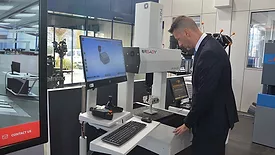
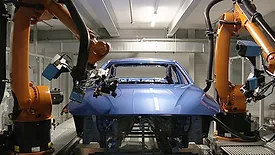
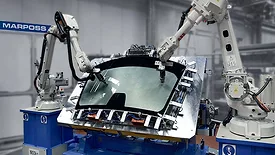
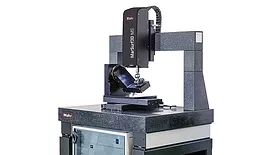
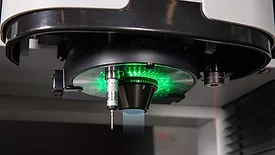
Coordinate measuring machines have traditionally been confined to controlled laboratory environments, where stable temperatures, minimal vibration, and clean conditions ensure optimal accuracy.
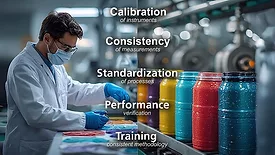
Consistent product quality requires a proactive and structured approach that extends beyond final inspection. Inconsistencies often arise early in the production process, well before the last quality control check.
In 1952, Mario Possati had the intuition that it was crucial to measure a component during its processing and, therefore, directly inside a machine tool.
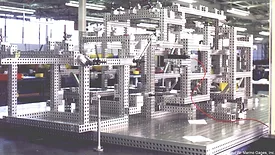
When asking a few of my favorite friends and colleagues about whether a CMM holding or checking fixture should be made by traditional welded base plates with common clamping methods versus a modular fixturing system, I tried very hard not to be “partisan” about the fixturing needs for manufacturing everything from rocket engines to automobiles.
Precision has long been the backbone of manufacturing. But today, precision alone no longer guarantees performance. As automation, artificial intelligence, and digital transformation redefine production systems, the science of measurement—metrology—is evolving at an unprecedented pace.
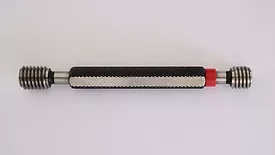
Thread and cylindrical gages are essential tools in precision manufacturing, playing a critical role in ensuring parts meet strict dimensional requirements.
The technology available to today’s modern manufacturers – allowing them to create complex parts quickly – is better than ever. Advancements in core production and fabrication equipment are seemingly endless.
 RSS
RSS