Measurement
Precision in Every Micron: Optical Surface Metrology in Medical Device Manufacturing
The optimal surface texture can reduce friction and wear, ultimately improving the performance and longevity of the manufactured device.
In medical device manufacturing, the difference between life-saving success and catastrophic failure is often measured in nanometers. One element that is increasingly important in the precision manufacturing of medical devices is surface texture, as it can significantly impact a component or product’s performance and functionality.
Surface texture can affect how a part fits, wears, accepts coatings, and more. For example, precise surface finishes are critical for parts that must fit together with tight tolerances, such as sealing, mating, or moving parts. The optimal surface texture can reduce friction and wear, ultimately improving the performance and longevity of the manufactured device. With the introduction of new processes and materials, and a more advanced understanding of coating, bonding, lubrication, and friction, surfaces also have an increasingly technical function, and surface structure becomes an increasingly vital element to ensure performance and longevity.
As a result, precise measurement of surface texture is crucial. As medical devices such as orthopedic implants and surgical tools become increasingly complex, the methods used to verify their surface integrity must evolve.
An Overview of Optical Surface Metrology
Proper analysis of engineered surfaces requires selecting the optimal measurement procedure. Surface finish measurement methods are generally divided into contact and noncontact. Contact methods include linear measurement (profile method). This measures roughness along a single line of the sample surface as the tip of a stylus traces across it, rising and falling to determine roughness measurements.
If the application requires a more detailed understanding of the surface structure, and information from a single profile is insufficient, 3D measurement devices offer new insights into surface structures and processing. Three-dimensional measurements can cover a larger surface sampling area to provide in-depth information about the structure/characteristics of a surface.
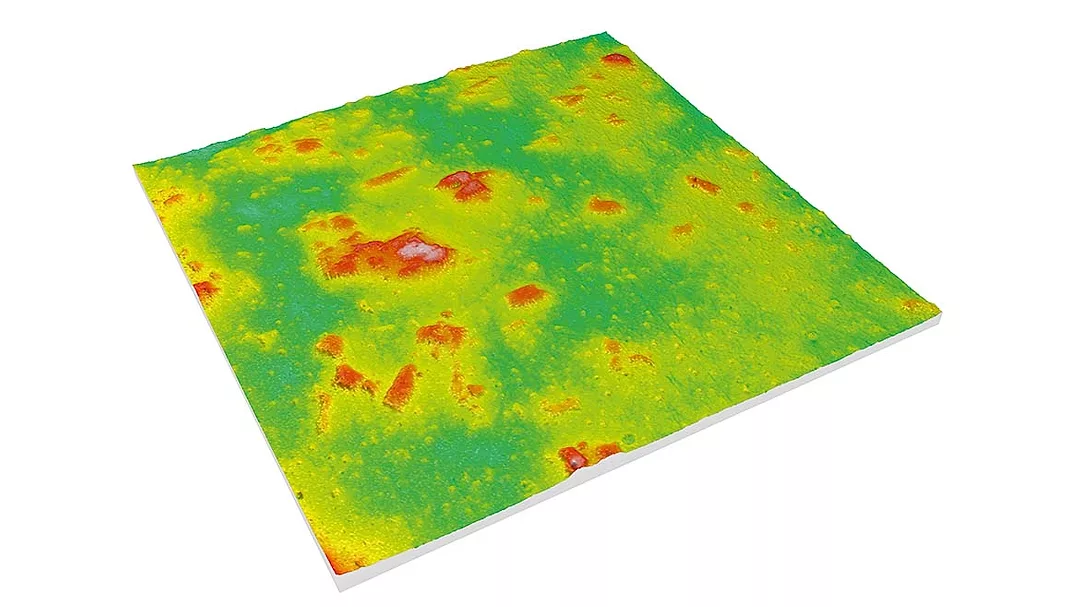
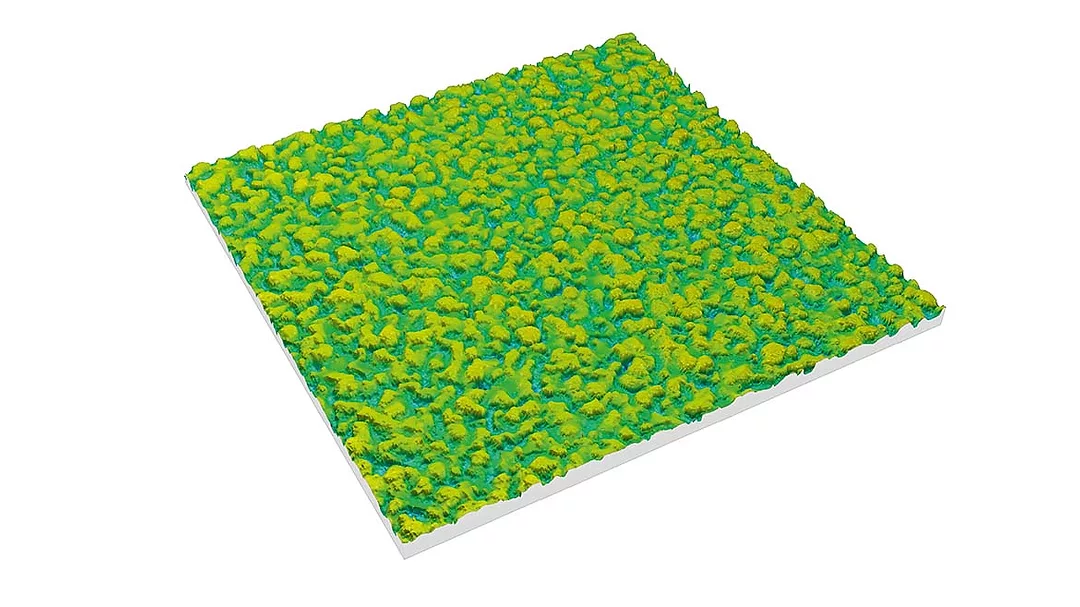
The leading noncontact methods use light (optical measurements) to acquire 3D surface data and characterize surface texture, roughness, and topography. Light emitted by a tool, such as a confocal microscope, is reflected to obtain the measurement without coming into contact with the sample. As a result, these systems do not harm the sample and can even measure very soft or viscous materials. Instead of dragging a physical diamond stylus across a part (contact metrology), optical systems use various light-based techniques to illuminate the surface, analyzing the characteristics of the reflected light to build a high-resolution 3D map.
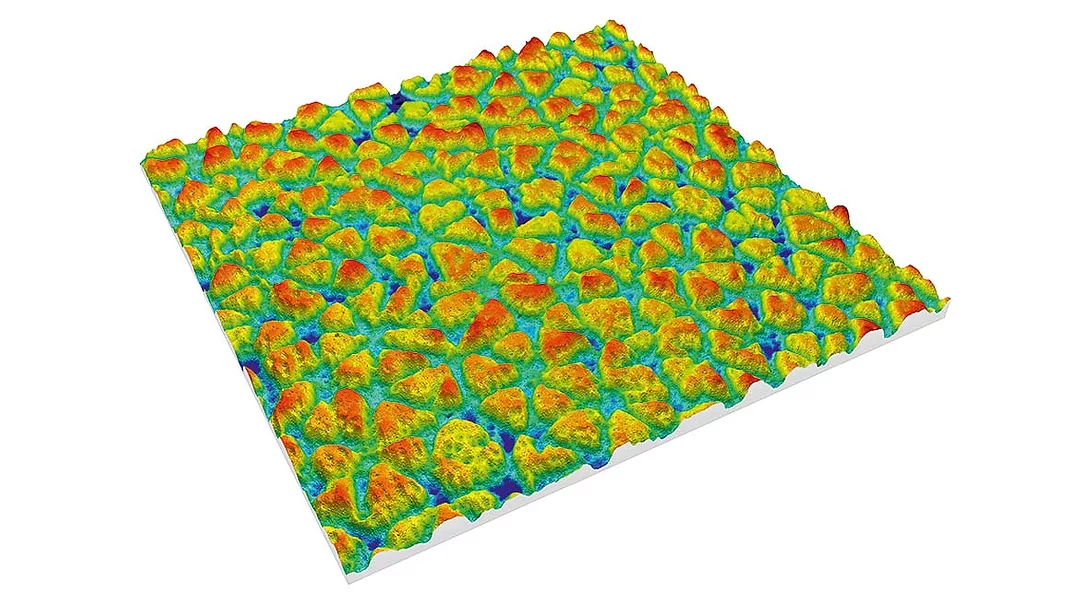
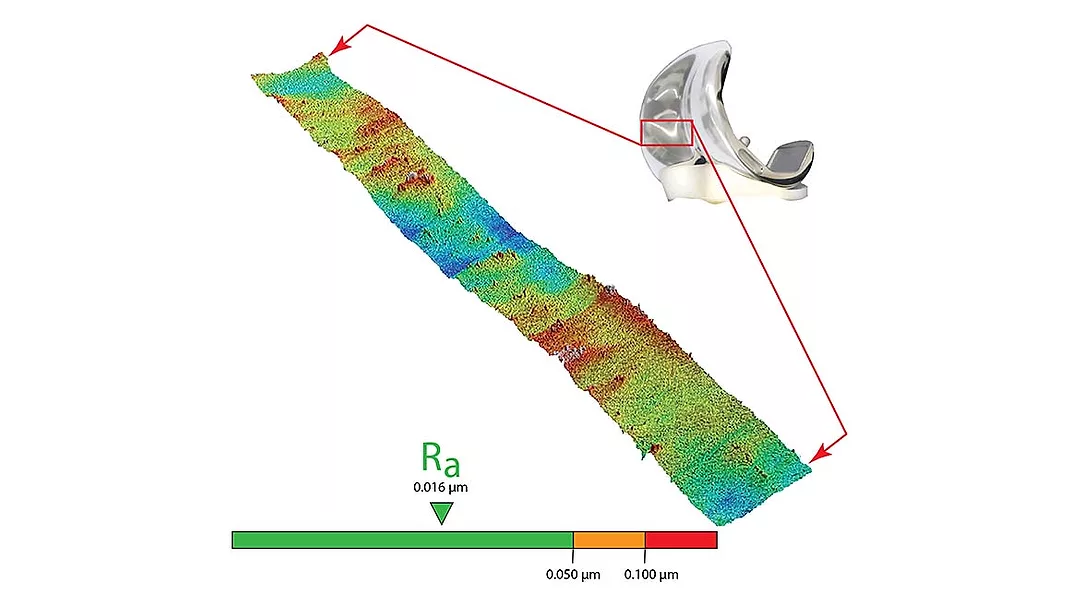
Optical 3D measurement is beneficial for a wider range of surfaces with a requirement to focus on functional structures, including protrusions or depressions. This technique produces a topographic map with highly detailed height information at every point in the measurement area, enabling an accurate representation of complex features. Furthermore, today’s 3D systems can provide micron- and nanometer-resolution measurements and acquire more detailed information on surface roughness, depth, volume, flatness, and more. The technique is particularly useful in the medical device industry, where surfaces often require precise measurement to ensure proper function and safety.
Various optical techniques are available, including white light interferometry (WLI), LED confocal microscopy, and focus variation, each with its own advantages:
-
White Light Interferometry (WLI): Ideal for extremely smooth surfaces requiring sub-nanometer vertical resolution.
-
LED Confocal Microscopy: Highly versatile, providing high lateral resolution and the ability to handle steep slopes and varying materials.
- Focus Variation (Focus Contrast): Excellent for measuring large areas and very rough surfaces with high vertical ranges.
Improvements in processing speeds and analysis software are driving increased demand for optical 3D metrology. Emerging trends include the development of new technologies, such as scattered light, and the increasing adoption of multi-sensor systems. Vibration-resistant LED confocal heads enable high-precision measurements in production environments, even in the presence of ambient vibrations or particles.
Applications of "Touchless" in Medical Device Manufacturing
Medical device manufacturing demands exceptional precision, as even the smallest defect can have significant consequences for patient safety. Optical surface metrology has emerged as a critical technology for ensuring that components meet stringent quality standards, offering noncontact, nondestructive measurement capabilities that enhance the quality and reliability of medical devices.
For medical device manufacturers, the “why” behind optical metrology is rooted in material sensitivity, functional performance, and traceability.
- Sensitive Surfaces: A dynamic surface, such as a femoral head, must be smooth and defect-free. Joint implants have very tight tolerances to move freely with very low friction. To accomplish this, some orthopedic implants have highly polished surfaces with a near-mirror finish. Many manufacturers are reluctant to use a profile measurement method on this type of surface as a physical stylus could leave a “scratch” that compromises the part’s biocompatibility or structural integrity.
- Complex Material Properties: Surfaces that are highly adhesive or soft can deform under the pressure of a contact probe, leading to inaccurate data.
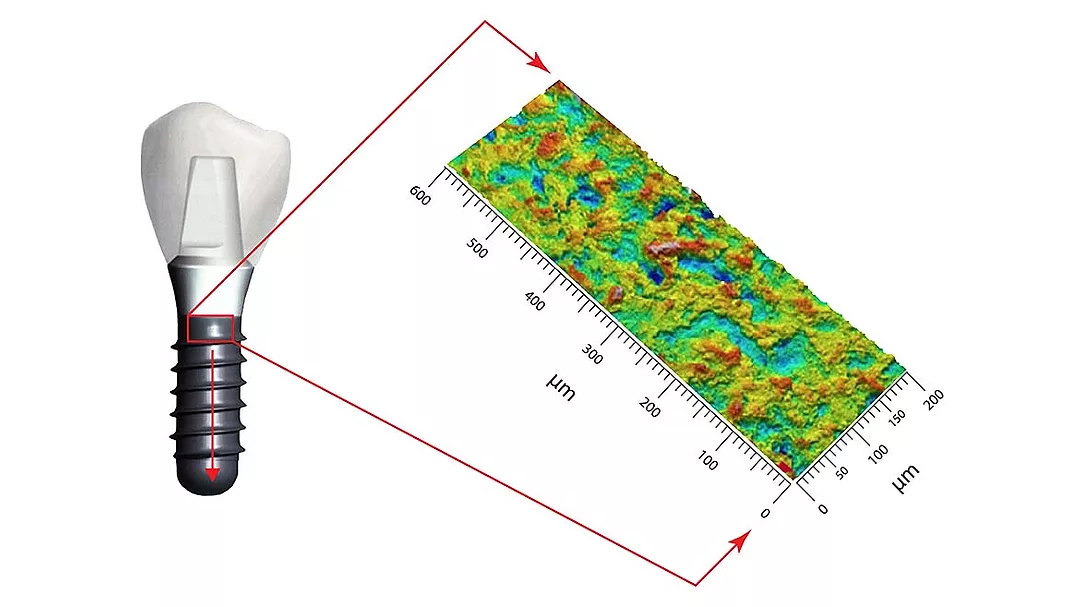
- Rough Surfaces: Surfaces designed to promote osseointegration (bone growth into an implant) require extremely rough, complex features for bone to adhere. In this type of orthopedic implant, how well that occurs depends on the surface roughness of the root portion, as it increases the overall surface area, enhancing implant stability.
-
High-Fidelity Data: Optical techniques provide millions of data points in seconds, offering a holistic view of the topography rather than a single linear trace.
- Traceability: Digital data collection aligns with established and evolving ISO standards to provide superior data tracking, enabling manufacturers to ensure an unbroken chain of measurement. This creates an audit trail essential for proving that surface texture measurements meet international benchmarks for safety and efficacy.
By using optical surface metrology, medical device manufacturers can ensure accurate, traceable measurements and improved product reliability.
A New Era of Flexibility: Multi-Sensor Solutions
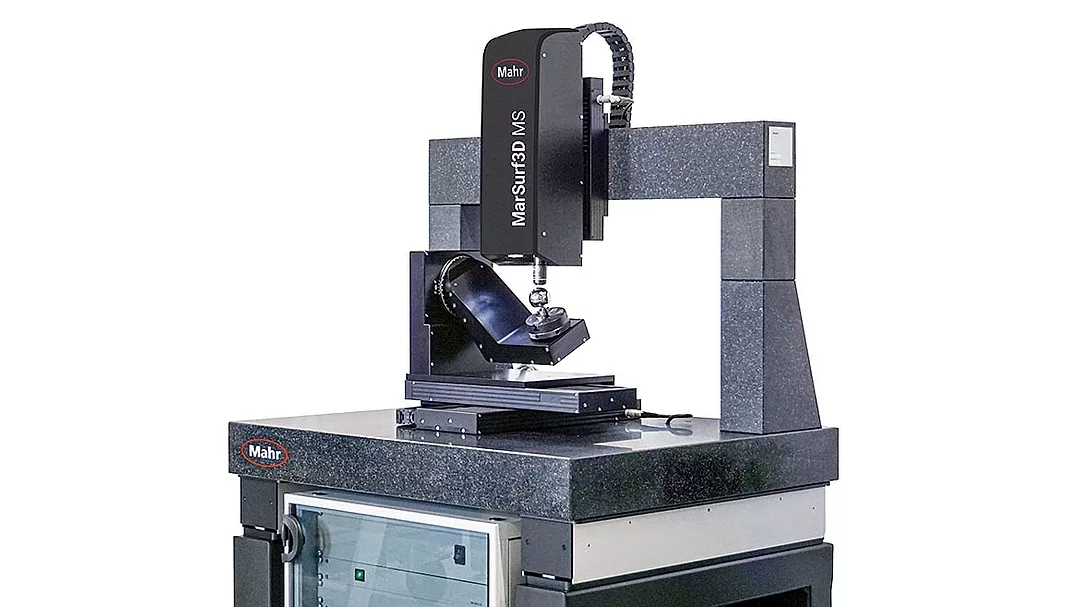
A significant trend in optical surface metrology is the shift from single-sensor tools to a new generation of multi-sensor, configurable tools that feature noncontact, five-axis motion-control positioning within a single system, enabling the combination of different measurement techniques in a single instrument.
These systems offer greater flexibility and versatility, serving as powerful tools for medical device manufacturers to measure a wide range of surfaces and materials with high accuracy and precision.
Innovative new multi-sensor approaches integrate five distinct sensor types:
- LED Confocal Microscopy
- White Light Interferometry (WLI)
- Multi-Sensor Trio: Combining Confocal, WLI, and Focus Variation in one head.
- Confocal Rastering Point
- Confocal Line
The Power of Integration: Hardware, Software, and Automation
By integrating various sensor types, such as LED confocal microscopy, white light interferometry (WLI), focus variation, and both confocal rastering point and line sensors, these systems can analyze surfaces more holistically. However, the sensor is only as good as the machine carrying it. True “surface fidelity,” representing the surface exactly as it physically exists, requires three pillars:
Hardware Integration
The integration of multiple sensors and peripheral hardware, including high-precision X, Y, and Z axes, and CNC motion control, ensures the sensor moves with absolute stability, enabling seamless measurement and analysis.
Software Intelligence
Effective software systems capture raw data from sensor measurements and translate it into actionable insights, enabling users to make informed decisions regarding quality and compliance. Modern software prioritizes usability for floor operators, providing results indicating whether parts are fit for use, thereby streamlining workflows.
Automation & Traceability
Automation removes user influence, ensuring consistent results and enhanced reproducibility even in complex environments. Automated processes also help ensure the correct areas are measured in hard-to-reach locations and that reliable data is generated. Automated measurement tools can enable the processing of an incredibly high volume of parts quickly, regardless of shape, size, or material type. This enables an operator to use time more efficiently without performing ongoing, tedious, or repetitive hand movements.
Full traceability back to NIST (National Institute of Standards and Technology) ensures that every micron measured is backed by international standards.
Use Case: Ensuring the Comfort and Efficacy of Surgical Implants
Orthopedic implants for hip replacements provide a clear example of the applicability of optical surface texture measurement. In this type of surgical implant, two components with different functional surfaces work together to recreate the ball-and-socket structure of the hip joint. This includes a dynamic surface, a femoral head, which can move, e.g., slide or rotate while in service. This type of implant has very tight tolerances and incorporates highly polished surfaces.
The second component, the femoral stem, requires extremely rough and complex features that bones can grow into and adhere to. How well the bone can do so depends on the surface roughness and the surface area available for bone growth.
By measuring surface texture, medical device manufacturers can ensure implants have the desired characteristics, such as smoothness, appropriate roughness, and optimal friction properties. These factors are crucial to the implant’s ability to articulate smoothly with surrounding tissues and to provide long-term stability and functionality.
Automation Success Story
A notable case involved a medical device manufacturer working on a knee implant application that utilized an automated five-axis LED confocal microscope to drastically reduce measurement time from 45 minutes to under 10 minutes per part. Of those 10 minutes, operator interaction was minimized to just 90 seconds. Because the operator-to-operator variance was virtually eliminated by CNC automation, the manufacturer was able to move from a rigorous process of manual engagement per part to inspect features, requiring 100% inspection, to a more efficient statistical process control (SPC) strategy.
The Importance of Choosing a Trusted Partner
When selecting an optical surface metrology system in complex industries such as medical devices, manufacturers should look for a partner that offers a broad range of measurement technologies and extensive expertise across both optical and stylus-based technologies.
A trusted partner doesn’t just sell a sensor; they also help develop a Standard Operating Procedure (SOP) designed to ensure optimized workflows tailored to specific manufacturing tasks.
Whether the surface is at single-digit nanometer resolution (requiring WLI) or a complex mix of titanium, ceramic, and polymers (requiring LED confocal), the goal is a validated workflow with a strong focus on traceability and compliance to ensure safety-critical products meet the highest standards of accuracy and reliability.
Conclusion
Optical surface metrology plays a crucial role in the medical device industry, offering noncontact, nondestructive measurement capabilities that ensure the precision, quality, and reliability of critical devices. Emerging multi-sensor technologies and automation are reshaping how measurements are obtained and analyzed, enabling medical device manufacturers to achieve higher throughput, greater traceability, and, ultimately, better patient outcomes.
By partnering with experienced, trusted metrology providers, manufacturers can enhance their processes and ensure the highest standards in medical device production. Ultimately, the right tools and expertise can lead to significant improvements in efficiency, compliance, and product reliability.
Looking for a reprint of this article?
From high-res PDFs to custom plaques, order your copy today!