Test & Inspection
Validating the Process: Why Test and Validation are Critical to Quality in MedTech Molding
When validation is treated as an investment rather than an obligation, it enhances both trust and performance.
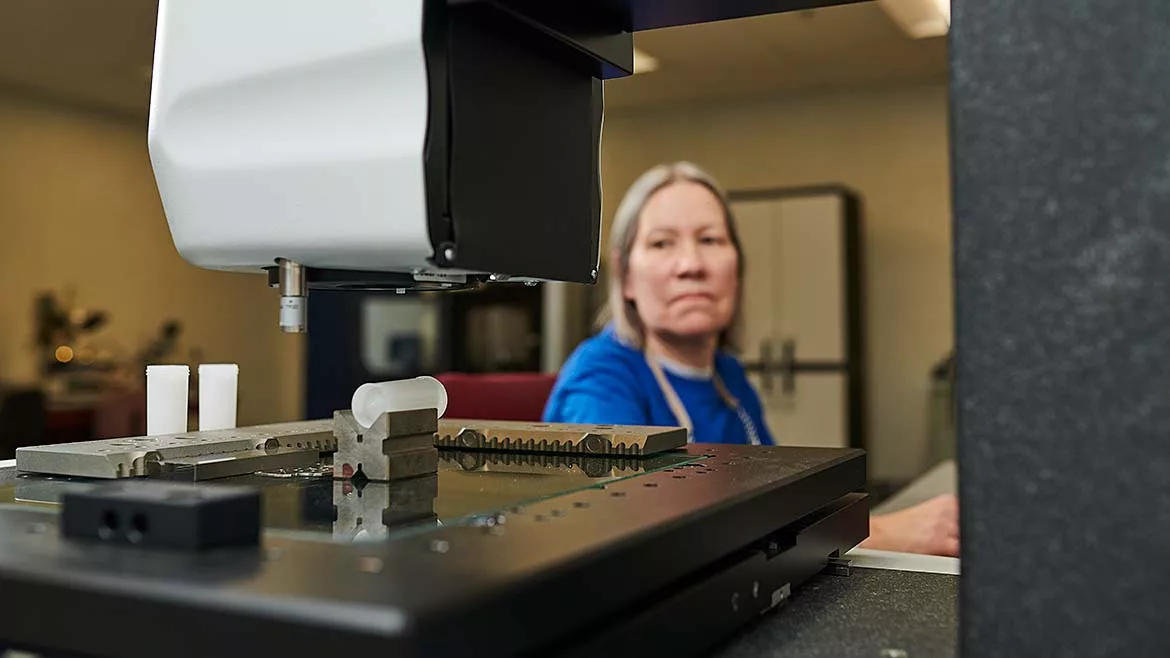
In medical device manufacturing, precision is not optional. Every molded component must meet exacting requirements for safety, reliability, and compliance. It is rarely possible to confirm those requirements through final inspection, as critical characteristics such as bonding strength and cure completeness often cannot be measured after molding. Validation therefore provides evidence that the process itself is capable of consistently producing parts that meet specification.
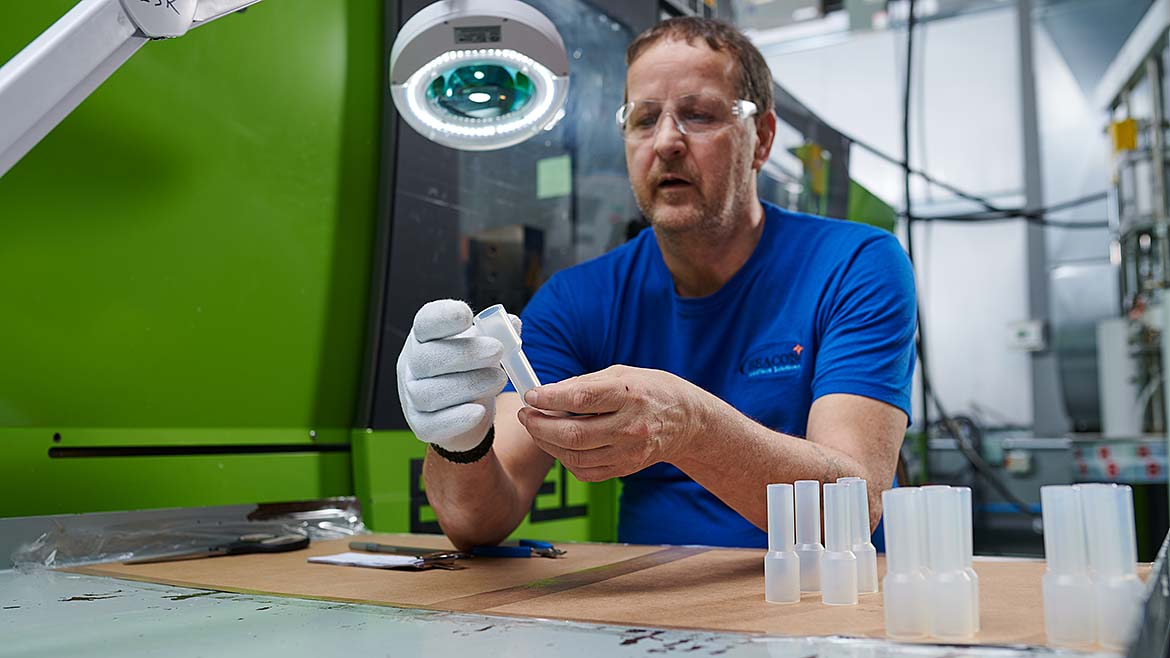
For medical devices, validation isn’t just good business practice; it is a requirement. As the FDA regulation and ISO 13485:2016 demand that where the results of a process cannot be fully verified by inspection and test, the process MUST be validated with a high degree of assurance.
In regulatory terms, that means quality must be built into the process rather than inspected once parts come off the press. Similar expectations apply to processes such as sterilization, welding and bonding, where hidden defects or shifts in material behavior may not be visible until products are already in use. For manufacturers, this classification reinforces that validation is not only a compliance requirement, but a safeguard for long-term performance and patient safety.
Regulators expect medical device manufacturers and contract manufacturing organizations (CMOs) to establish and maintain validated processes before release to production. This requires evidence that equipment, tooling and materials function together within limits defined by process capability studies and risk-based acceptance criteria. Validation becomes a living record of ongoing control, not a one-time event.
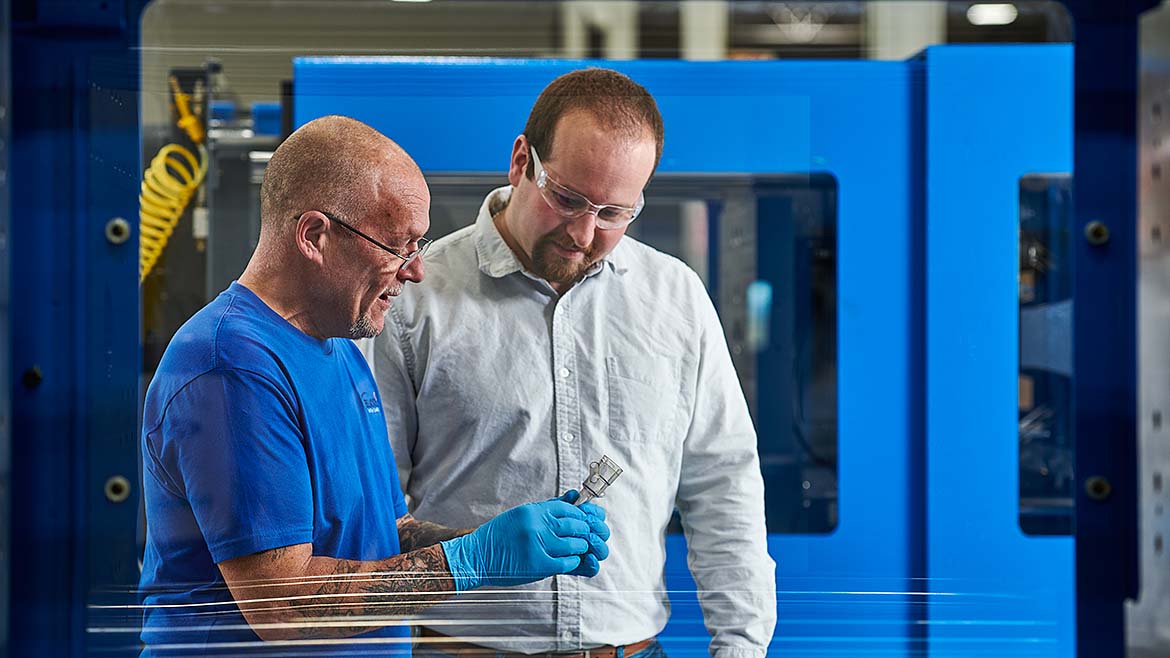
When a change occurs, such as new tooling, material or software, the process must be revalidated. Incomplete validation is a leading cause of audit findings, yet strong validation also improves efficiency by reducing scrap, downtime and rework.
How to Build a Validated Medical Manufacturing Process
A well-structured validation process is built from the foundation of IQ/OQ/PQ process validation. This follows three distinct stages: Installation Qualification (IQ), Operational Qualification (OQ) and Performance Qualification (PQ). Each phase works together to demonstrate process capability, consistency and preparedness for full-scale launch.
Installation Qualification (IQ)
IQ confirms that molding and auxiliary equipment are installed correctly and meet defined specifications. Documentation verifies that utilities, calibration, software and tooling setup conform to approved requirements. Establishing this baseline ensures the process begins with a known and controlled state, minimizing risk of equipment-related issues on product quality.
Experienced contract manufacturers support OEMs in this phase by maintaining installation records, calibration certificates and equipment qualifications that demonstrate their system(s) are ready for validation and compliant with regulatory requirements.
Operational Qualification (OQ)
OQ evaluates how the process performs across parameters such as temperature, pressure and cycle time. These are challenged at upper and lower limits to determine where the process maintains capability. Data from these trials define the acceptable range for routine production and establish the foundation for process monitoring.
During OQ, CMOs help OEMs characterize process limits and analyze variability across test conditions. Their data collection and statistical evaluations support the definition of stable operating parameters and tolerance windows that ensure consistent results during full production.
Performance Qualification (PQ)
PQ confirms that the validated parameters consistently produce acceptable parts under normal production conditions. This phase uses approved materials, trained operators and representative environmental conditions to verify long-term performance. Capability studies quantify the stability of key dimensions and attributes over multiple runs, demonstrating that the process is predictable and repeatable.
To further ensure reliability, dimensional inspections and capability studies verify that parts produced throughout validation remain within tolerance. Measurement systems analyses confirm that inspection tools provide sufficient resolution to detect meaningful variation. Together, these activities provide statistical evidence of control and confidence that your CMO will deliver repeatable results at scale.
Together, the IQ/OQ/PQ validation steps provide regulators and customers with statistical evidence of control. They also create a permanent record to guide future production and continuous improvement.
Avoiding Common Pitfalls
Even the strongest validation programs can struggle when seemingly small details are not considered. More often than not, it’s not the process that fails; it’s the documentation that supports it or assumptions made throughout the process.
True process control depends on solid data and disciplined execution. Understanding how materials behave, how measurements are taken and how scale up affects stability helps prevent the kind of issues that lead to costly rework and delays. OEMs can benefit from the experience of their CMOs in avoiding these pitfalls, which in practice comes down to clarity, consistency and a willingness to challenge assumptions before they become problems.
Statistical Credibility
Statistical credibility is a common gap. Validation depends on data that quantifies both short-term and long-term process capability. Sampling plans should be based on risk and tolerance stack-up, not convenience. Capability indices such as Cpk and Ppk demonstrate whether the process can consistently meet specifications with adequate margin. Without this justification, validation cannot withstand regulatory scrutiny or production variation.
Material Behavior
An understanding of how one material behaves often leads to incorrect assumptions when utilizing new materials. Validation for thermoplastics differs significantly from validation for liquid silicone rubber (LSR), for example. Thermoplastic molding focuses on controlling melt temperature, injection speed and cooling rate to prevent warpage, short shots or dimensional drift. Shrinkage must be thoroughly characterized because it influences tolerance stack-up across assemblies.
LSR molding presents its own complexities, involving the chemical process of curing and bonding, rather than thermal process concerns. Parameters such as cure time, material ratio and mold temperature directly affect durometer, bonding strength and dimensional stability. Validation must include detailed verification of these variables, often through thermal mapping and mixing accuracy studies. Ignoring these differences can lead to inconsistent part performance and costly requalification.
It’s also important to understand how materials interact, whether in a process like overmolding or later in assembly. The compatibility of surfaces, adhesives and cure cycles can affect adhesion strength, dimensional stability and long-term performance, all of which must be considered during validation.
Dimensional Control
Maintaining dimensional control is also part of sustaining any validated process. Measurement systems used in capability analysis must be qualified and repeatable so that data reflects true process variation, not inspection error. Consistent fixturing, calibration and environmental control ensure that validation results remain reliable over time.
Incomplete dimensional definition can also derail validation. For example, one program experienced setbacks due to the misalignment of mating parts after shrinkage distorted four screw hold positions. The drawings lacked defined locations and a clear datum structure, making accurate measurement impossible. Updating the prints with ANSI GD&T true position callouts and creating a focused inspection routine corrected alignment and enabled meaningful capability analysis. The issue showed how unclear dimensional data can compromise validation before production starts.
Scaling for Production
Scaling from prototype to production adds further risk. Larger molds, higher cavity counts or new materials can alter the thermal balance and pressure dynamics of the process. Treating scale-up as a distinct validation event ensures that all new conditions are evaluated and documented. Change control procedures must also specify when revalidation is required to confirm continued process stability and compliance.
Building Alignment Across Functions
Process validation succeeds when communication is strong between every team involved in the engineering and manufacturing process. Molding, tooling, metrology and quality groups contribute critical insights into how a process performs and how its capability is measured. When these functions work in silos, data gaps and delays can occur that complicate validation or mask the root causes of variation.
Companies that integrate engineering, metrology, molding and inspection under one roof often find it easier to maintain control and traceability throughout validation. Cross-functional collaboration streamlines information flow, reduces transfer error and ensures that process feedback is captured in real time. Whether within one facility or across partner sites, shared access to process data and clear documentation standards strengthen every stage of validation and simplify ongoing compliance.
Validation as a Continuous Quality Tool
Validation should not be viewed as a compliance milestone but as a continuous improvement framework. The data generated through validation feeds directly into statistical process control (SPC) systems, enabling real-time monitoring and early detection of variation. Over time, these insights inform tooling refinement, material optimization and design improvement. A validated process that is actively monitored becomes more efficient, more stable and more predictable.
When validation is treated as an investment rather than an obligation, it enhances both trust and performance. It provides manufacturers with a deeper understanding of their processes and ensures that every part produced meets its intended purpose. In medical molding, validation is the link between precision engineering and patient safety – a disciplined, data-driven approach that defines quality at its source.
Looking for a reprint of this article?
From high-res PDFs to custom plaques, order your copy today!