Quality Magazine logo
search
cart
facebook twitter linkedin youtube
  • Sign In
  • Create Account
  • Sign Out
  • My Account
Quality Magazine logo
  • NEWS
  • PRODUCTS
    • FEATURED PRODUCTS
    • SUBMIT YOUR PRODUCT
  • CHANNELS
    • AUTOMATION
    • MANAGEMENT
    • MEASUREMENT
    • NDT
    • QUALITY 101
    • SOFTWARE
    • TEST & INSPECTION
    • VISION & SENSORS
  • MARKETS
    • AEROSPACE
    • AUTOMOTIVE
    • ENERGY
    • GREEN MANUFACTURING
    • MEDICAL
  • MEDIA
    • A WORD ON QUALITY PUZZLE
    • EBOOK
    • PODCASTS
    • VIDEOS
    • WEBINARS
  • EVENTS
    • EVENT CALENDAR
    • IMTS
  • DIRECTORIES
    • BUYERS GUIDE >
      • Supplier Insights
    • NDT SOURCEBOOK
    • VISION & SENSORS
    • TAKE A TOUR
  • INFOCENTERS
    • Digital Quality Management Systems
    • NEXT GENERATION SPC & QUALITY ANALYTICS
  • AWARDS
    • ROOKIE OF THE YEAR
    • PLANT OF THE YEAR
    • PROFESSIONAL OF THE YEAR
  • MORE
    • Expert Columns
    • NEWSLETTERS
    • QUALITY STORE
    • INDUSTRY LINKS
    • SPONSOR INSIGHTS
  • EMAG
    • eMAGAZINE
    • ARCHIVES
    • CONTACT
    • ADVERTISE
  • SIGN UP!
The Quality Industry Voices Management

Guest Column | Travis Ellinger

Capability Study Showdown: 30-Piece vs. 125-Piece Explained

Why the 125-piece study provides improved accuracy and reliability in decision making.

By Travis Ellinger
A male warehouse worker wearing a safety uniform and a helmet inspects the quality of products with a laptop computer in a storage warehouse.
Image Source: Amorn Suriyan / iStock / Getty Images Plus
September 1, 2025
✕
Image in modal.

In the world of manufacturing and quality engineering, process capability studies are important tools used to determine whether a process can produce parts within specification limits consistently. Two common approaches when analyzing process capability include a 30-piece study and a more comprehensive 125-piece study. Both studies serve the same basic purpose, but they differ significantly in methodology, statistical power, and scope.

In this article, we will explore the background of each study type, and decision-making criteria for selecting the appropriate method. We will also look at why the 125-piece study provides improved accuracy and reliability in decision making.

Background and Purpose of Capability Studies

READ MORE

  • Control Charting Integration with Process Capability and Enhanced KPI Reports
  • Why Measurement System Analysis Student Capstone Projects Lead to Lasting Benefits
  • Building Trust: The Role of QA/QC and Specialized Inspections in High-Stakes Manufacturing

Process capability studies evaluate how well a manufacturing process meets specification limits by comparing the variability of the process output with design tolerances. Capability studies are typically performed using one of two statistics:

  • Cp/Cpk (Process Capability Index): Measures how centered and consistent the process is within the specification limits.
  • Pp/Ppk (Performance Capability Index): Similar to Cp/Cpk but includes long-term variation. This is useful for initial process evaluation.

The goals of capability studies include:

  • Verify that a process is stable and under statistical control.
  • Assess whether a process can reliably produce parts within specification limits.
  • Provide a statistical basis for continuous improvement or redesign.

30-Piece Capability Study: A Common Starting Point

The 30-piece capability study is widely used, especially early in the developmental stages or setup. It involves measuring 30 consecutive parts from a stable process and calculating basic statistics such as mean, range, and standard deviation. This is most often used when:

  • Time or resources are limited.
  • A rapid assessment of capability is needed.
  • The process is in its early development stages and under close monitoring.

Advantages:

  • Quick and cost-effective.
  • Requires minimal sampling effort.
  • Sufficient for preliminary or short-run validation.

Limitations:

  • Small sample size reduces statistical confidence.
  • Limited ability to detect variation trends (e.g., shift, drift, special causes).
  • Poor representation of long-term performance.

125-Piece Capability Study: 25 Subgroups of 5

A 125-piece capability study using 25 subgroups of 5 provides more accurate statistical insight. Each subgroup of 5 parts is collected over time (e.g., every hour, shift, or lot), capturing the process’s natural variation more effectively.

Advantages:

  • Higher statistical confidence due to increased sample size.
  • Subgrouping allows for calculation of within-group and between-group variation.
  • Enables more accurate estimates of process standard deviation.
  • More reliable detection of special cause variation.

Limitations:

  • More time-consuming and resource-intensive.
  • Requires a stable process over a longer period of time.
  • May be excessive for short-run or low-risk parts.

Comparison of Data Distributions

The histogram below shows the distribution difference between a 30-piece study and a 125-piece study. Both datasets are sampled from the same distribution (mean = 5, standard deviation = 1.5), but the larger sample size in the 125-piece study produces a more pronounced and representative distribution:

Graph: Distribution Comparison: 30-piece vs. 125-piece Capability Study
Image Source: Strategic Manufacturing Solutions

As shown, the 30-piece histogram is more irregular due to its limited sample size, whereas the 125-piece histogram better approximates a normal distribution, resulting in statistical conclusions that are more reliable.

Why the 125-Piece Study Produces Improved Results

The superiority of the 125-piece study comes from its statistical robustness:

  1. Improved Estimation of Standard Deviation: A larger sample size allows for more accurate estimates of standard deviation, which directly impact the accuracy of both the Cp and Cpk calculations.
  2. Improved Process Variability Detection: Subgrouping across different times (hours, shifts, etc.) captures both short-term and long-term variability, allowing the study to differentiate between common cause and special cause variation.
  3. Control Chart Utilization: The subgroup format enables the use of control charts, such as X-bar and R or X-bar and S charts, which are instrumental in monitoring process stability / drift over time.
  4. Greater Confidence for Decision Making: Capability studies enable critical decisions such as process qualification, production release, or need for corrective action. 125-piece studies reduce the risk of false conclusions.
  5. Customer and Industry Standards: Some customers in industries, such as automotive or aerospace, require 125-piece studies (or more) to meet quality standards. You can find these requirements defined in customer specific requirements for industry action group manuals like AIAG’s Statistical Process Control manual (AIAG, 2023).

Conclusion

Choosing between a 30-piece and a 125-piece capability study depends on the situation a manufacturer is dealing with, the criticality of the part, and the required confidence level. While a 30-piece study is valuable for quick assessments, 125-piece studies provide significantly more accurate and comprehensive understanding of a process’s capability. In quality-critical industries, where precision and reliability are paramount, the 125-piece capability study is a preferred and often required method.

By understanding the strengths and limitations of each approach, engineers and quality professionals can make informed decisions that balance time, cost, and statistical reliability to ensure the success of their manufacturing processes.

Works Cited

AIAG. Statistical Process Control (SPC) Manual. 2nd ed., Automotive Industry Action Group, 2023.

Montgomery, Douglas C. Introduction to Statistical Quality Control. 8th ed., Wiley, 2020.

Wheeler, Donald J. Understanding Variation: The Key to Managing Chaos. SPC Press, 2021

KEYWORDS: continuous improvement manufacturing process control quality quality professionals

Share This Story

Looking for a reprint of this article?
From high-res PDFs to custom plaques, order your copy today!

Travis ellinger author headshot 200x200

Travis Ellinger is the president and founder of Strategic Manufacturing Solutions. Having engaged with hundreds of manufacturing facilities over his career, he is a highly sought-after manufacturing consultant with extensive experience implementing strategic solutions that provide significant return on investment to his clients. Travis has 20 years of management and consulting experience and is an alumnus of Ford Motor Company, Lear Corporation, and Wilhelm Karmann GmbH. He brings a unique blend of strategy, business acumen, shop floor knowledge, and a deep understanding of people, organization, and culture. [email protected] 
linkedin.com/in/travisellinger

Recommended Content

JOIN TODAY
to unlock your recommendations.

Already have an account? Sign In

  • 2024 Quality Rookie of the Year Justin Wise 1440x750px banner with "Quality Rookie of the Year" logo inset

    Meet the 2024 Quality Rookie of the Year: Justin Wise

    Justin Wise is an exceptional individual who has been...
    Aerospace
    By: Michelle Bangert
  • Man with umbrella and coat stands outside while it rains at night looking at a building.

    Nondestructive Testing: Is there an ethics problem?

    I was a whistleblower who exposed fraudulent activities...
    NDT
    By: Dale Norwood
  • Unraveling Deflategate: Football stadium with closeup of football on field

    Unraveling the Tom Brady Deflategate

    The Deflategate scandal erupted following the 2014 AFC...
    Measurement
    By: Greg Cenker and Henry Zumbrun
Manage My Account
  • eMagazine Subscriptions
  • Newsletters
  • Online Registration
  • Subscription Customer Service
  • Manage My Preferences

More Videos

Sponsored Content

Sponsored Content is a special paid section where industry companies provide high quality, objective, non-commercial content around topics of interest to the Quality audience. All Sponsored Content is supplied by the advertising company and any opinions expressed in this article are those of the author and not necessarily reflect the views of Quality or its parent company, BNP Media. Interested in participating in our Sponsored Content section? Contact your local rep!

close
  • Key Takeaways for Quality Leaders
    Sponsored byComplianceQuest

    Key Takeaways for Quality Leaders from the 2026 Gartner Magic Quadrant™ for QMS

  • This image shows a person seated next to a Bobcat T66 compact track loader.
    Sponsored byPolyWorks by InnovMetric

    Supercharging Digital Gauging at Bobcat North America

  • Dorsey Calibration Lab photo by Tom LaBarbera Picture this Studios
    Sponsored byDorsey Metrology International

    Ensuring Product Quality in a Competitive Manufacturing Landscape

Popular Stories

This image shows a person seated next to a Bobcat T66 compact track loader.

Supercharging Digital Gauging at Bobcat North America

a professional in the aviation field performing maintenance, repair, and overhaul (MRO) work

Manufacturing Retention: Strategies for Improving Company Culture, Engagement and Skill Development

Dorsey Calibration Lab photo by Tom LaBarbera Picture this Studios

Ensuring Product Quality in a Competitive Manufacturing Landscape

2026 Quality Professional of the Year!

Events

June 22, 2026

Automate 2026

Automate is North America's largest robotics and automation event — and the best place to take your ideas from insight to impact.
 
Our show floor features the world’s leading automation solutions, from AI and robotics to motion control, vision systems, and more. Plus, our educational conference is second to none, led by the brightest minds in automation today.
 
Ready to transform the way you work? Take the next step at Automate.
July 14, 2026

Quality Leaders Forum: Better Communication, Better Quality Data

The Quality Leaders Forum is a quarterly, editor-moderated fireside chat series hosted by Quality Magazine, featuring candid conversations with senior manufacturing and operations executives shaping enterprise-level quality.

View All Submit An Event

Products

Lean Manufacturing and Service Fundamentals, Applications, and Case Studies

Lean Manufacturing and Service Fundamentals, Applications, and Case Studies

See More Products
Quality Podcast Channel Custom Content

Related Articles

  • Q-Cast Podcast with Travis-Ellinge 1170x658 feature article

    VIDEO PODCAST | The Right Capability Study

    See More
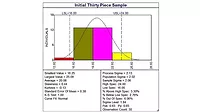
  • Initial Thirty-Piece Sample

    The Limits of the Thirty Piece Sample

    See More
  • NDT1124-FEAT-Test-p1-Image 1_Preparing VCI Film Strips for VIA Testing.jpg

    Corrosion Testing: An Important Piece of the Quality Assurance Puzzle

    See More

Related Products

See More Products
  • Single Piece Flow DVD

See More Products
×

Stay in the know with Quality’s comprehensive coverage of
the manufacturing and metrology industries.

Newsletters | Website | eMagazine

JOIN TODAY!
  • RESOURCES
    • Advertise
    • Contact Us
    • Directories
    • Manufacturing Division
    • Store
    • Want More
  • SIGN UP TODAY
    • Create Account
    • eMagazine
    • Newsletters
    • Customer Service
    • Manage Preferences
  • SERVICES
    • Marketing Services
    • Market Research
    • Reprints
    • List Rental
    • Survey/Respondent Access
  • STAY CONNECTED
    • LinkedIn
    • Facebook
    • YouTube
    • X (Twitter)
  • PRIVACY
    • PRIVACY POLICY
    • TERMS & CONDITIONS
    • DO NOT SELL MY PERSONAL INFORMATION
    • PRIVACY REQUEST
    • ACCESSIBILITY

Copyright ©2026. All Rights Reserved BNP Media, Inc. and BNP Media II, LLC.

Design, CMS, Hosting & Web Development :: ePublishing