Measurement
Implementing a Quality-First Process Control Strategy
From supplied materials to finished goods: Quality does not begin at the end of the line.
Consistent product quality requires a proactive and structured approach that extends beyond final inspection. Inconsistencies often arise early in the production process, well before the last quality control check. This article introduces a quality-first framework with checkpoints at every stage, including supplied material verification, in-process monitoring, and final inspection. It explores the differences between in-line and off-line quality control and guides manufacturers in selecting the appropriate method for each stage. Standardizing measurements and reducing subjectivity help manufacturers detect issues sooner, minimize waste, and deliver reliable, high-quality products.
1. The Importance of a Proactive Quality Strategy
A proactive quality strategy is essential for maintaining consistent, high-performing products. Quality must be built into every step of the process, not just at the end. Variability that begins early in production can easily move downstream, where it becomes more complicated and more expensive to correct. Designing processes that prevent issues rather than react to them helps eliminate these hidden risks before they escalate. Data plays a critical role in this approach, providing insights into trends, shifts, and root causes that might otherwise go unnoticed. When manufacturers rely solely on late-stage checks, they risk discovering flaws after materials have expired or products are already assembled, resulting in delays, scrap, and costly rework.
2. Supplied Material Quality Checks
All supplied material must adhere to strict quality control standards. These materials come from different suppliers that should be controlled to ensure consistency. Standard evaluation procedures and test methods must be established to meet the targets and tolerances for these products. Before production begins, materials must be verified against defined specifications to ensure they meet the performance requirements of the final product. Paint manufacturers are required to provide a certificate of analysis for all testing that ensures the final product quality. Part manufacturers provide data on color and appearance prior to shipping parts for final assembly of the product.
Equally important is the development of clear, measurable acceptance criteria. These criteria help operators make objective decisions about whether a material is suitable for use. By implementing structured incoming inspections, manufacturers can quickly identify and isolate nonconforming materials before they enter the production process. Incoming inspections prevent defects from being introduced early in the workflow, minimize waste, and protect the integrity of subsequent manufacturing steps. Ultimately, rigorous raw material checks ensure that quality begins at the very first stage of production.
3. In-Process Quality Monitoring
Environmental conditions, including temperature, humidity, viscosity, and various application parameters, are monitored throughout the process. Adjusting these conditions in real-time will help maintain a consistent film build but does not automatically guarantee that all decorative specifications are met.
Therefore, it is necessary to use instrumentation to verify specifications are met for color, appearance, and film build. Regardless of the product being produced, it is highly recommended that an organized measurement sequence be developed and followed by all operators. This organized data gathering method should include precise locations and orientations of the instrumentation. This is important because some instrumentation may be sensitive to measurement direction, and it is essential that data gathering is done consistently every time.
When organizing the data gathering method, it is important to include measurements of critical control points, or where parts meet. This may consist of parts that are painted on different lines or processes. It is in these vital areas that color and appearance harmony have the greatest chance to differ and impact the overall perception of quality. When performing data analysis, it is advantageous to have all measurements labeled to provide the ability to sort and compare. For example, comparison between match to standard, measurement locations or harmony match points.
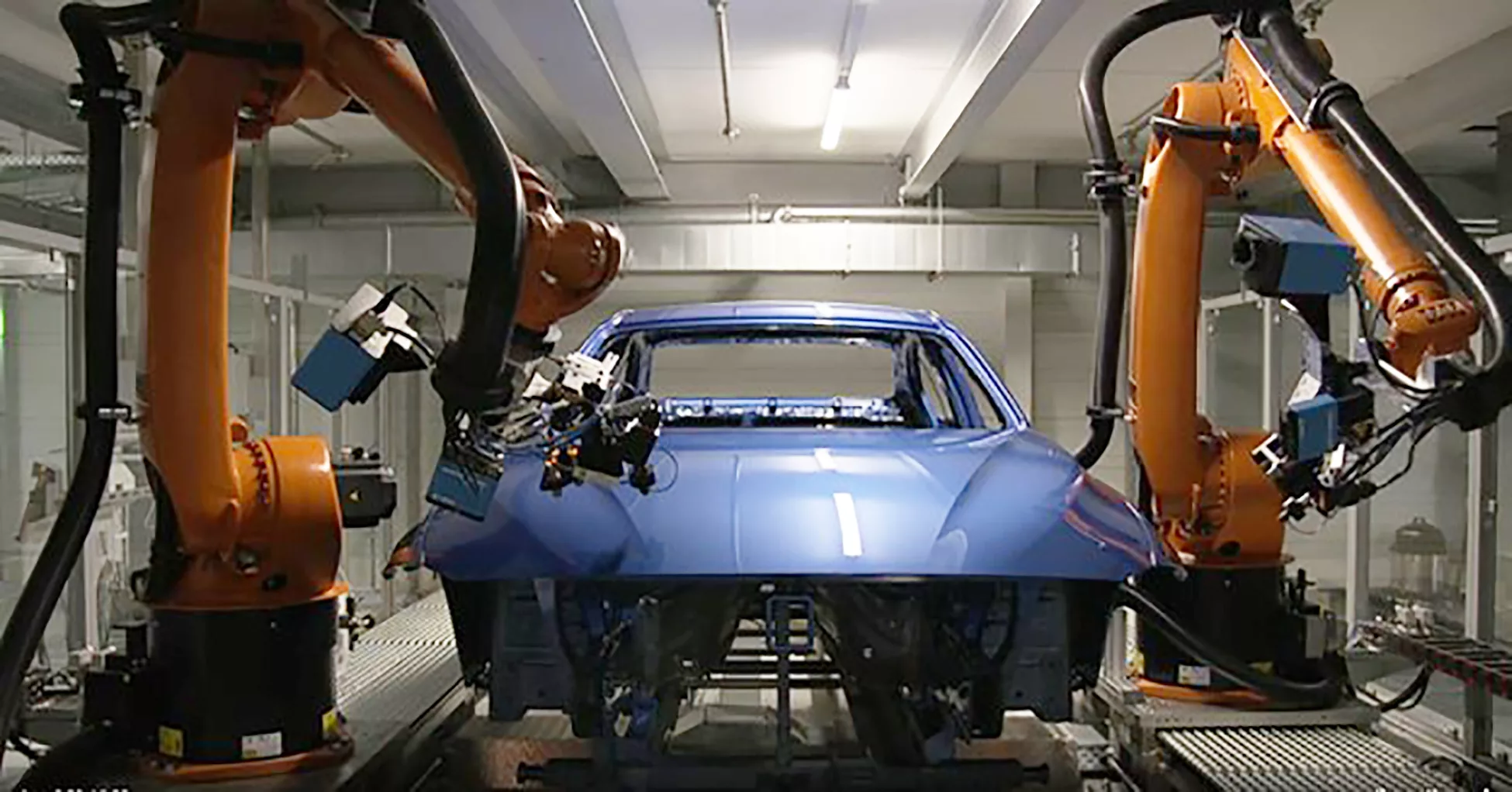
Even with the best control of measurement procedures, there is still potential for measurement errors to occur. For this reason, the implementation of robotic solutions is becoming more popular. Robotic solutions enable more precise measurements and the collection of additional data. Larger data sets reveal patterns in process variation, enabling faster responses to changes in process parameters and enhanced quality. Robotic solutions are best suited for processes that consistently produce the same product on a daily basis. For processes with high variability, where the product or parts change frequently, handheld instrumentation is often the preferred approach. Most importantly, there should be excellent inter-instrument agreement between handheld and robotic versions of color and appearance instrumentation, as well as nondestructive multi-layer film build analysis.
4. Final Inspection and Release
Whether you are making a part or a finished product, final approval is a critical step. It is the time when you confirm that you have met all the quality requirements and the product is saleable. Many functional checks on coatings are destructive tests, such as adhesion, flexibility, or impact resistance. A multi-layered film build is often a specification for final acceptance and is typically nondestructive.
For color and appearance inspection, ensure that the measurement data aligns with what is visually observed. It is essential to ensure that any visual inspection is repeatable and reproducible for different inspectors. Controlling how the product is illuminated (type of lighting), as well as the surroundings and the distance from the product, should be standardized and documented.
All the measurement data should also be documented and controlled. It is easiest to use the software provided by your instrument provider. In a supply chain, it is most efficient to use the same instruments and software, allowing data to be easily shared. Establishing a routine for sharing data can improve supply chain efficiencies, manage expectations, and enhance overall quality.
5. The Power of Standardized Measurements
For a quality-first manufacturing approach, the use of digital standards is crucial for ensuring color consistency, appearance, and film build. With excellent inter-instrument agreement, the ability to digitize target specifications becomes not only possible but practical, ensuring that all measurement attributes are the same. A digital standard is the quantified, instrument-based representation of a physical master standard that can be shared electronically across laboratories and production lines. Reliance on physical standards introduces additional variability due to handling, storage conditions, aging, and damage, while also requiring careful logistics and maintenance. By using digital standards, manufacturers ensure that every location measures against the same target, eliminating the subjective interpretation of all specifications for color, appearance, and film build.
Conclusion
Quality does not begin at the end of the line; it is built at every stage of the production process. By applying a quality-first approach with well-placed checkpoints, standardized measurements, and the right mix of in-line and off-line control methods, manufacturers can detect issues early and maintain tighter control over their processes. By prioritizing early detection and continuous monitoring, manufacturers strengthen process stability, improve efficiency, and ultimately deliver more reliable products to their customers.
Looking for a reprint of this article?
From high-res PDFs to custom plaques, order your copy today!