Measurement
Next-Generation Shopfloor CMM Technology: Engineering Solutions for Production Environments
The evolution from laboratory to production floor
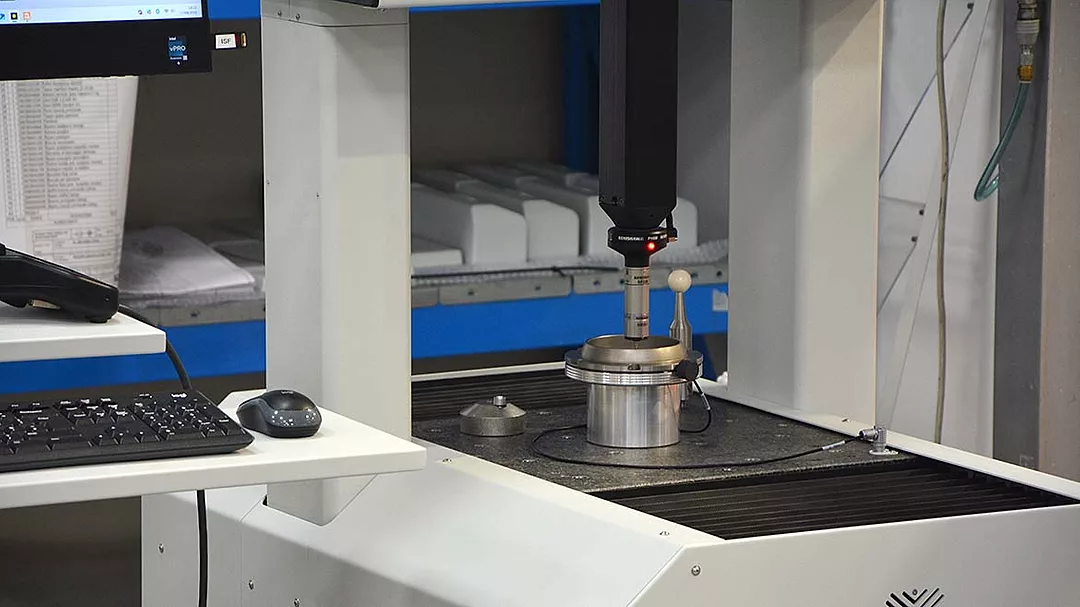
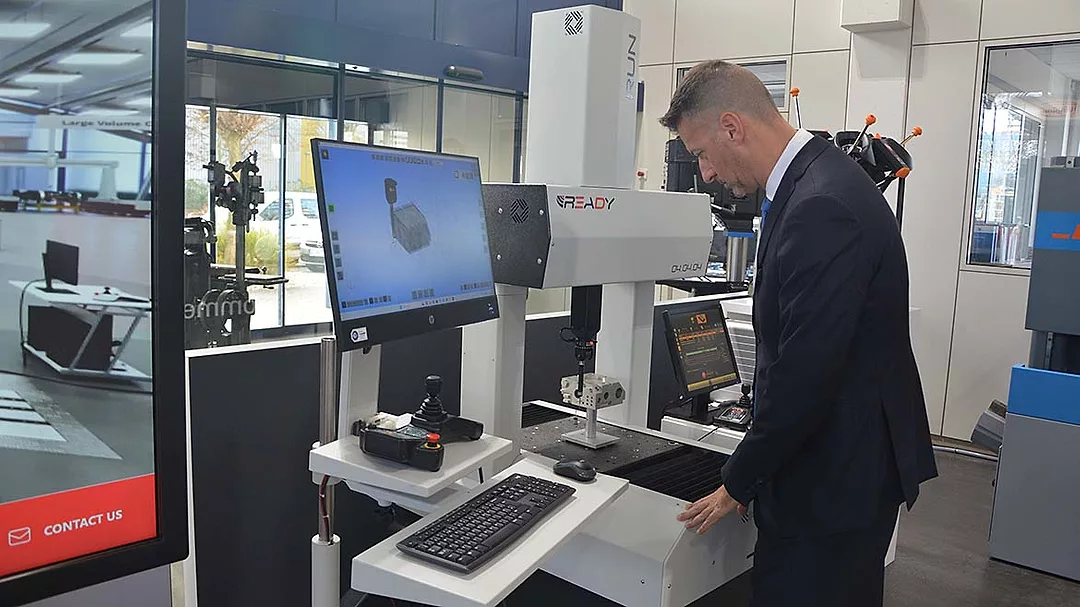
Coordinate measuring machines have traditionally been confined to controlled laboratory environments, where stable temperatures, minimal vibration, and clean conditions ensure optimal accuracy. However, as manufacturers face increasing pressure to reduce cycle times and improve quality control efficiency, the industry is witnessing a significant shift toward shopfloor metrology—bringing measurement capabilities directly into production environments.
This transition has driven fundamental innovations in CMM design. Production floors expose measurement equipment to temperature fluctuations, vibrations from nearby machinery, airborne contaminants, and the demanding pace of manufacturing operations. Recent technological advances are now making it possible to achieve laboratory-grade precision in these challenging conditions through purpose-built engineering solutions.
Fixed Portal Architecture: The Foundation of Shopfloor Stability
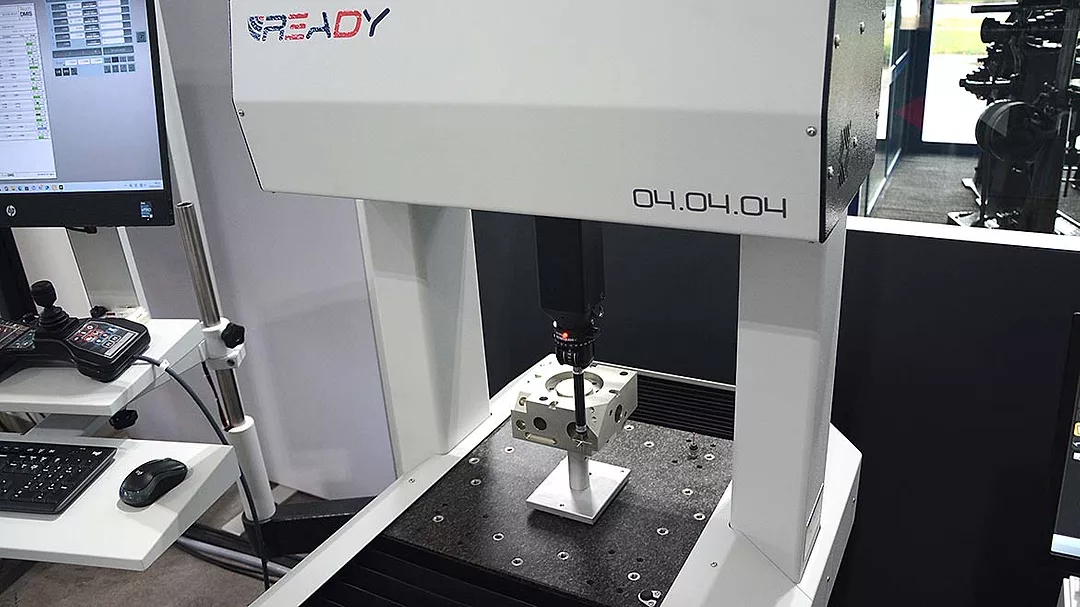
Among the most significant developments in shopfloor CMM design is the adoption of fixed portal architecture with moving table configurations. This represents a fundamental departure from traditional mobile gantry designs and addresses one of the most critical challenges in production metrology: vibration control.
In a fixed portal design, the measurement structure remains stationary, offering compelling advantages for shopfloor applications. Since the portal never experiences acceleration or deceleration forces during measurement cycles, mechanical stress on the structure is highly reduced. The result is a system with superior rigidity—critical when equipment operates in proximity with stamping presses, machining centers, and forklift traffic.
The fixed portal’s static nature also minimizes inertial effects, substantially reducing vibration-induced measurement errors. This translates to extended calibration intervals, improved long-term accuracy stability, and reduced maintenance requirements—significantly impacting total cost of ownership in production environments.
Full Front Table Extraction: Revolutionizing Workflow Integration
Full front table extraction capability represents another critical innovation. In this design, the measuring table can be completely withdrawn from the portal footprint, providing unrestricted access to the measurement area.
This feature solves multiple workflow challenges simultaneously. For manual loading operations, ergonomics improve dramatically as operators no longer need to reach into confined spaces or work around overhead structures. Parts can be loaded and unloaded with natural, safe movements, reducing operator fatigue and improving cycle time consistency.
The benefits compound in automated applications. With full table extraction, the measuring table can exit completely from beneath the portal, creating clear spatial separation between the measurement structure and robotic work zones. This spatial efficiency reduces cycle times and improves robot programming safety by clearly segregating automated zones—advantages that translate directly to production capacity and return on investment for manufacturers implementing lights-out operations or high-volume automated cells.
Mechanical Bearing Systems: Reliability in Harsh Environments
While air bearing technology has long been favored in metrology for its friction-free operation, shopfloor conditions have driven a paradigm shift toward advanced mechanical bearing systems—specifically prismatic guides with ball recirculating slides.
This transition reflects a fundamental principle: optimizing for consistent performance in real-world conditions rather than maximum theoretical precision in ideal environments. Air bearings, despite their laboratory advantages, present significant vulnerabilities on production floors. The thin air film that eliminates friction makes these systems highly susceptible to contamination from cutting fluids, metal chips, and airborne particles.
Modern prismatic guide systems with ball recirculation technology offer a practical alternative engineered for shopfloor resilience. These mechanical bearings provide excellent precision while demonstrating superior resistance to contamination, operating reliably in environments where air bearings would require extensive protective measures.
Linear Motor Technology: Speed and Durability
Linear motors generate motion through electromagnetic forces without mechanical contact between moving parts, eliminating numerous potential failure points and maintenance requirements inherent in mechanical linkages.
The performance advantages are substantial. Linear motors achieve significantly higher speeds than mechanical systems, with smoother acceleration profiles that reduce vibration and improve measurement throughput. In high-volume applications where cycle time determines production capacity, these speed advantages can be transformative.
Equally important, linear motors drastically reduce mechanical wear. With no screws, nuts, racks, or pinions to wear or require periodic replacement, long-term maintenance needs decrease substantially. The combination of higher speed, reduced maintenance, and contamination resistance makes linear motors particularly well-suited for production environments where equipment uptime and consistent performance directly impact manufacturing output.
Independent Axis Calibration: Advanced Thermal Management
Temperature variation remains one of the most persistent challenges in shopfloor metrology. Unlike climate-controlled laboratories maintained at 20°C ±1°, production environments may experience temperature swings of several degrees throughout a shift.
Advanced shopfloor CMMs now incorporate independent calibration of X and Y axes, enabling sophisticated thermal compensation strategies impossible with traditional approaches. When axes can be calibrated separately, thermal drift in one direction can be compensated without compromising accuracy in perpendicular directions. Combined with real-time temperature monitoring at multiple strategic points throughout the machine structure, this approach enables dynamic compensation that adapts to current conditions.
Integrated Touch Interface and Advanced Software
Shopfloor operation demands different software approaches than laboratory metrology. Next-generation systems incorporate fully touch-based interfaces designed for intuitive operation by production technicians who may have varying levels of metrology expertise.
These interfaces eliminate the learning curve associated with traditional CMM controllers, adopting interaction models familiar from consumer devices while maintaining measurement integrity. Direct CAD file import allows operators to work from engineering models without programming expertise. Advanced measurement capabilities once considered specialized—such as free-form surface measurement using spline algorithms—are now integrated as standard functionality, recognizing that modern manufactured parts increasingly feature complex geometries.
The Convergence: Purpose-Built Shopfloor Solutions
These technological advances represent more than incremental improvements. Together, they define a new category of measurement equipment: CMMs designed from the ground up for production environments rather than adapted from laboratory instruments.
The result is equipment that optimizes every design element for the realities of production environments. These machines deliver stable, repeatable accuracy under real manufacturing conditions, integrate seamlessly into production workflows, and provide total cost of ownership advantages that justify bringing measurement directly into the manufacturing process.
Impact on Manufacturing Strategy
The maturation of shopfloor CMM technology is enabling fundamental shifts in quality control strategy. Rather than batch-sampling parts for delayed inspection in metrology labs—creating bottlenecks and discovering defects after potentially hundreds of parts—manufacturers can now implement near-real-time measurement.
This capability transforms quality control from a gatekeeping function to an integrated process control tool. Measurement data collected immediately after manufacturing enables rapid feedback to upstream processes, reducing scrap and rework while improving process stability. For industries requiring 100% inspection—aerospace, medical devices, automotive safety components—shopfloor CMMs with these advanced technologies make previously impractical inspection protocols economically viable.
Conclusion: A New Standard for Industrial Metrology
The convergence of these technological innovations marks a genuine evolution in industrial metrology. Shopfloor CMMs incorporating these advanced features are purpose-engineered tools optimized for production environments. As manufacturing continues toward increased automation, real-time quality control, and Industry 4.0 integration, these shopfloor metrology capabilities will become increasingly central to competitive manufacturing operations.
Looking for a reprint of this article?
From high-res PDFs to custom plaques, order your copy today!