Measurement
An Introduction to Portable Metrology
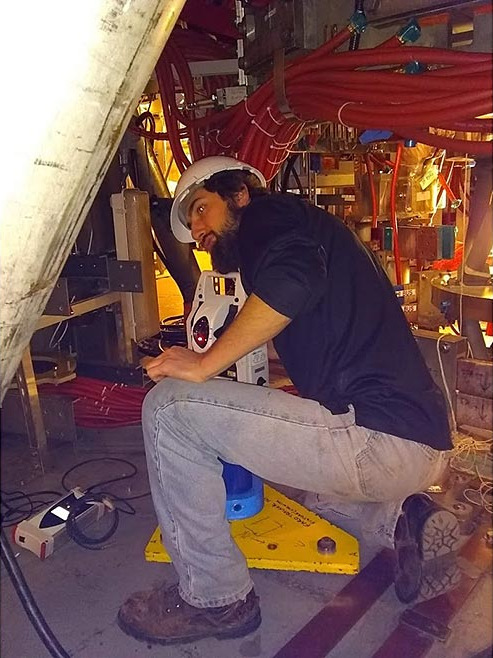
Portable metrology tools can be used in a variety of environments, whether it’s a factory floor, construction site, dry dock, or large-scale assembly plant.

Source: East Coast Metrology, a Division of In-Place Machining Company
Portable metrology plays a significant role in enhancing the efficiency and accuracy of onsite machining and assembly processes for all industries. In particular, the use of portable measuring equipment such as laser trackers, 3D scanners, and portable CMMs [or portable arms] can be used to perform measurements and inspections at the location of the workpiece, rather than requiring the part to be brought to a dedicated inspection room. Portable metrology tools can also be used in a variety of environments, whether it’s a factory floor, construction site, dry dock, or large-scale assembly plant.
They are ideal for measuring large or heavy components that are difficult to move. These tools are also effective for measuring complex and intricate geometries that might be difficult to measure with conventional methods. This is especially valuable when machining parts with irregular shapes or difficult-to-access features. Onsite metrology allows for continuous monitoring of the machining process. As parts are being machined, measurements can be taken at various stages, ensuring that the part remains within the desired tolerances. If discrepancies or defects are detected during machining, adjustments can be made immediately, preventing defective parts from progressing further down the production line.
The role of these devices is to provide accurate and reliable measurement and inspection capabilities outside of traditional, fixed measurement setups. Industries such as aerospace, power and marine require precise measurements for quality control, maintenance, and production processes, and portable metrology tools allow for greater flexibility and efficiency. These industries often deal with complex components that need to meet strict tolerances and operate in harsh environments.
The data collected by these instruments also can be used for Part-to-CAD comparison. This allows for rapid comparison of physical parts to their CAD models to guarantee that each measured component or assembly conforms to design specifications, avoiding costly manufacturing errors and rework. Portable metrology allows measurement results to be shared directly with machine operators, engineers, and quality control personnel, promoting better communication and collaboration. Everyone involved can review real-time data, make quick decisions, and implement improvements faster. Through this direct comparison of the part’s geometry to CAD data in real-time, you can allow the team to ensure that the machining or manufacturing process is in alignment with the design specifications.
Since the introduction of portable metrology, there has been little need to transport large parts to a fixed inspection facility, as the part can be measured and inspected directly onsite or on the shop floor without breaking down the assembly or machine setup. Moreover, onsite measurements allow machinists to receive immediate feedback about the quality and accuracy of their work. If adjustments are needed, they can be made right away, improving the speed and proficiency of the process.
Examples of Portable Metrology Tools Used
- Laser Trackers: These instruments look very much like standard optics instruments except lasers are used to measure distances and angles, providing highly accurate 3D measurements for large objects. By using a laser to track a precision reflector target, laser trackers can be extremely valuable for assembly work and tool fabrication, because of their ability to provide real time position feedback. This is very useful in both the marine and aerospace industries for large components like foundation mounts and hulls, and in the space sector for rocket parts, launch and transport equipment, as well as satellite assemblies. Laser trackers can also be paired with accessories that provide scanning capability and the ability to monitor six degrees of freedom (6DOF) simultaneously.
- Portable CMMs (Coordinate Measuring Machines): These instruments are commonly referred to as “arms” because they operate like a human or robotic arm. At the end of the arm there is a touch probe which, when contacted with a part, can be triggered to take a measurement. They come in various lengths which will dictate how far of a reach you can get in one position. Arms are used to measure the physical geometrical characteristics of an object, to ensure that the dimensions and tolerances are met. They can be moved easily between different parts of a ship or aircraft during manufacturing or maintenance. In more recent years, arms have been equipped with laser scanning probes which provides the unique ability to quickly perform scanning for Part-to-CAD comparison or reverse engineering tasks.
- 3D Scanners: 3D scanners come in all shapes and sizes. Some are handheld and some are mounted to be stationary; some rotate automatically, and some do not. These pieces of equipment allow for detailed scanning of complex geometries and are particularly useful for the creation of 3D models for reverse engineering. They are often used for creating digital models of worn or damaged parts such as a ship’s hull, or assemblies that may be hard to measure with traditional tools. Though all of this portable technology is impressive, scanners have successfully worked their way into the mainstream culture. In particular, large volume laser scanners are currently being used in everyday applications such as architecture, historic preservation, art, and construction. It is not uncommon to see a laser scanner used as a digital camera for crime scenes, artwork, or historic buildings.
- Digital Levels, Transits, and Theodolites: These instruments have been around for quite some time, but they still have their place in industry. The physics behind this equipment is simple, and they are extremely useful when measuring angles and performing machine alignments. Although they have been around for many years and precede laser-based metrology instruments, standard optics, as they are often referred, can still acquire highly accurate data. Modern versions of this equipment are often integrated with all the instruments previously mentioned.
Examples of Portable Metrology Applications
Shipbuilding:
- Hull and Structural Measurements: Portable metrology tools like laser trackers or large volume 3D scanners are used to measure and inspect the complex geometry of ship hulls and other structural components, ensuring that they are built to design specifications and conform to safety standards.
- Alignment of Subsystems: The assembly of ship subsystems, such as engines, turbines, and propellers, requires precise alignment. Portable measurement systems can verify that these components are installed correctly to avoid misalignment-related issues during operation.
- Hull Inspection: Marine vessels require regular inspection for signs of wear, corrosion, and structural integrity. Portable metrology tools, including 3D scanners and laser trackers can be used for rapid and accurate inspections in dry docks or during service without the need for disassembly.
- Shaft Alignment: Misaligned propeller shafts can cause excessive wear, vibrations, and energy losses. Portable metrology systems ensure that shafts and propellers are aligned with high precision, reducing maintenance costs and improving fuel efficiency.
- Propeller Surface Mapping: Laser trackers, arms and laser scanners are often used to profile the surface of a ship’s propeller. With this equipment, the propeller can be scanned in place or during the manufacturing process. Propeller design criteria is a science unto itself, and by using the newest scan technology and software, what was once an exceedingly tedious process has now become fairly straightforward.
- Regulatory Compliance: Marine vessels are subject to strict safety regulations and standards. Portable metrology systems help ensure that key components, like the hull, engines, and structural supports, meet regulatory requirements.
- Corrosion and Wear Monitoring: Portable metrology tools help monitor the wear and tear of critical marine components exposed to harsh environments. By quickly detecting issues, operators can plan maintenance and avoid potential failures.
Power Industry:
- Turbine Blades and Rotors: Portable CMMs, laser scanners and laser trackers are used for high-precision measurement of turbine blades, rotors, and other critical components in power plants. This ensures that turbines are balanced and operating efficiently.
- Alignment of Components: Portable tools are used to ensure proper alignment of turbines, pumps, and other rotating machinery, which is crucial for preventing wear and tear, reducing energy consumption, and maximizing equipment lifespan.
- Wear and Deformation Detection: Portable metrology systems can identify wear or deformation in components such as shafts, bearings, and seals, enabling early intervention before failure occurs.
- On-Site Calibration: For power generation equipment such as gas turbines and steam turbines, portable metrology systems can be used for in-field calibration, ensuring performance remains optimal without the need for disassembly or transportation.
- System Retrofit: When retrofitting old equipment with new technology, portable metrology tools ensure that the new components fit precisely within the existing infrastructure, avoiding costly downtime or operational inefficiencies.
Aerospace:
- Aircraft Components: Aerospace components, such as wings, fuselages, and engine parts, often involve complex geometries. Portable metrology tools like handheld laser scanners, portable CMMs and laser trackers enable quick, accurate measurements of these parts during manufacturing or assembly.
- Part-to-CAD Comparison: Portable metrology allows for rapid comparison of physical parts to their CAD models. This ensures that parts conform to design specifications, regardless of the complexity found in its design geometry.
- In-Field Inspections: Portable systems like laser trackers or handheld 3D scanners are used to inspect aircraft on the tarmac or in hangars. This is particularly important for ensuring components meet precise tolerances during maintenance, reducing downtime and increasing aircraft availability.
- Structural Integrity Checks: Inspecting large and intricate structures, such as engine mounts or fuselage assemblies, can be done on-site, ensuring the integrity of parts and early detection of any deformations or misalignment
- Engine Alignment: Portable metrology tools help align large aircraft engines and driveshafts accurately, ensuring that the critical components are correctly positioned for optimal performance and safety.
- Wing-to-Fuselage Alignment: Measuring and verifying the alignment of wings to the fuselage during assembly is critical for aerodynamic performance and overall structural integrity.
- Boresighting/Harmonization: Laser trackers have earned a valuable place in both weapon and navigation system boresighting processes where position and angular orientation are critical. With the ability to make accurate measurements and provide real time feedback, system adjustments can be performed in the field or on board a marine vessel.
Space:
- Launch Equipment: Launch vehicles require extreme precision in their structural design and manufacturing. Portable metrology ensures that components like fuel tanks, engines, and fairings are produced with tight tolerances to avoid malfunctions or failures during launch.
- Alignment of Guidance Systems: Portable metrology instruments are often used to calibrate and align critical guidance systems, like gyroscopes and accelerometers, to ensure that the launch vehicle follows the correct trajectory during liftoff and in-flight operations.
- Verification of Assembly Tolerances: Making sure that parts fit together correctly and that there are no alignment or assembly errors. Ensuring that parts such as rocket stages, payload adapters, and structural components meet stringent design specifications.
- Structural Alignment: Ensuring that elements of the launch vehicle and ground equipment are aligned properly. This might include the alignment of fueling systems, satellite integration, or the position of rockets relative to the launch pad.
- Base Plate Leveling: During assembly and pre-launch setup, portable metrology instruments ensure that launch pads and other infrastructure are level and correctly positioned to prevent launch anomalies.
- Check for Deformation or Damage Laser scanners and laser trackers are very useful to identify any distortions, cracks, or wear in parts that could affect performance or safety.
- Tracking the Alignment During Assembly: Large rocket structures require precise monitoring as they are assembled. Portable tools help ensure that every stage of the assembly is within tolerance wherever they may exist in the world.
In all industries, where precision is crucial, portable metrology enables greater flexibility and accuracy in machining, assembly, and maintenance. It reduces downtime, improves efficiency, and ensures that critical components meet the required standards without the need for extensive transportation or disassembly. It helps machinists and engineers monitor and adjust the manufacturing process in real-time, leading to higher productivity, reduced errors, and cost savings. By integrating these advanced tools, industries can ensure that complex, high-precision machining and assembly tasks are completed efficiently, regardless of location or part size.
Looking for a reprint of this article?
From high-res PDFs to custom plaques, order your copy today!