Quality Magazine logo
search
cart
facebook twitter linkedin youtube
  • Sign In
  • Create Account
  • Sign Out
  • My Account
Quality Magazine logo
  • NEWS
  • PRODUCTS
    • FEATURED PRODUCTS
    • SUBMIT YOUR PRODUCT
  • CHANNELS
    • AUTOMATION
    • MANAGEMENT
    • MEASUREMENT
    • NDT
    • QUALITY 101
    • SOFTWARE
    • TEST & INSPECTION
    • VISION & SENSORS
  • MARKETS
    • AEROSPACE
    • AUTOMOTIVE
    • ENERGY
    • GREEN MANUFACTURING
    • MEDICAL
  • MEDIA
    • A WORD ON QUALITY PUZZLE
    • EBOOKS
    • PODCASTS
    • VIDEOS
    • WEBINARS
  • EVENTS
    • EVENT CALENDAR
    • IMTS
  • DIRECTORIES
    • BUYERS GUIDE >
      • Supplier Insights
    • NDT SOURCEBOOK
    • VISION & SENSORS
    • TAKE A TOUR
  • INFOCENTERS
    • Digital Quality Management Systems
    • NEXT GENERATION SPC & QUALITY ANALYTICS
  • AWARDS
    • ROOKIE OF THE YEAR
    • PLANT OF THE YEAR
    • PROFESSIONAL OF THE YEAR
  • MORE
    • Expert Columns
    • NEWSLETTERS
    • QUALITY STORE
    • INDUSTRY LINKS
    • SPONSOR INSIGHTS
  • EMAG
    • eMAGAZINE
    • ARCHIVES
    • CONTACT
    • ADVERTISE
  • SIGN UP!
Test & InspectionNDT

Test & Inspection

Phased array ultrasonic testing (PAUT)

Phased array ultrasonic inspection has become an indispensable tool in the aerospace industry, contributing to the safety and reliability of aircraft components.
By Rob Bilney
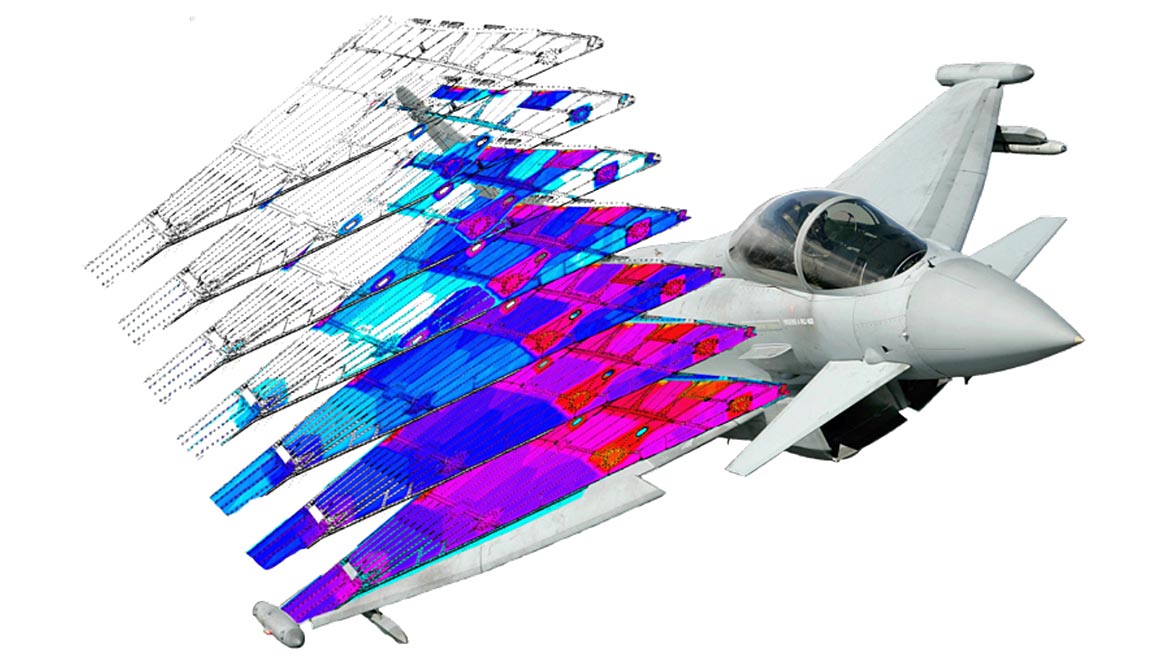
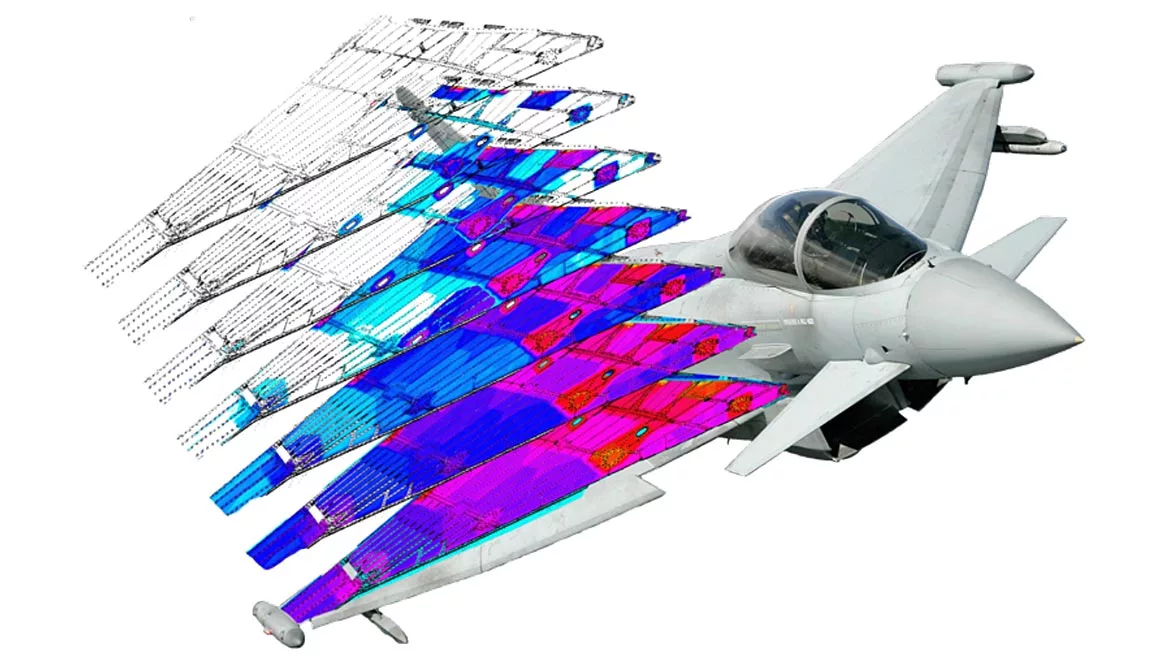
Test & Inspection C feature Figure 4: Layered depth information (great for management presentations).
Image courtesy of Testia UK Ltd

Image courtesy of Testia UK Ltd

December 31, 2023
✕
Image in modal.

“Phased array (PA) is like an ultrasonic paintbrush.” I remember those words vividly, leaving my lips as an instructor at the military Tri-Service Non-Destructive Testing School. Little did I know as I was drawn into the world of PA research some twenty years ago, that I was a very small part of cutting-edge development work that led to capabilities that we take for granted today across the industry.

I was privy to working with some outstanding minds in the field, including Dr. Robert Smith, QinetiQ, Nancy Wood, Boeing, and David Lines, Diagnostic Sonar, and look back at their collaborations with a degree of silent awe (companies stated were those at the time).

Our project was to realize a large-area scanning system to baseline and monitor the ground-breaking use of monolithic carbon fiber composite in the Royal Air Force’s Typhoon fighter, and PA gave us the solution (see Figures 1-4).
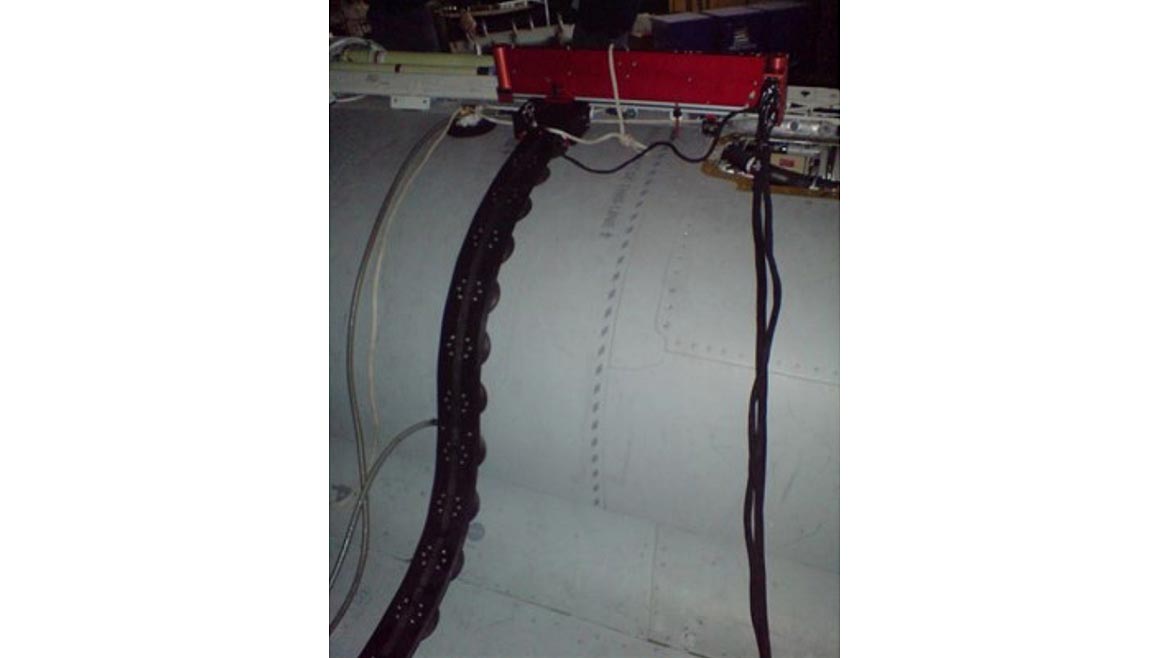
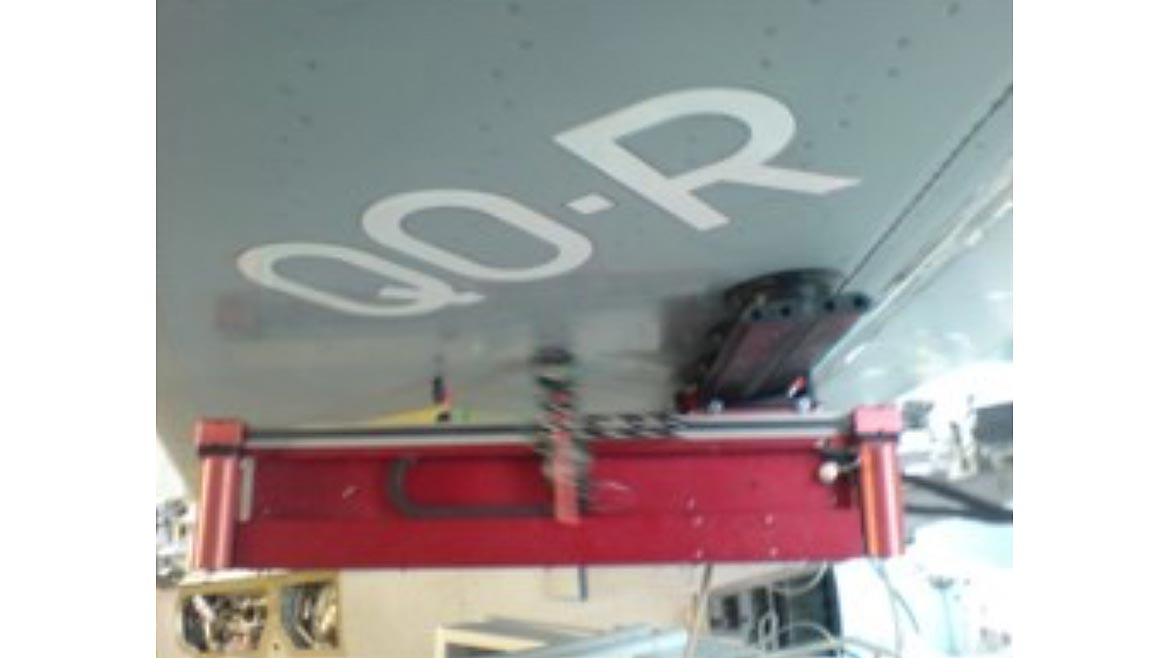
Test and Inspection C feature Figure 1: PAUT fuselage scan.
Figure 1. PAUT fuselage scan. Image courtesy of Testia UK Ltd
Test and Inspection C feature Figure 2: Scan on fin (blurring due to motion).
Figure 2. Scan on fin (blurring due to motion). Image courtesy of Testia UK Ltd
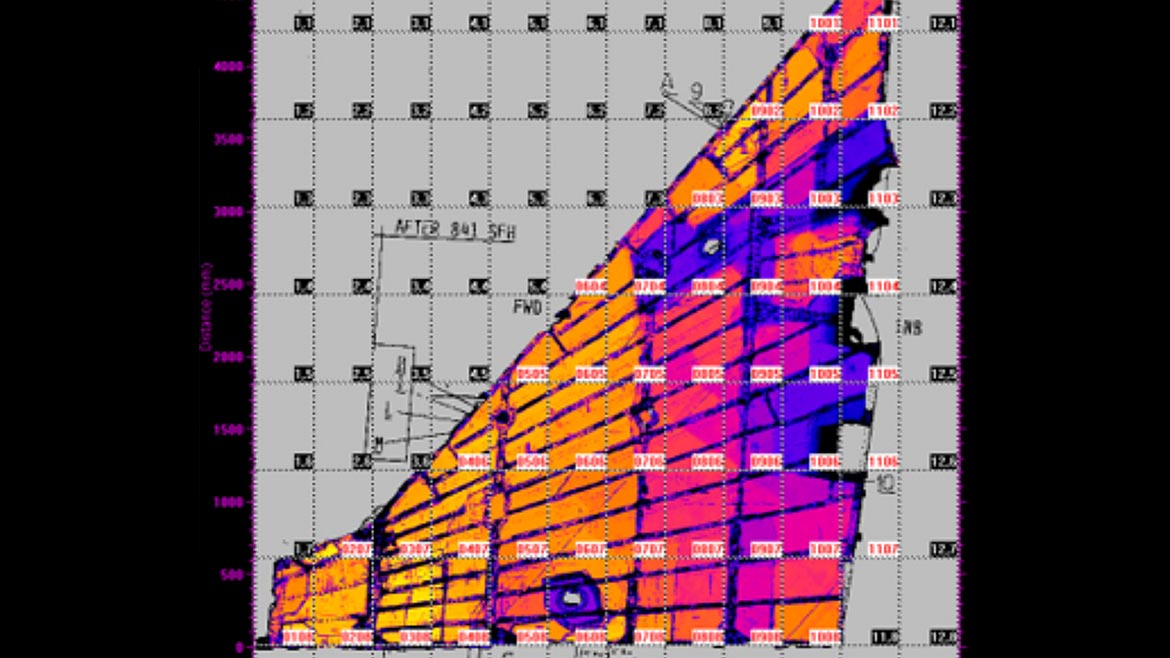
Test and Inspection C feature Figure 3: PAUT stitched scan of full wing.
Figure 3. PAUT stitched scan of full wing. Image courtesy of Testia UK Ltd
Test and Inspection C feature Figure 4: Layered depth information (great for management presentations).
Figure 4. Layered depth information (great for management presentations). Image courtesy of Testia UK Ltd

Now, whilst I feel it’s still the tip of the iceberg, my understanding and application of phased array ultrasonic testing (PAUT) has grown over time, displacing myths I was taught in my own training, such as “ultrasonics is a single-layer method,” and how the “UT paintbrush” was a naive understatement of its capabilities.

In this article, I will explore the basic principles of phased array ultrasonic inspection and predominantly its applications within the aerospace sector, although it should be clarified that PAUT can equally be utilized across other industrial sectors to ensure the integrity of other suitable materials, components and structures.

Phased array ultrasonic inspection: fundamentals

Phased array ultrasonic inspection is an NDT technique that utilizes ultrasonic waves to detect and characterize internal defects within materials. It relies on the principles of wave interference to create a directed, and/or focused, controlled ultrasonic field. Unlike conventional single-element ultrasonic testing, which uses a fixed transducer crystal to send and receive ultrasonic waves, PAUT employs an array of small ultrasonic elements that can be electronically controlled via timing and sequencing to produce a wide range of beam angles and focal points.

The key components of a phased array system include:

  1. Ultrasonic transducer array
    This is a collection of individual ultrasonic elements, typically piezoelectric crystals, arranged in a specific pattern. Each element can be independently excited to generate ultrasonic waves and groups of elements can be operated together.
  2. Phased array controller
    This electronic device controls the timing and amplitude of the voltage sent to each element in the transducer array. It allows for precise control of the ultrasonic beam.
  3. Software:
    Specialized software is used to design inspection plans, control the phased array system and analyze the collected data. Whole raw data can be captured so that results can be further fine-tuned and analyzed later.
  4. Encoders:
    A means of linking positional information with UT data to produce readily interpretable images.

How PAUT works

  1. Wavefront control:
    By adjusting the timing and amplitude of the voltage pulses sent to each element in the transducer array, PAUT can create a customized wavefront. This allows for precise control of the ultrasonic beam’s angle and focus.
  2. Beam steering:
    PAUT can electronically sweep the ultrasonic beam without moving the transducer physically. This is achieved by adjusting the time delay between elements, enabling the inspection of complex geometries and areas that are difficult to access.
  3. Multi-angle inspection:
    PAUT can perform inspections at multiple angles simultaneously, which is particularly advantageous for detecting defects that may be oriented in various directions within the material.
  4. Data acquisition and analysis:
    The reflected ultrasonic waves are recorded and analyzed in real-time or saved as a full waveform, which permits retrospective analysis with access to the original A-scan signal (raw data) with the ability to move and change gates and hence the way the data is displayed. Any anomalies or defects in the material can be detected by analyzing changes in the signal.

Applications in aerospace

Phased array ultrasonic inspection has found extensive applications in the aerospace industry due to its ability to provide high-resolution user-friendly imaging with accurate defect characterization. Some of its primary applications include:

  1. Composite material inspection:
    Aerospace components increasingly use composite materials due to their lightweight and high-strength properties. PAUT is invaluable in detecting defects such as barely visible impact damage (BVID), delaminations, voids and disbonds in layered composite structures, permitting visually appealing mapping of large complex areas. Pseudo-3D modelling is possible using a combination of depth/amplitude data with positional encoding.
  2. Weld inspection:
    Welded joints are often critical points for inspection. PAUT can identify defects such as cracks, porosity and lack of fusion in welds covering the toe, root and fusion zones using different beam angles in each of two single-sided scans. This can avoid the use of three different angled, single-element transducers to cover the angular range of the different weld areas.
  3. Bolt hole inspection:
    Fastener holes in aerospace components require meticulous inspection. PAUT can detect issues such as fatigue and stress corrosion cracking, fretting and corrosion in and around bolt holes. I recall inspections on the C130 wing joint, where multiple single-element probe angles and scans were used to inspect these key fastener areas, where a PAUT probe could achieve the same coverage in a single scan.
  4. Turbine blade inspection:
    The integrity of gas turbine compressors and turbine blades is paramount. PAUT can accurately assess the condition of turbine blades, including detecting fatigue cracks and erosion. PAUT systems may be operated remotely where access is restricted or test conditions are uncomfortable or unsafe.
  5. Aircraft skin inspection:
    The skin of an aircraft is subjected to various stresses during flight. PAUT can identify fatigue cracking, corrosion and hidden defects in the aircraft skin, ensuring its structural integrity including, where sealant/interfaces allow, second layers.

Advancements in PAUT for aerospace

Over the years, advancements in phased array ultrasonic inspection technology have made it even more indispensable for aerospace applications. Some notable advancements include:

  1. High-frequency probes:
    Miniaturized high-frequency probes have been developed, allowing for enhanced resolution in inspecting thin materials and small components.
  2. Advanced data processing algorithms:
    Machine learning and artificial intelligence algorithms have been integrated into PAUT systems, improving defect recognition and reducing false positives. Results can often be automatically ‘stitched’ together to create large area scan images.
  3. 3D scanning:
    PAUT systems can now perform 3D scanning of complex components, providing a complete volumetric inspection and allowing for precise defect sizing and location.
  4. Portable systems:
    Compact and portable PAUT systems have been developed, making it easier to perform inspections in the field, at remote sites or on aircraft during maintenance operations.
  5. Improved user interfaces:
    User-friendly software interfaces have been developed, simplifying the set-up, inspection and data analysis processes. Software wizards are often used to set complex parameters and focal laws for the respective probes and their attachments. Probes can be auto recognized to reduce the need for inputting their parameters manually.
  6. Multi-modal inspection:
    Some PAUT systems offer the capability to switch between different inspection modes, such as shear wave and longitudinal wave, in a single scan. This versatility enhances defect detection capabilities.

Challenges and future directions

While phased array ultrasonic inspection has made significant strides in the aerospace industry, there are still challenges and opportunities for improvement:

  1. Standardization:
    Developing standardized inspection procedures and acceptance criteria for PAUT in aerospace is an ongoing effort to ensure consistency and reliability.
  2. Data management:
    As PAUT generates large amounts of data, efficient data management and analysis tools are needed to extract and evaluate meaningful information quickly.
  3. Integration with manufacturing:
    Integrating PAUT into the manufacturing process itself, rather than relying solely on post-production inspections, can lead to more efficient defect prevention.
  4. Cost-effectiveness:
    Despite its advantages, PAUT equipment set-up costs can be high and when coupled with the advanced ultrasonic knowledge and practical industrial experience required to deploy such advanced inspection methods, this should be considered when looking to implement such technologies within an organization. However, continued efforts to reduce costs and increase accessibility are huge industry drivers. Non-phased ultrasonic arrays are available that can reduce complexity and increase image resolution.
  5. Advanced materials:
    As aerospace materials continue to evolve, PAUT techniques must adapt to effectively inspect new materials and composites, especially where the material itself is designed to avoid detection.

Conclusion

Phased array ultrasonic inspection, once the realm of the medical world, has become an indispensable tool in the aerospace industry, contributing to the safety and reliability of aircraft components.

However, it should be stated that use of this NDT technology is also applicable within a realm of other industry sectors, such as the oil and gas, marine, railway and power generation sectors, to name but a few, and has now become an indispensable tool, contributing to the safety and reliability of a host of platforms.

Its ability to provide easier to understand high-resolution imaging, multi-angle inspections and real-time data analysis has made it a preferred choice for detecting defects in critical industrial structures.
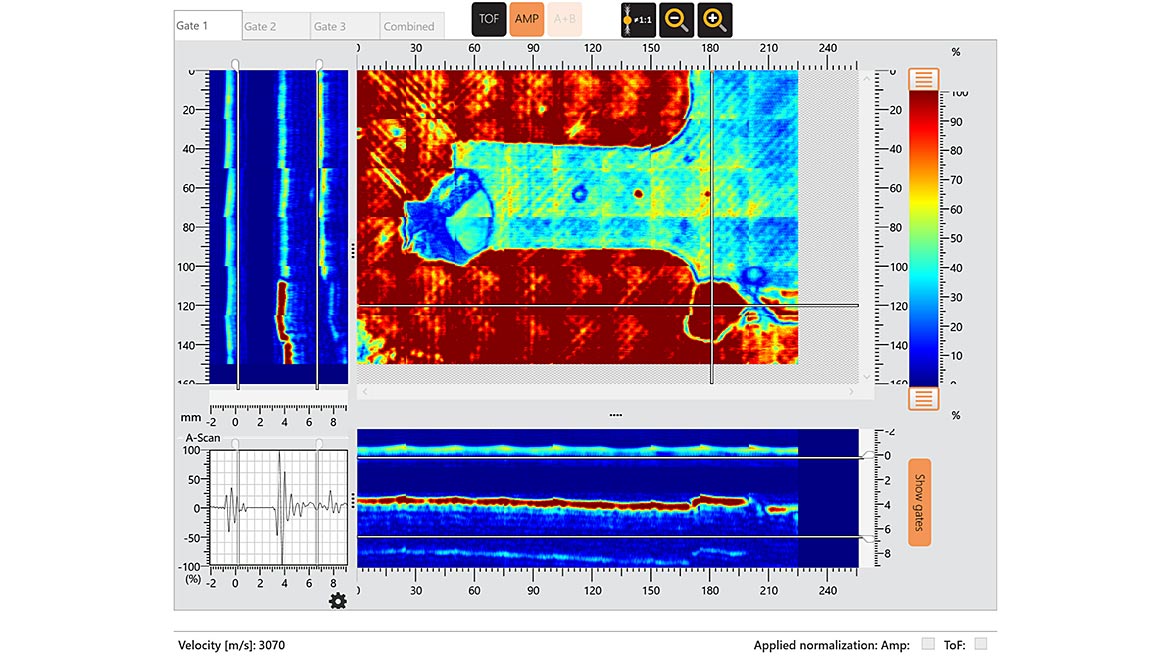
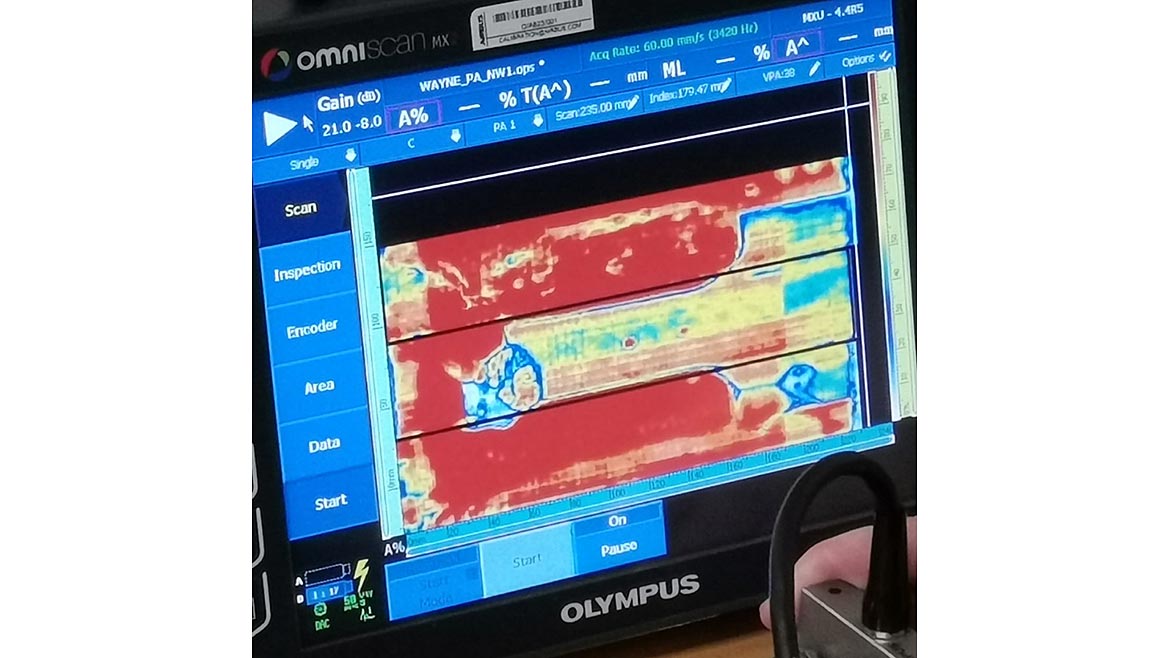
Test and Inspection C feature Figure 5: UT non-phased array C-scan of second-layer panel showing three artificial defects and delamination damage.
Figure 5. UT non-phased array C-scan of second-layer panel showing three artificial defects and delamination damage. Image courtesy of Dolphitech
Test and Inspection C feature Figure 6: UT phased array C-scan of second-layer panel showing two artificial defects and delamination damage.
Figure 6. UT phased array C-scan of second-layer panel showing two artificial defects and delamination damage. Image courtesy of Testia UK Ltd


What are NDT and CM?

Nondestructive testing is the branch of engineering concerned with all methods of detecting and evaluating flaws in materials. Flaws can affect the serviceability of a material or structure, so NDT is important in guaranteeing safe operation as well as in quality control and assessing plant life. The flaws may be cracks or inclusions in welds and castings or variations in structural properties, which can lead to a loss of strength or failure in service. The essential feature of NDT is that the test process itself produces no deleterious effects on the material or structure under test. The subject of NDT has no clearly defined boundaries; it ranges from simple techniques such as the visual examination of surfaces, through the well-established methods of radiography, ultrasonic testing and magnetic particle crack detection, to new and very specialized methods such as the measurement of Barkhausen noise and positron annihilation spectroscopy.

Condition monitoring (CM) aims to ensure plant efficiency, productivity and reliability by monitoring and analyzing the wear of operating machinery and components to provide an early warning of impending failure, thereby reducing costly plant shutdown. Condition monitoring originally used mainly vibration and tribology analysis techniques but now encompasses new fields such as thermal imaging, acoustic emission and other nondestructive techniques. The diagnostic and prognostic elements, in addition to increasingly so

phisticated signal processing, is using trends from repeated measurements in time intervals of days and weeks.

KEYWORDS: non destructive testing phased array ultrasonic inspection ultrasonic testing (UT)

Share This Story

Looking for a reprint of this article?
From high-res PDFs to custom plaques, order your copy today!

Rob Bilney, Testia UK Ltd.

The British Institute of Non-Destructive Testing (BINDT) is a UK-based professional engineering institution working to promote the advancement of the science and practice of non-destructive testing (NDT), condition monitoring (CM), diagnostic engineering and all other materials and quality testing disciplines. Internationally recognized, it is concerned with the education, training and certification of its members and all those engaged in NDT and CM and through its publications and annual conferences and events it disseminates news of the latest advances in the science and practice of the subjects. For further information about the Institute and its activities, visit http://www.bindt.org

Recommended Content

JOIN TODAY
to unlock your recommendations.

Already have an account? Sign In

  • 2024 Quality Rookie of the Year Justin Wise 1440x750px banner with "Quality Rookie of the Year" logo inset

    Meet the 2024 Quality Rookie of the Year: Justin Wise

    Justin Wise is an exceptional individual who has been...
    Aerospace
    By: Michelle Bangert
  • Man with umbrella and coat stands outside while it rains at night looking at a building.

    Nondestructive Testing: Is there an ethics problem?

    I was a whistleblower who exposed fraudulent activities...
    NDT
    By: Dale Norwood
  • Unraveling Deflategate: Football stadium with closeup of football on field

    Unraveling the Tom Brady Deflategate

    The Deflategate scandal erupted following the 2014 AFC...
    Measurement
    By: Greg Cenker and Henry Zumbrun
Manage My Account
  • eMagazine Subscriptions
  • Newsletters
  • Online Registration
  • Subscription Customer Service
  • Manage My Preferences

More Videos

Sponsored Content

Sponsored Content is a special paid section where industry companies provide high quality, objective, non-commercial content around topics of interest to the Quality audience. All Sponsored Content is supplied by the advertising company and any opinions expressed in this article are those of the author and not necessarily reflect the views of Quality or its parent company, BNP Media. Interested in participating in our Sponsored Content section? Contact your local rep!

close
  • Key Takeaways for Quality Leaders
    Sponsored byComplianceQuest

    Key Takeaways for Quality Leaders from the 2026 Gartner Magic Quadrant™ for QMS

  • This image shows a person seated next to a Bobcat T66 compact track loader.
    Sponsored byPolyWorks by InnovMetric

    Supercharging Digital Gauging at Bobcat North America

  • Dorsey Calibration Lab photo by Tom LaBarbera Picture this Studios
    Sponsored byDorsey Metrology International

    Ensuring Product Quality in a Competitive Manufacturing Landscape

Popular Stories

iStock-1352825159-jpg.jpg

U.S. Should Substantially Boost Support for Manufacturing USA Program, Issue National Industrial Manufacturing Strategy, Says New Report

Dorsey Calibration Lab photo by Tom LaBarbera Picture this Studios

Ensuring Product Quality in a Competitive Manufacturing Landscape

Visions Sensors Ebook

eBook | How AI-driven Vision Systems Are Transforming Automotive Quality Control

2026 Quality Professional of the Year!

Events

June 22, 2026

Automate 2026

Automate is North America's largest robotics and automation event — and the best place to take your ideas from insight to impact.
 
Our show floor features the world’s leading automation solutions, from AI and robotics to motion control, vision systems, and more. Plus, our educational conference is second to none, led by the brightest minds in automation today.
 
Ready to transform the way you work? Take the next step at Automate.
July 14, 2026

Quality Leaders Forum: Better Communication, Better Quality Data

The Quality Leaders Forum is a quarterly, editor-moderated fireside chat series hosted by Quality Magazine, featuring candid conversations with senior manufacturing and operations executives shaping enterprise-level quality.

View All Submit An Event

Products

Lean Manufacturing and Service Fundamentals, Applications, and Case Studies

Lean Manufacturing and Service Fundamentals, Applications, and Case Studies

See More Products
Rookie of the Year Custom Content

Related Articles

  • NDT 0823 Phased Array img 1

    Phased Array Ultrasonic Testing

    See More
  • West Penn Accelerates Test-Process Development in Wake of FAA Approval of Phased Array Ultrasonic Testing

    See More
  • QM 0723 Aerospace Phase Array feature image

    Phased Array Ultrasonic Testing: A Tutorial

    See More

Related Products

See More Products
  • Mechanical and Non-Destructive Testing DVD

See More Products

Events

View AllSubmit An Event
  • October 8, 2025

    Beyond Radiography: Optimizing Weld Inspection with Advanced Ultrasonic Techniques

    On Demand This webinar explores the latest ultrasonic techniques—Phased Array Ultrasonic Testing (PAUT), Time-of-Flight Diffraction (TOFD), and Plane Wave Imaging (PWI) with TOFD—and their advantages over traditional radiographic testing (RT).
View AllSubmit An Event

Related Directories

  • TEST NDT LLC

    NDT Training Courses for the Aircraft Industry, consulting and Level III services. Methods include Ultrasonic, Phased Array, Eddy Current, Eddy Current Array, Radiography, Penetrant, Magnetic Particle and Visual. Scheduled and On-Site Training available. Call Cathy Harvey at (714) 255- 1500 for details or to discuss your options.
  • TEST NDT LLC

    TEST NDT in Southern California is a privately-owned NDT training facility. We offer Level I, II, and III Non-Destructive Testing Training Courses in UT, RT, CR, ET, MT, PT, and VT, in addition to Phased Array and Eddy Current Array training and Phased Array Inspection of Composites in accordance with SNT-TC-1A/NAS-410, special seminars and on-site training.
×

Stay in the know with Quality’s comprehensive coverage of
the manufacturing and metrology industries.

Newsletters | Website | eMagazine

JOIN TODAY!
  • RESOURCES
    • Advertise
    • Contact Us
    • Directories
    • Manufacturing Division
    • Store
    • Want More
  • SIGN UP TODAY
    • Create Account
    • eMagazine
    • Newsletters
    • Customer Service
    • Manage Preferences
  • SERVICES
    • Marketing Services
    • Market Research
    • Reprints
    • List Rental
    • Survey/Respondent Access
  • STAY CONNECTED
    • LinkedIn
    • Facebook
    • YouTube
    • X (Twitter)
  • PRIVACY
    • PRIVACY POLICY
    • TERMS & CONDITIONS
    • DO NOT SELL MY PERSONAL INFORMATION
    • PRIVACY REQUEST
    • ACCESSIBILITY

Copyright ©2026. All Rights Reserved BNP Media, Inc. and BNP Media II, LLC.

Design, CMS, Hosting & Web Development :: ePublishing