Quality Magazine logo
search
cart
facebook twitter linkedin youtube
  • Sign In
  • Create Account
  • Sign Out
  • My Account
Quality Magazine logo
  • NEWS
  • PRODUCTS
    • FEATURED PRODUCTS
    • SUBMIT YOUR PRODUCT
  • CHANNELS
    • AUTOMATION
    • MANAGEMENT
    • MEASUREMENT
    • NDT
    • QUALITY 101
    • SOFTWARE
    • TEST & INSPECTION
    • VISION & SENSORS
  • MARKETS
    • AEROSPACE
    • AUTOMOTIVE
    • ENERGY
    • GREEN MANUFACTURING
    • MEDICAL
  • MEDIA
    • A WORD ON QUALITY PUZZLE
    • EBOOK
    • PODCASTS
    • VIDEOS
    • WEBINARS
  • EVENTS
    • EVENT CALENDAR
    • IMTS
  • DIRECTORIES
    • BUYERS GUIDE >
      • Supplier Insights
    • NDT SOURCEBOOK
    • VISION & SENSORS
    • TAKE A TOUR
  • INFOCENTERS
    • Digital Quality Management Systems
    • NEXT GENERATION SPC & QUALITY ANALYTICS
  • AWARDS
    • ROOKIE OF THE YEAR
    • PLANT OF THE YEAR
    • PROFESSIONAL OF THE YEAR
  • MORE
    • Expert Columns
    • NEWSLETTERS
    • QUALITY STORE
    • INDUSTRY LINKS
    • SPONSOR INSIGHTS
  • EMAG
    • eMAGAZINE
    • ARCHIVES
    • CONTACT
    • ADVERTISE
  • SIGN UP!
Quality 101

Quality 101

Pre-Plate Threads: 60° Thread Form

Nobody wants to make or sell a custom gage you can’t use and are unable to return.
By Mike Oddy
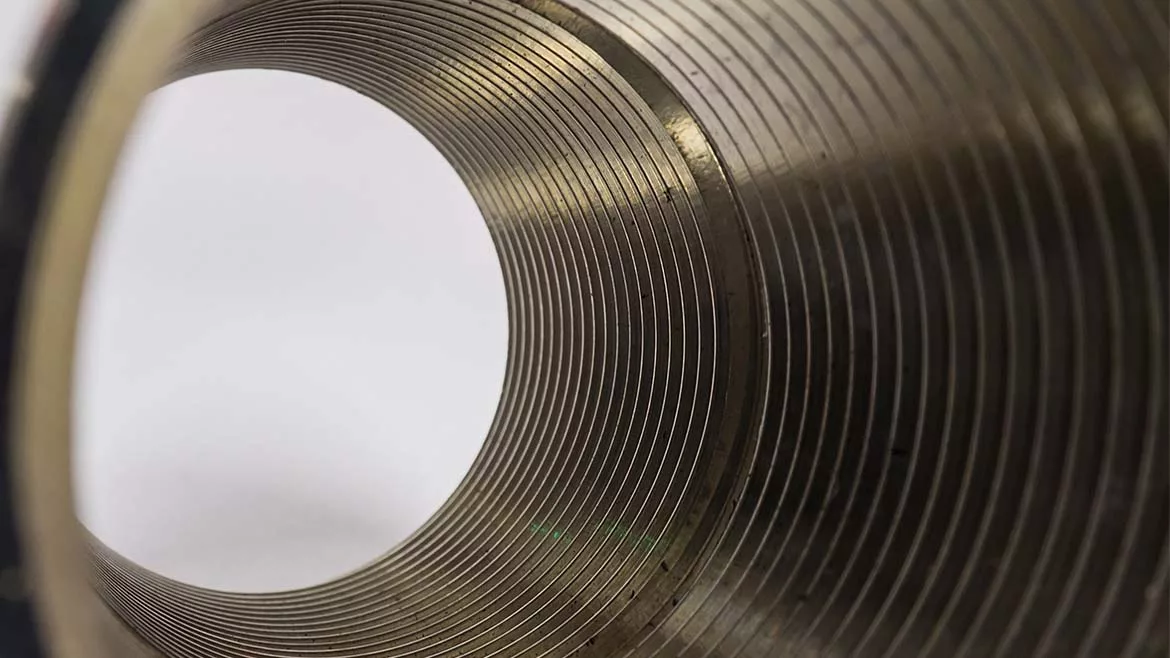
Close-up of circle tube with spiral inside, tunnel of spiral

Image Source: Surasakpd / iStock / Getty Images Plus


May 3, 2024
✕
Image in modal.

As with all gages and inspection tools, the functionality and accuracy of the product thread or the gages used to inspect them, is heavily dependent on the information supplied from the product manufacturer, engineer, or designer. The product design and tolerances always dictate the dimensions and tolerances for the gage used to inspect them. When we apply plating to a thread form, the thread geometry is affected. The changes to the thread pitch diameter are significant. The key to understanding and creating the proper pre-plate allowances is to correctly compensate for the buildup on all surfaces of the thread form. For instance, a 60° UN thread pitch diameter will change 4X the plating thickness. If the thread form angle changes to a 29° ACME, the plating change for the pitch diameter increases to 8X. We will focus on 60° Threads for this discussion.

The ASME B1.1-2019 for “Unified Inch Screw Threads (UN, UNR, and UNJ Thread Forms)”, Section 7 and the ASME B1.13M-2005, “Metric Screw Threads: M Profile”, section 8, both show formulas for calculating the pre-plate product dimensions for the 60° thread form pre-plate product threads. There are limitations to these formulas. They do not apply to dipped coating, paint, or other “heavy” plating or coatings. Both standards have suggestions for using standard thread tolerance classes. See the above-mentioned standards for further information on these options. We are only focusing the math calculations based on the plater supplying the minimum and maximum plating thickness.

Below is an illustration (Fig. 1) of how plating builds up on the flanks of the thread form.  It shows the effects of the coating on the pitch diameter of the thread.

Figure 1: an illustration of how plating builds up on the flanks of the thread form.

The pitch diameter change due to plating on a Unified Inch or M Series Metric 60° screw thread is 4X. The formula is:

a = 2 (CSC 1/2 Angle)

a = 2 (CSC 30°)

a = 2 x 2 = 4

If you have a 0.0002” plating thickness, the change in pitch diameter is (4 x 0.0002” = 0.0008”), Fig. 2. Does this mean that both my minimum and maximum pitch diameter will both be decreased by 0.0008” on an external product thread? Unfortunately, no, this is only the beginning of the calculations. We also need to account for plating provider’s tolerance for their plating process thickness. We take this 4X plating and apply it to the plater’s minimum and maximum plating tolerances. These values are then applied to the product thread pitch diameter.

Figure 2: 0.0002' plating thickness, the change in pitch diameter is (4 x 0.0002' = 0.0008')

See the example below:

After Plate Dimensions:

¼-20 UNC 2A external product thread:

Pitch Diameters = 0.2164” / 0.2127”

Plating = 0.0002” – 0.0004”

Product Thread Pitch Diameter Formulas per ASME B1.1-2019:

Max Pre-plate PD = Max After Plate PD – (4 x Max Plating Thickness)

= 0.2164” – (4 X 0.0004”)

= 0.2164” – 0.0016”

= 0.2148” Max Pre-plate PD (Go Ring or Setting Plug PD)

Min Pre-plate PD = Min After Plate PD – (4 x Min Plating Thickness)

= 0.2127” – (4 X 0.0002”)

= 0.2127” – 0.0008”

= 0.2119” Min Pre-plate PD (No-Go Ring or Setting Plug PD)

The above examples only apply to the pitch diameter of the external product thread. If the product thread is internal, the plating will increase the pitch diameter of the nut or internal product pitch diameter before plating.

See the formulas below:

After Plate Dimensions:

¼-20 UNC 2B internal product thread:

Pitch Diameters = 0.2175” / 0.2224”

Plating = 0.0002” – 0.0004”

Product Thread Pitch Diameter Formulas per ASME B1.1-2019:

Min Pre-plate PD = Min After Plate PD + (4 x Max Plating Thickness)

= 0.2175” + (4 X 0.0004”)

= 0.2175” + 0.0016”

= 0.2191” Max Pre-plate PD (Go Work Plug PD)

Max Pre-plate PD = Max After Plate PD + (4 x Min Plating Thickness)

= 0.2224” + (4 X 0.0002”)

= 0.2224” + 0.0008”

= 0.2232” Min Pre-plate PD (No-Go Work Plug PD)

Once you have the calculated pre-plate minimum and maximum pitch diameters, you can request pre-plate gages based on the pre-plate pitch diameters. Purchasing gages for the pre-plate threads can be a challenge. Gage end users will sometimes only supply the amount the tap is oversize to create the plated product internal thread. This will not work and using the amount oversize from the cutting tool and applying it to both the minimum and maximum gage pitch diameters equally will cause the gage user to accept out of tolerance threads or scrap in tolerance threads. (See the previous Quality article from 11/2023 for more information on Taps vs. Gages How Do Tap Limits Affect Gage Selection?)

Metrology labs will measure the gages based on the pre-plate pitch diameters marked on the gage members or handles. The problems arise when the lab measures the pre-plate major diameter on working thread plug gages, minor diameters on thread ring gages and the full form major diameters on truncated thread setting plugs. There are differing opinions in the industry on the calculation of the gage major and minor diameters. Some use the custom calculated pre-plate pitch diameters and add the standard calculations for major and minor diameters in the ASME gage standard. (This results in an effective 4X change to the major and minor diameters.) Others will follow the ASME product thread standard and apply the 2X change to the major and minor diameters. The 2X on major and minor diameters follows the product thread ASME B1.1-2019 and ASME B1.13M-2005.

There are many other variables that will affect how you order, use, or calibrate pre-plate thread gages. Some coatings, such as anodize plating, will penetrate the substrate up to 50%. If you apply 0.0002” the buildup is only 0.0001”. If you only have a minimum or nominal plating thickness, there are ASME B1.1 & B1.13M calculations to assist. If your calculation generates a minimum and maximum pitch diameter less than 0.0015” between them, the thread plug gages will not work. The gage dimensions would be too close together to allow the inspector to feel the difference between the Go and No-Go gage. If you are quoting or ordering any custom gages be sure to ask your supplier for a gage spec sheet. Most gage manufacturers will offer them. This sheet will show the manufacturer’s suggested gage dimensions and tolerances. This can save you time and money by reviewing and confirming or altering prior to placing an order. Nobody wants to make or sell a custom gage you can’t use and are unable to return.

More from the author:

  • The Gage Selection Conundrum
  • Taper Pipe Thread Inspection, NPT
  • Thread Classes and Setting Plug Gages
  • Gages for Screw Thread Inserts (STI)
  • Cylindrical Ring Gages: One Ring to Rule Them All
KEYWORDS: manufacturing metrology thread gaging

Share This Story

Looking for a reprint of this article?
From high-res PDFs to custom plaques, order your copy today!

Mike Oddy is the technical sales director at Vermont Gage (Swanton, VT). For more information, call (802) 868-2701 Ext. 1123, email [email protected] or visit www.vermontgage.com.

Recommended Content

JOIN TODAY
to unlock your recommendations.

Already have an account? Sign In

  • 2024 Quality Rookie of the Year Justin Wise 1440x750px banner with "Quality Rookie of the Year" logo inset

    Meet the 2024 Quality Rookie of the Year: Justin Wise

    Justin Wise is an exceptional individual who has been...
    Aerospace
    By: Michelle Bangert
  • Man with umbrella and coat stands outside while it rains at night looking at a building.

    Nondestructive Testing: Is there an ethics problem?

    I was a whistleblower who exposed fraudulent activities...
    NDT
    By: Dale Norwood
  • Unraveling Deflategate: Football stadium with closeup of football on field

    Unraveling the Tom Brady Deflategate

    The Deflategate scandal erupted following the 2014 AFC...
    Measurement
    By: Greg Cenker and Henry Zumbrun
Manage My Account
  • eMagazine Subscriptions
  • Newsletters
  • Online Registration
  • Subscription Customer Service
  • Manage My Preferences

More Videos

Sponsored Content

Sponsored Content is a special paid section where industry companies provide high quality, objective, non-commercial content around topics of interest to the Quality audience. All Sponsored Content is supplied by the advertising company and any opinions expressed in this article are those of the author and not necessarily reflect the views of Quality or its parent company, BNP Media. Interested in participating in our Sponsored Content section? Contact your local rep!

close
  • Key Takeaways for Quality Leaders
    Sponsored byComplianceQuest

    Key Takeaways for Quality Leaders from the 2026 Gartner Magic Quadrant™ for QMS

  • This image shows a person seated next to a Bobcat T66 compact track loader.
    Sponsored byPolyWorks by InnovMetric

    Supercharging Digital Gauging at Bobcat North America

  • Dorsey Calibration Lab photo by Tom LaBarbera Picture this Studios
    Sponsored byDorsey Metrology International

    Ensuring Product Quality in a Competitive Manufacturing Landscape

Popular Stories

This image shows a person seated next to a Bobcat T66 compact track loader.

Supercharging Digital Gauging at Bobcat North America

Dorsey Calibration Lab photo by Tom LaBarbera Picture this Studios

Ensuring Product Quality in a Competitive Manufacturing Landscape

a professional in the aviation field performing maintenance, repair, and overhaul (MRO) work

Manufacturing Retention: Strategies for Improving Company Culture, Engagement and Skill Development

2026 Quality Professional of the Year!

Events

June 22, 2026

Automate 2026

Automate is North America's largest robotics and automation event — and the best place to take your ideas from insight to impact.
 
Our show floor features the world’s leading automation solutions, from AI and robotics to motion control, vision systems, and more. Plus, our educational conference is second to none, led by the brightest minds in automation today.
 
Ready to transform the way you work? Take the next step at Automate.
July 14, 2026

Quality Leaders Forum: Better Communication, Better Quality Data

The Quality Leaders Forum is a quarterly, editor-moderated fireside chat series hosted by Quality Magazine, featuring candid conversations with senior manufacturing and operations executives shaping enterprise-level quality.

View All Submit An Event

Products

Lean Manufacturing and Service Fundamentals, Applications, and Case Studies

Lean Manufacturing and Service Fundamentals, Applications, and Case Studies

See More Products
Quality Podcast Channel Custom Content

Related Articles

  • Inspection of 60 Degrees Working Thread Plug Gages

    See More
  • QM 0323 Quality101 NPT Taper Pipe Thread

    Taper Pipe Thread Inspection, NPT

    See More
  • Thread ring gages

    Adjustable Thread Ring Gages: Functional External Thread Inspection

    See More

Related Directories

  • Thread Check Inc.

    Thread Check Inc. is a full-service gage company offering a complete line of precision thread plug and ring gages, plain plug and ring gages, custom gauges, 3-wire thread measuring systems, API pipe gages, thread comparators, thread engineering software, gear measuring wires, measuring instruments, cutting tools, and calibration services.
  • The Rymon Co.

    The Rymon Co. Stocks Thread Plug and Thread Ring Gages. All members are serialized and Long Form Certified. Series stocked UNC, UNF, UNEF, UN, UNS, UNJ, STI, M, MF, M-STI, MJ, NPT, NPTF, NPSM, BSPP.
×

Stay in the know with Quality’s comprehensive coverage of
the manufacturing and metrology industries.

Newsletters | Website | eMagazine

JOIN TODAY!
  • RESOURCES
    • Advertise
    • Contact Us
    • Directories
    • Manufacturing Division
    • Store
    • Want More
  • SIGN UP TODAY
    • Create Account
    • eMagazine
    • Newsletters
    • Customer Service
    • Manage Preferences
  • SERVICES
    • Marketing Services
    • Market Research
    • Reprints
    • List Rental
    • Survey/Respondent Access
  • STAY CONNECTED
    • LinkedIn
    • Facebook
    • YouTube
    • X (Twitter)
  • PRIVACY
    • PRIVACY POLICY
    • TERMS & CONDITIONS
    • DO NOT SELL MY PERSONAL INFORMATION
    • PRIVACY REQUEST
    • ACCESSIBILITY

Copyright ©2026. All Rights Reserved BNP Media, Inc. and BNP Media II, LLC.

Design, CMS, Hosting & Web Development :: ePublishing