Management
Nearly Two Million Manufacturing Jobs May Remain Unfilled due to Skill Gaps
If given the opportunity, existing employees are often keen to learn the enhanced processes and specialized equipment that today’s manufacturing requires.
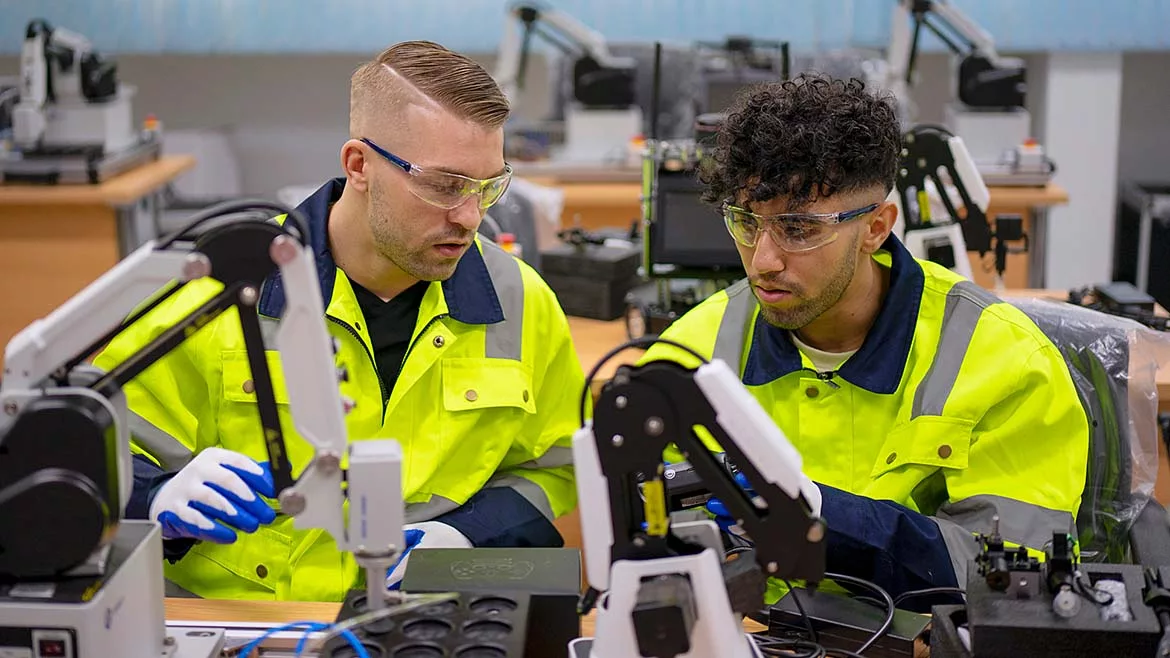
Image Source: eyesfoto / E+ / Getty Images
After decades of overseas production, American manufacturing is returning home. It’s a renaissance, with much of this growth driven by billions in bipartisan government and industry investment in new technologies that enable American companies to compete globally. Reshoring jobs back home minimizes the risks of supply chain disruptions that paralyzed businesses during the COVID-19 pandemic, offering companies additional control to ensure the consistent quality of their products. It solidifies our nation’s leadership in the industries of the future and creates economic opportunity through high-quality, well-paying jobs for American workers.
So, where’s the catch?
Increasingly, manufacturers don’t have enough skilled employees to fill the roles they need. According to a recent National Association of Manufacturers Outlook Survey, 65% of respondents indicated talent shortage and skills gaps as their primary challenge—a problem further amplified by the potential loss of institutional knowledge among the baby boomers preparing to retire and the younger workers who will ultimately replace them.
Yet often, companies don’t need to look outside their walls for a workforce to power their future. By investing in the transformative power of upskilling and reskilling, they can provide employees with the tools and skills needed to remain successful in their roles. If given the opportunity, existing employees are often keen to learn the enhanced processes and specialized equipment that today’s manufacturing requires. It’s a win-win—engaged employees make an immediate impact, advancing their careers, while organizations experience continuous improvement that upholds their quality and excellence standards without incurring additional hiring costs.
A recognized leader in upskilling
ASQ’s internationally recognized specialized credentials and comprehensive skills frameworks enable businesses to empower their employees, reducing individual and organizational skill gaps and enhancing operational sustainability.
Available not only to ASQ members but also to the global quality community, these all-inclusive upskilling opportunities set the tone for an industry teeming with talent that is, quite literally, right at employers’ fingertips. For instance, whether it’s an individual or a team that needs specific practical skills for activities (such as a histogram or control chart), the ASQ website offers a wealth of resources from basic quality tools to comprehensive theory. For those seeking to sharpen their expertise, enrolling in e-learning, virtual or in-person courses provide added depth in relevant subjects such as root cause analysis, Lean Six Sigma and many others. Most courses also offer recognition in the form of a certificate, which provides validation of a practical skill set and may prove beneficial to those in specialized jobs.
As the only ISO 17024 accredited body in the world that offers quality certification—something the organization has done for more than 50 years—ASQ currently boasts 19 available certifications. These include Manager of Quality/Organizational Excellence CMQ/OE), Master Black Belt (CMBB), Quality Engineer (CQE), Quality Improvement Associate (CQIA), Reliability Engineer (CRE) and the organization’s newest credential, a Certified Construction Quality Manager (CCQM) certification—designed to enhance construction quality and ensure sustainable practices across the industry. Programs are thoroughly reviewed every five to seven years to ensure each remains aligned with current practices.
While formal certification is not needed for each job, there are professional and organizational benefits to this model of educational development I would like to address.
The difference of a certification versus a certificate
There is often confusion around the meaning of certification, especially as individuals and companies strive to achieve and validate competencies in a competitive job market. Numerous training companies, educational institutions and consultants sell training courses that purportedly include “certification.” Oftentimes, these certifications are not based on a standard body of knowledge developed by objective third-party entities, but rather paper certificates awarded for participating in specific training.
Behind every documented evidence of course completion, organizations should not overlook the rigor and accomplishment of achieving a professional certification. These accolades provide formal recognition by a respected, recognized and established professional organization that an individual has demonstrated proficiency within, and comprehension of, a specified body of knowledge. Like most authentic professional certifications, ASQ certifications require individuals to demonstrate these competencies by passing an exam and having a track record of expertise in one of the specified quality disciplines, such as Six Sigma, auditing and engineering.
Increasing employee engagement and satisfaction
As the manufacturing industry evolves, so do hiring standards. While professional certifications are not always a standard requirement, increasingly manufacturing companies realize the value of hiring candidates based on their proficiency and specialized skill level. Certification proves the attainment of a certain level of knowledge for a specific job, enabling employers to hire certified professionals with confidence. As a result, more manufacturers today are covering training costs—or even building certification into their employee professional development plans—to further enhance employee skill sets.
The benefits of certification extend well beyond boosting technical skills—they also cultivate a sense of achievement, validating employees’ professional capabilities and significantly enhancing their job satisfaction. A workforce that holds relevant certifications is typically more engaged and motivated, leading to reduced turnover rates and elevated productivity.
For example, Gallup's Employee Engagement Survey shows that when employees are engaged, turnover rates are 43% lower than at companies with low engagement. Likewise, when employees observe their company is investing in their professional growth, it fosters greater loyalty within the organization’s workforce. This creates a better alignment between the ambitions of employees and the business’ overarching strategic goals.
ASQ’s annual Quality Progress Salary Survey further reinforces the benefits of certification programs, consistently demonstrating that certified employees have a significant industry advantage in being hired or promoted over others without such credentials. Additionally, the survey indicates that certified professionals are more likely to receive higher pay than their noncertified colleagues.
Investment in employees creates long-term organizational benefits
Along with the professional advantages afforded to individuals, certification programs create numerous long-term benefits for companies, including:
- Customer loyalty and trust: Certified employees help organizations create predictably uniform, quality manufactured products. As customers recognize this quality standard and rely on the consistency of excellence, their loyalty toward your product or service will increase.
- Organizational value addition: As a company frames its approach toward quality, employee productivity is channeled toward that collective goal. Stakeholders can work toward an agreed-upon standard (with understood companywide techniques and tools), which makes processes more efficient, increasing the ease of problem diagnosis and the ability to improve processes.
- Increased global competitiveness: The global manufacturing market is more competitive than ever before, and firms must uphold superior operational practices to produce high-quality products. Encouraging workers to earn and renew certifications reinforces a commitment to high production standards, quality and efficient processes. This enhances a company’s appeal to potential clients who prioritize quality and reliability and helps attract top talent.
- Futureproofing: As new challenges arise in the manufacturing sector and technology and methodologies continue to evolve, the importance of keeping certifications up to date cannot be overstated. Continuous learning and adaptation are critical for manufacturers to stay competitive and compliant with evolving industry standards.
- Strengthening organizational brand: Properly skilled employees are critical in helping businesses continue to improve their quality management systems. Organizations that demonstrate continued excellence throughout their products and services benefit from a loyal customer base and a strong reputation to attract highly qualified, prospective employees.
Growing the workforce going forward
With reshoring manufacturing steadily increasing, U.S. companies must continue to actively invest in employee professional development to ensure the broadest pool of viable workers. Fostering a culture of continuous improvement that encourages employees to pursue new skills and expand their knowledge base will enable manufacturers to improve control of their quality outputs and compliance while keeping up with constantly evolving industry demands.
Experienced workers need relevant, proven professional development programs they can rely on for continued growth. Students and individuals new to the workforce require those same programs to enable them to build a professional foundation, providing them with an expanded array of job opportunities. Globally recognized and transcending industries, ASQ certifications provide a structured learning path to help these individuals acquire the practical knowledge, skill sets and core competencies required in manufacturing today. And it is those employees who share their organization’s commitment to excellence that will strengthen their local economy and help further our nation’s manufacturing resurgence.
Looking for a reprint of this article?
From high-res PDFs to custom plaques, order your copy today!