Management
Facilitation: A Role or Craft?
We quality professionals may sometimes forget that we also work with human beings.
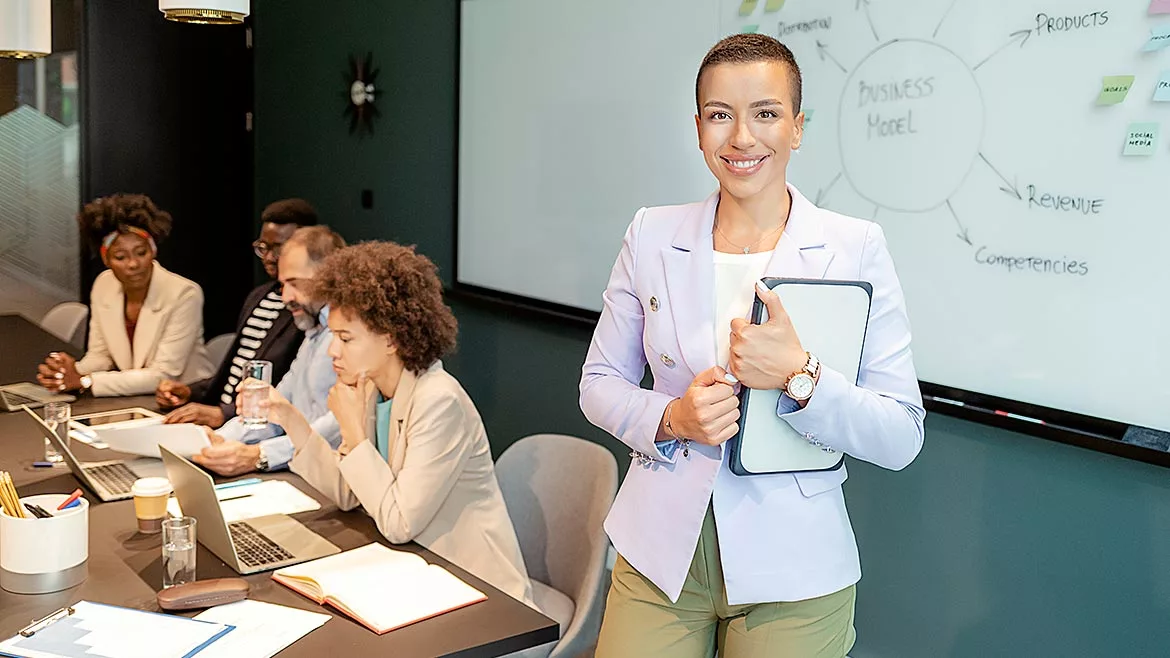
Image Source: PixelsEffect / E+ / Getty Images Plus
Many of us work in teams and some facilitate team projects and continuous improvement activities. Facilitating can be challenging if we are unfamiliar with the techniques. Facilitation techniques are part process and part human factors. As quality professionals, we rely on methods and tools and sometimes forget that we also work with human beings.
What is a Facilitator?
A facilitator is a trained person who functions as a teacher, coach, catalyst, and moderator for a group, team, or organization. Facilitators should have special training in group dynamics and improvement techniques. Effective facilitators use good interpersonal, communication, and self-management skills to engage everyone. A facilitator’s primary role is to focus on the team’s process and function.
A facilitator is responsible for creating favorable conditions that enable a team to achieve its goals by bringing together the necessary tools, information, and resources. In most large organizations, a facilitator does not perform duties as team leader, but they sometimes do in smaller organizations.[i]
A facilitated session is a structured meeting in which the facilitator guides the participants through predefined steps to arrive at a result created, understood, and accepted by all participants.[ii]
What makes a good facilitator?
The previous definitions hint at the characteristics of a good facilitator. We should:
- Have both personal characteristics and acquired skills
- Value people and their ideas
- Think quickly and logically
- Communicate effectively
- Be both product and process-oriented
- Make a difficult process seem natural and intuitive
As facilitators, we assume basic responsibilities (see Table 1). We work closely with the team leader and sponsor to prepare the team environment. The facilitator helps to identify team members, clarify project goals, select an appropriate workspace, and design the flow of team activities. Although the team leader is responsible for agendas, the facilitator should contribute ideas for member engagement and may suggest subject matter experts. The facilitator must know the sponsor’s motivation for chartering the project so they can help the team leader guide members to effective outcomes. This guidance includes establishing expectations before the team first meets and as new information influences adjustments in original expectations.
The facilitator is there to coach team members or subject matter experts in sharing information in formats that influence decision-makers. We use good project management skills to provide closure and reiterate action items as the team progresses. Technical professionals are not always comfortable presenting information to others. It takes practice to develop self-confidence in front of others. Often a lead facilitator will mentor a new facilitator as they become accustomed to the role.
Troubleshooting tips
What happens when a team gets off track? All it takes is a side conversation to tempt team members away from the agenda. The facilitator’s job is to keep the team and the team leader on task and on time. Some techniques are:
- Remind the group of the “keep focused” expectation
- Don’t be afraid to directly re-focus the group on a particular agenda item
- Try to close the item or set it aside in a “parking lot” for consideration later
- Engage a team member as a timekeeper
- Let the team decide where the topic should go
Sometimes team members are disruptive and fall into unproductive behavior. Some tips for bringing the conversation back onto the topic are:
- Use gentle and appropriate humor for redirection
- Restate the ground rules
- Direct your questions to an individual for clarification
- Seek help from the team
- Address the issue during a break or offline
|
Facilitator |
Helper; trainer; advisor; coach |
A person who: • Observes the team’s processes and team members’ inter- actions and suggests process changes to facilitate positive movement toward the team’s goals and objectives • Intervenes if discussion develops into multiple conversations • Intervenes to skillfully prevent an individual from dominating the discussion or engaging an overlooked individual in the discussion • Assists the team leader in closing discussions • May provide training in team building, conflict management, and so forth |
• Is trained in facilitating skills • Is respected by team members • Is tactful • Knows when and when not to intervene • Deals with the team’s process, not content • Respects the team leader and does not override his or her responsibility • Respects confidential information shared by individuals or the team as a whole • Will not accept the facilitator role if they are expected to report to management any information that is proprietary to the team • Will abide by the organization’s Code of Ethics and Principles |
Table 1: Role of the Facilitator[iii]
The facilitator is less concerned with the content of the meeting than the engagement of the participants. We vigilantly watch to see who is hanging back from contributing, who is overwhelming the conversation, and whether the team is getting off track. Although the team leader is responsible for the content of the discussion, the facilitator can stimulate productive inquiry by using probing questions, inviting the experts to speak up, calling on individuals, and inviting debate.[iv]
The lead facilitator or coach is a well-trained, experienced quality professional. They are experts in Lean Six Sigma tools and methods, typically, a Black Belt or higher. If the organization is not involved in Lean or Six Sigma, the characteristics of coaching and facilitation are similar. They provide a “first filter” for events by knowing the skills and abilities of team members and mentoring where additional skills are needed. The facilitator works with the team leads and sponsors to coordinate between teams engaged
|
Competency Area |
Sub-competency |
Behavior Statement |
How to Observe |
Coaching for Development |
|
Unique to virtual |
Engaging use of camera |
Simulates making eye contact with participants by looking directly into the camera lens |
|
|
Table 2: Example of a unique virtual facilitation skill[v]
Remote learners are easily distracted. The delivery of remote training must provide more frequent interaction with the learner. The facilitator can help the team leader by suggesting tools and activities that actively engage remote learners. The use of break-out rooms, whiteboards, frequent report-outs, and shorter, more frequent meetings, enhance the effectiveness of remote sessions.
Build remote standards for your organization
Facilitating remote work teams and improvement projects is necessary in today’s workplace. Some organizations are fine with facilitators establishing their own style. Some have a more standardized approach to remote facilitation. Either way, the team facilitator must practice the techniques to provide a smooth flow of activity and work closely with the team leader, so the project or meeting appears planned and runs effectively. Considerations for remote facilitation include:
- Will facilitators work solo and be fully accountable for delivery and logistics, or will a producer or co-facilitator support them?
- Do producers and co-facilitators have clearly defined roles and accountabilities?
- What equipment is available or considered minimum (lighting, touch screen, standing desk, multiple screens, etc.)?
- Are there concerns about privacy or security while leveraging full platform functionality (chat, screen share, breakout rooms, whiteboard)?
- How will participants access the learning session, and what functionality will they have to interact during training (for example, mobile phone, audio only)?
- What remote platform is used for facilitation (TEAMS, Zoom, Webex, etc.)?
Conclusion
Whether in-person or remotely, the facilitator role takes skill and practice. Technical professionals may not be comfortable in visible leadership positions. It takes time to establish a strong self-image. The skills and artistry of facilitating others are acquired. They are not born. The techniques shared in this article are best practiced in a supportive environment. Ask a lead facilitator to coach you or let you sit in one of their facilitation assignments to watch their work. The facilitator is a critical member of the team who should be involved with the sponsor and team leader early in the team development, so they know the purpose of the engagement. That way they can help choose and guide the right people, with the right skills, to a successful conclusion.
References
I Smith, Jim, Jim Smith’s Glossary of Terms and Definitions, self-published, 2016, p. 116
[ii] Source: Michael Wilkinson: CEO and Managing Director of Leadership Strategies, Inc
[iii] Duffy, Grace L. and Furterer Sandra L., The ASQ Certified Quality Improvement Associate Handbook, 4th edition. ASQ Quality Press, Milwaukee, WI 2020, Table 5.1 p. 68.
[iv] JD Solomon, PE, CRE, CMRP: ASQ's Reliability and Risk Division
[v] McRae, Jennifer and Poirier, Moe, Virtual Facilitation Executed with Precision, TD Magazine, 4/2023 Fig 3 p. 34.
Looking for a reprint of this article?
From high-res PDFs to custom plaques, order your copy today!



.webp?height=200&t=1770830401&width=200 "The image shows two multi-ethnic workers in a factory setting at a control panel.")