Quality Magazine logo
search
cart
facebook twitter linkedin youtube
  • Sign In
  • Create Account
  • Sign Out
  • My Account
Quality Magazine logo
  • NEWS
  • PRODUCTS
    • FEATURED PRODUCTS
    • SUBMIT YOUR PRODUCT
  • CHANNELS
    • AUTOMATION
    • MANAGEMENT
    • MEASUREMENT
    • NDT
    • QUALITY 101
    • SOFTWARE
    • TEST & INSPECTION
    • VISION & SENSORS
  • MARKETS
    • AEROSPACE
    • AUTOMOTIVE
    • ENERGY
    • GREEN MANUFACTURING
    • MEDICAL
  • MEDIA
    • A WORD ON QUALITY PUZZLE
    • EBOOK
    • PODCASTS
    • VIDEOS
    • WEBINARS
  • EVENTS
    • EVENT CALENDAR
    • IMTS
  • DIRECTORIES
    • BUYERS GUIDE >
      • Supplier Insights
    • NDT SOURCEBOOK
    • VISION & SENSORS
    • TAKE A TOUR
  • INFOCENTERS
    • Digital Quality Management Systems
    • NEXT GENERATION SPC & QUALITY ANALYTICS
  • AWARDS
    • ROOKIE OF THE YEAR
    • PLANT OF THE YEAR
    • PROFESSIONAL OF THE YEAR
  • MORE
    • Expert Columns
    • NEWSLETTERS
    • QUALITY STORE
    • INDUSTRY LINKS
    • SPONSOR INSIGHTS
  • EMAG
    • eMAGAZINE
    • ARCHIVES
    • CONTACT
    • ADVERTISE
  • SIGN UP!
NDT

NDT | Ultrasonics

Thickness Gages in my Lifetime

Today’s ultrasonic thickness gages are more powerful and more versatile than at any other time in the history of NDT.
By Larry Gochnauer
A row of current gauges with a white background.

Image Source: Danatronics

May 2, 2025
✕
Image in modal.

Throughout my 40 years in nondestructive testing (NDT), thickness gages have gone through a tremendous journey. From analog to highly intelligent digital gages, the transformation has been amazing.

Ultrasonic thickness gages operate as a system consisting of a gage with a pulser/receiver, a transducer and cable. The transducer transforms electrical energy into mechanical energy, or vibrations. The time it takes these vibrations to enter a homogeneous material, reflect off an interface, and return to the transducer, at a given sound speed (velocity), is calculated as a thickness.

UT gages were used as a replacement of mechanical dial calipers and micrometers. The thickness gage was a one-sided measurement, capable of measuring very thin and very thick materials with the same gage. You need to calibrate the gage for the type of material being tested.

The first ultrasonic thickness gage I worked with was a completely analog gage that had a 4-digit readout and a 4-segment velocity reading that was adjusted by + and – pushbuttons for calibration. Although battery powered and portable, most applications were performed in a lab or bench testing, consisting of metals testing.

Figure 1: Early analoge gauges on a white background
Figure 1 Image Source: Danatronics

At that time, the only way to record readings was to write them down. From the customer’s view, there had to be a better way to document their readings. Ultrasonic manufacturers listened and a few years later, the first data-logger gages were born. With this change also came longer battery life and RS-232 for downloading their readings. Most gages had a 1,000 reading limit, with numeric identification. The first data-logger gage I was exposed to was a two-piece unit with the gage and separate datalogger. Although this was a major breakthrough, the two-piece design was not well received.

Figure 2: Datalogger gauge on a white background
Figure 2 Image Source: Danatronics
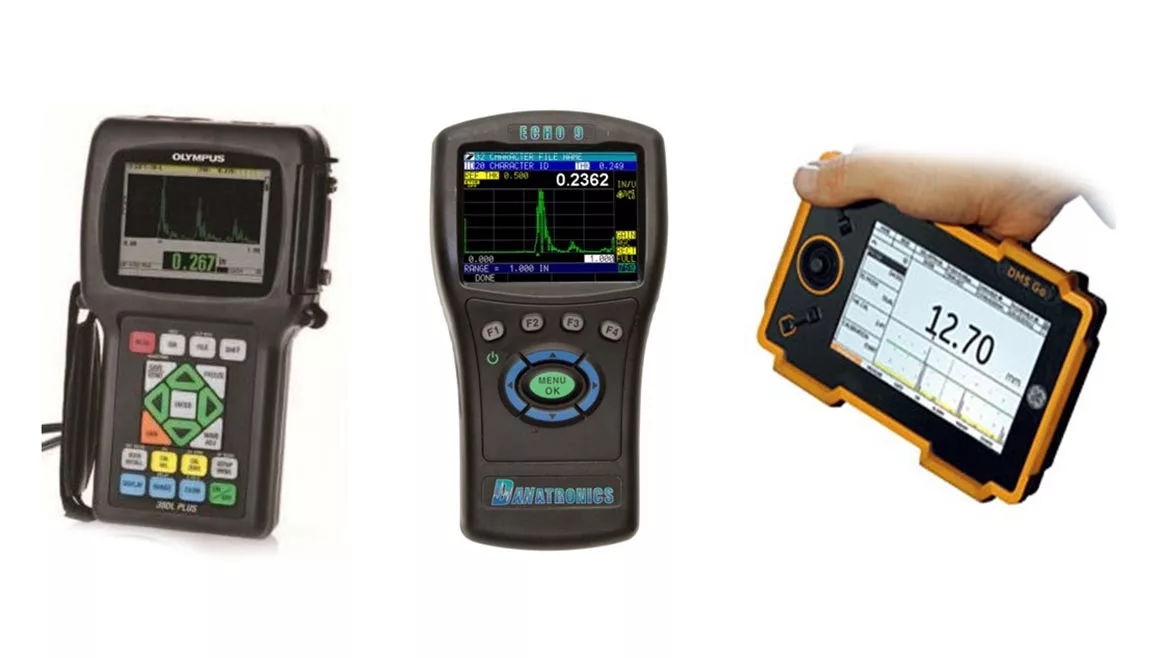
Figure 3: Three newer gauges on a white background
Figure 3 Image Source: Danatronics

Industry then asked for another innovation after several near accidents at various plants. A waveform was needed to confirm that the corrosion thickness reading shown was correct. The problem was when a reading was taken outside the limitations of the dual transducer, unknown to the technician, the reading would double or sometimes triple the actual reading, thus making a very thin reading appear thicker and within tolerance. The waveform or A-scan helps a trained technician verify the reading is proper and true.

Before the A-scan thickness gage, the readings were taken with a very heavy and burdensome flaw detector. Although the waveform thickness gages were larger in size to incorporate the additional space for the A-scan and thickness reading displayed at the same time, they were still small and lighter weight by comparison. With datalogging capability, you were now able to store the thickness reading and A-scan in the gage for reporting later.

At the same time, precision thickness gages were having their own technological growth. Precision gages typically have a higher resolution, .0001”, and higher frequency transducers for testing very thin materials and difficult to penetrate samples. Transducers were single element contact, delay-line, or immersion. Datalogging was introduced, as was waveform verification.

As electronics and software technology was growing at a very fast pace, the corrosion thickness gage market also grew. Industry demanded more out of the gage manufacturers and they delivered. The gages had an immediate effect on the industry with added features such as a larger screen to incorporate the A-scan and thickness reading, Echo-to-Echo, B-scan, and greater battery life.

Increased datalogger capacity and alpha-numeric identifiers were added along with sequential, 2D, 3D and boiler layout formats. There were also alarms added to allow a high and low set point, the gage would beep if the reading went over or under the set points.

Some of the early features during this time were stored transducer setups, expanded datalogger storage, encoded B-scan, and fast mode. Additionally, coating measurements and substrate were added.

Gages today are feature rich, with color screens, and measurement features such as temperature compensation, which allows the gage to compensate a reading for an elevated temperature using an algorithm to recalculate the reading that was taken on a material that is at a much higher temperature than the ambient temperature the gage was calibrated. Alarms that excite three of your five senses; hear a beep, see a color change, and feel the gage vibrate. Oxide scale measurement on boiler tubes can be measured using high frequency delay-line transducers. Phase reversal detection senses the change in the RF waveform, due to a delamination or other acoustic anomaly.

With Industry 4.0, many manufacturers have added wireless technology to their gages, such as Bluetooth and WIFI for sending data to the Cloud, Android and iOS devices. This helps to speed up the reporting process. You are also able to see live data from the gage on one of the Bluetooth devices, via an app, to help verify a difficult call. This advancement also allows data to be interfaced to an IDMS, Integrated Database Management System.

Figure 4: Bluetooth
Figure 4 Image Source: Danatronics

Even the ability to use software to add more capability to your thickness gage, such as precision thickness or even flaw detection, has made these handheld gages performance savvy.

Today’s ultrasonic thickness gages are more powerful and more versatile than at any other time in the history of NDT. They are used more than any other ultrasonic instrument, and will continue as the workhorse in the industrial market. Based on the current needs from the field and the speed at which electronics and software are changing, the future of the ultrasonic thickness gage is looking very good.

READ MORE

  • What You Need to Know When Selecting an Ultrasonic Thickness Gage
  • How the Internet of Things and Cloud-Based Apps Are Changing NDT Inspections
  • The Evolution of Ultrasonic Testing (UT) from Conventional UT to Total Focusing Method
KEYWORDS: manufacturing metrology thickness gauges ultrasonics

Share This Story

Looking for a reprint of this article?
From high-res PDFs to custom plaques, order your copy today!

Larry Gochnauer, sales manager, Danatronics, and ASNT Level III. For more information, call (770) 315-4368 or email [email protected].

Recommended Content

JOIN TODAY
to unlock your recommendations.

Already have an account? Sign In

  • 2024 Quality Rookie of the Year Justin Wise 1440x750px banner with "Quality Rookie of the Year" logo inset

    Meet the 2024 Quality Rookie of the Year: Justin Wise

    Justin Wise is an exceptional individual who has been...
    Aerospace
    By: Michelle Bangert
  • Man with umbrella and coat stands outside while it rains at night looking at a building.

    Nondestructive Testing: Is there an ethics problem?

    I was a whistleblower who exposed fraudulent activities...
    NDT
    By: Dale Norwood
  • Unraveling Deflategate: Football stadium with closeup of football on field

    Unraveling the Tom Brady Deflategate

    The Deflategate scandal erupted following the 2014 AFC...
    Measurement
    By: Greg Cenker and Henry Zumbrun
Manage My Account
  • eMagazine Subscriptions
  • Newsletters
  • Online Registration
  • Subscription Customer Service
  • Manage My Preferences

More Videos

Sponsored Content

Sponsored Content is a special paid section where industry companies provide high quality, objective, non-commercial content around topics of interest to the Quality audience. All Sponsored Content is supplied by the advertising company and any opinions expressed in this article are those of the author and not necessarily reflect the views of Quality or its parent company, BNP Media. Interested in participating in our Sponsored Content section? Contact your local rep!

close
  • Key Takeaways for Quality Leaders
    Sponsored byComplianceQuest

    Key Takeaways for Quality Leaders from the 2026 Gartner Magic Quadrant™ for QMS

  • This image shows a person seated next to a Bobcat T66 compact track loader.
    Sponsored byPolyWorks by InnovMetric

    Supercharging Digital Gauging at Bobcat North America

  • Dorsey Calibration Lab photo by Tom LaBarbera Picture this Studios
    Sponsored byDorsey Metrology International

    Ensuring Product Quality in a Competitive Manufacturing Landscape

Popular Stories

This image shows a person seated next to a Bobcat T66 compact track loader.

Supercharging Digital Gauging at Bobcat North America

a professional in the aviation field performing maintenance, repair, and overhaul (MRO) work

Manufacturing Retention: Strategies for Improving Company Culture, Engagement and Skill Development

Dorsey Calibration Lab photo by Tom LaBarbera Picture this Studios

Ensuring Product Quality in a Competitive Manufacturing Landscape

2026 Quality Professional of the Year!

Events

June 22, 2026

Automate 2026

Automate is North America's largest robotics and automation event — and the best place to take your ideas from insight to impact.
 
Our show floor features the world’s leading automation solutions, from AI and robotics to motion control, vision systems, and more. Plus, our educational conference is second to none, led by the brightest minds in automation today.
 
Ready to transform the way you work? Take the next step at Automate.
July 14, 2026

Quality Leaders Forum: Better Communication, Better Quality Data

The Quality Leaders Forum is a quarterly, editor-moderated fireside chat series hosted by Quality Magazine, featuring candid conversations with senior manufacturing and operations executives shaping enterprise-level quality.

View All Submit An Event

Products

Lean Manufacturing and Service Fundamentals, Applications, and Case Studies

Lean Manufacturing and Service Fundamentals, Applications, and Case Studies

See More Products
Quality Podcast Channel Custom Content

Related Articles

  • Thickness Gages Come in Colors

    See More
  • Thickness Gages

    See More
  • Quality Measurement: Coating Thickness Gages: A Fast Evolution

    See More

Related Products

See More Products
  • Measuring Quality Improvement in Healthcare

  • Kaizen in Logistics and Supply Chains

See More Products

Related Directories

  • Edmunds Gages

    Dimensional measurement specialists for 75+ years! Our turn-key custom solutions range from simple manual fixtures to fully automated gaging with size compensation control, robotics, or in-line automation using Air, LVDT, and Vision. Comparative measurement with NIST traceable masters from our A2LA accredited laboratory. AccuTouch, Trendsetter, EPIC-ADAMM, and EPIC-CAG gaging amplifiers.
  • Danatronics Corp.

    After 22 years in business, Danatronics has emerged as a leader of ultrasonic testing equipment with USA made flaw detectors, corrosion and precision thickness gages and hall effect gages. Our offerings include both video and ultrasonic inspection products.
×

Stay in the know with Quality’s comprehensive coverage of
the manufacturing and metrology industries.

Newsletters | Website | eMagazine

JOIN TODAY!
  • RESOURCES
    • Advertise
    • Contact Us
    • Directories
    • Manufacturing Division
    • Store
    • Want More
  • SIGN UP TODAY
    • Create Account
    • eMagazine
    • Newsletters
    • Customer Service
    • Manage Preferences
  • SERVICES
    • Marketing Services
    • Market Research
    • Reprints
    • List Rental
    • Survey/Respondent Access
  • STAY CONNECTED
    • LinkedIn
    • Facebook
    • YouTube
    • X (Twitter)
  • PRIVACY
    • PRIVACY POLICY
    • TERMS & CONDITIONS
    • DO NOT SELL MY PERSONAL INFORMATION
    • PRIVACY REQUEST
    • ACCESSIBILITY

Copyright ©2026. All Rights Reserved BNP Media, Inc. and BNP Media II, LLC.

Design, CMS, Hosting & Web Development :: ePublishing