Medical
Quality and Visibility as a Service in Medical Contract Manufacturing
For years, standalone quality management system (QMS) software has been at the heart of quality assurance programs. But that’s changing.
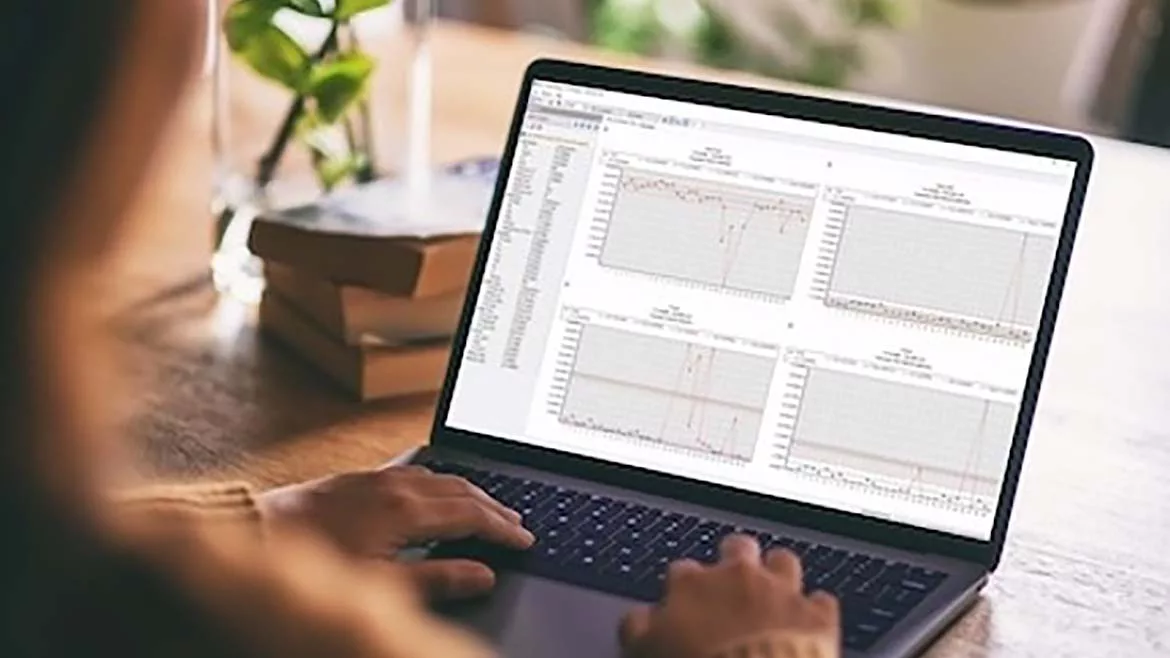
With postproduction process monitoring, historical process data can be studied using statical process control (SPC) techniques to determine if equipment issues were the root cause of the problem.
While visiting a contract medical device manufacturer, it was striking just how important visibility and documentation around quality control were to the relationship between this manufacturer and its tier-one medical device customer. The tier-one wasn’t just buying the components. It was buying the system of processes, controls and documentation that led to parts arriving at its docks with such high confidence in quality that they could go immediately into production with minimal incoming inspection.
In other words, to both avoid internal quality expenses and minimize product risk, the tier-one customer was not just paying for manufacturing services; it was also paying for quality as a service (QaaS).
The Move to Quality as a Service
Many contract manufacturers offer value-added services to their original equipment manufacturing (OEM) customers, but these are usually secondary operations like assembly, labeling and kitting. Now, we’re increasingly seeing detailed quality control data and documentation as tangible value-adds that contract manufacturers’ customers are willing to purchase.
To become a supplier of first choice, contract manufacturers need to compete not only on price and performance but also on the elimination of downstream product risk and quality assurance costs. This quality as a service goes well beyond lot tracking, inspections and paper documentation. Providing true QaaS means actively gating, enforcing and recording process steps from the receipt of materials to shipment of final goods. However, this level of control and visibility is only practical using automated systems that can ensure quality procedures are followed and capture quality control steps and measurements in real time.
For years, standalone quality management system (QMS) software has been at the heart of quality assurance programs. But that’s changing. A typical QMS focuses on document processes and manually recording data—less so on enforcing quality procedures or collecting quality data in real time. Instead, such process controls and data collection are the domain of integrated enterprise resource planning (ERP) and manufacturing execution system (MES) software. This has increasingly led to solutions with fully integrated ERP, MES and QMS functionality replacing a standalone QMS as the backbone of manufacturers’ quality assurance programs.
Let’s examine how contract manufacturers in the medical device industry can use their ERP systems with integrated MES and QMS functionality to deliver quality as a service and evolve into a provider of choice who is competitive on a scale that eclipses simply competing on scrap reduction and price.
Maintain Certifications and Compliance with Standards
Fundamentally, certifications are commitments that good quality management practices are in place and that audits and controls are being applied to ensure their day-to-day application. Maintaining compliance to the full scope of certifications for standards—such as ISO13485 and the Federal Drug Administration’s 21 CFR parts 11 & 820—using only paper-based systems is possible but time consuming.
Instead, a manufacturing ERP system with fully integrated QMS functionality can ensure that the quality procedures and risk mitigation strategies that have been defined are actually enforced and audited. It does so by automating two key elements. First is auditing process controls in real time and enforcing their execution through management alerts and exception reporting when process steps have not been properly executed. Second is the automatic and organized record keeping inherent in real-time process auditing, which enables a manufacturer to seamlessly document quality processes and their proper execution.
Consider CFR Part 11, which requires dual signatory approval for significant design and process modifications. Originally CFR Part 11 was meant to ensure that companies had adequate electronic signature measures in place to reliably replace signed paper documents. Today dual-authenticated electronic signatures are far more reliable than older hand signed documentation, and enforcement and documentation is automatic.
Manage Operator Certification Requirements
Alerts and notifications are an excellent safety net for missed production steps, but it’s far preferrable to do things right in the first place. So, operator training and certification are essential for managing production and complying with certifications. For example, contract manufacturers in the medical sector often need to address questions, such as: Does the operator have the credentials to allow the job to start? When does an operator need to be re-certified on a job?
An ERP system’s manufacturing execution features can enforce policies that only certified operators can perform a task and record that an operator’s certification was validated prior to allowing each production run to proceed.
Enforce Quality Control Processes
Another competitive distinction for contract manufacturers rests in the difference between having processes in writing and putting those processes into action. Consider: Are inspections really happening at the right time, being pushed to future dates, or perhaps not happening at all? Manual recording and enforcement of quality inspections is a hit-and-miss procedure susceptible to errors.
By contrast, automated inspection procedures are very reliable because the MES/QMS features of an ERP system expect them to happen and will alert management when a scheduled inspection hasn’t occurred. The ERP system watches for missed inspections, and it flags values that are so far out of specification as to be suspect data entries. It also digitally records and files the inspections for future reference and customer documentation.
Tracing to the Lot and Item Level
Medical products place exacting demands on raw material inputs, so processes that ensure the validation of raw materials are imperative. A contract manufacturer must be certain that incoming raw materials are validated before being used in production, and the continuity of their use must be certified throughout the entire production process.
A manufacturing ERP system can be configured to insist that when lot or item-level traceability is required by a product’s specifications, no manufacturing can take place prior to the proper raw material lot numbers being validated. Failure to properly sign-off on raw material inputs will cause the ERP system to alert management of the missed step and make notification before production can proceed. Additionally, the records kept can be recalled and presented as evidence to a customer that the proper procedures were followed.
Importantly, creating and enforcing traceability provides the ability to quickly and accurately back trace an item through its production lifecycle. In ERP, this functionality is known as track and trace, and it works by searching based on an item’s unique identifier, for example: a part number, date of production, lot number, or serial number. With this information, track and trace can walk a manufacturer backwards through the product life cycle to discover what material was used, which machines and operators handled production, what quality inspections were made, and the machine process parameters at the point of production.
Capture Manufacturing Process and Quality Data
Many tasks in a manufacturing operation are highly influenced by management, supervisors and operators following procedures and doing the right things. But influence also comes from the production equipment itself. For example: Is the machinery operating at the right speeds, pressures and voltages? Real-time process monitoring functionality, an essential feature of a manufacturing ERP system, can capture streams of data from sensors and machines to track process variables in real time.
Real-time process monitoring provides multiple benefits during and after production. Throughout production, process monitoring can deliver advanced warnings if the equipment is trending towards a boundary-level operating parameter—for instance, if a barrel is too cool or a voltage is cycling. These are warning signs that a machine could start producing bad parts or even fail. The point: process monitoring can prevent problems before they happen.
Meanwhile, postproduction process monitoring offers two added benefits. One, if bad parts are discovered in the postproduction quality assurance inspection, the historical process data can be studied using statical process control (SPC) techniques to determine if equipment issues were the root cause of the problem. Two, parts passed onto customers as having passed quality assurance inspection can be accompanied by the inspection documents and the digital trail documenting that the production equipment was running at specification at the time of production.
Being able to provide a digital history of production to an upstream medical device customer is a clear differentiator between an average manufacturing contractor and an outstanding one.

Provide Trusted Quality and SPC Records
For quality and SPC records to be trusted, they must be repeatable, documented and transferrable. When manufacturing and inspection processes are executed under an ERP system’s supervision, they’re automatically recorded and documented. This data capture may be a timestamp signature, date of a material validation, name of an operator, or histogram of process parameters. If the ERP system is running the workflow, it knows what happened and when.
The records captured by the ERP system are extremely valuable to internal operations—for example, facilitating efforts to back-trace the root causes of problems or build continuous improvement programs. Additionally, they serve as proof positive for medical device OEMs that the contract manufacturer has the procedures, controls and documentation in place to build quality products and deliver them on time.
Conclusion
More medical device OEMs are willing to pay not only for production services but also for quality as a service—or QaaS. To address this demand, contract manufacturers need to go beyond just building products to exacting specifications and also document the manufacturing execution processes that went into production to provide airtight quality assurance. Contractor manufacturers who make this transition can evolve from tactical outsourcing options to strategic, trusted partners in enabling safe and reliable patient care.
Looking for a reprint of this article?
From high-res PDFs to custom plaques, order your copy today!