Vision & Sensors | Machine Vision
Seeing the Future: Camera Trends, Deep Learning, and System Integration in the Energy Sector
Recent developments in optics, AI, and robotics are pushing inspection systems into new territories.
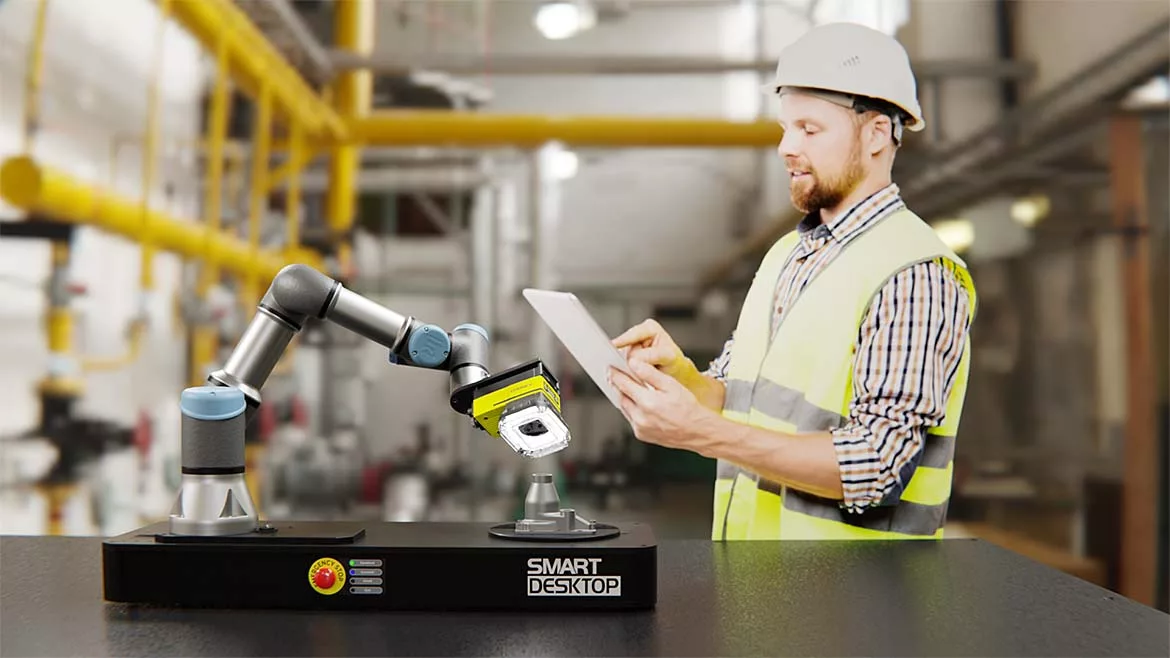
Imagine a world where machines not only “see” but also “understand” what they are looking at—where inspection tasks once reserved for trained human eyes can be performed automatically, accurately, and at scale. This is not a distant vision of science fiction; it is the reality taking shape in today’s energy sector. With increasing downward price pressures in the midstream energy sector and skilled labor shortages in countries like the U.S., UK, and Japan, companies are looking at new technologies to help optimize margins. Advances in machine vision, deep learning, and system integration are redefining how industries approach inspection, maintenance, and quality assurance, especially in environments as demanding and high stakes as oil rigs, solar farms, and wind farms.
Two decades ago, the conversation around camera technology revolved around fundamentals: miniaturization, higher-resolution sensors, the rise of CMOS over CCD, shrinking pixel sizes, and lower costs. These advancements paved the way for smart cameras and laid the groundwork for today’s complex machine vision applications. What began with basic in-line inspection has evolved into versatile, adaptive systems that reduce labor costs, remove subjectivity, and enable traceability in ways that were once unimaginable.
Now, the trends shaping machine vision reflect a different demand: the need for systems that can handle greater variability, operate autonomously, and perform in industries that have historically relied on manual inspection.
Emerging Trends in Machine Vision
Recent developments in optics, AI, and robotics are pushing inspection systems into new territories. Several technologies stand out for their transformative potential:
- Deep Learning – A branch of artificial intelligence that enhances computer vision, enabling systems to classify subtle defects and perform complex decision-making once reserved for skilled inspectors.
- Liquid Lens Technology – Traditional auto-focus systems use mechanical components to adjust focus, which can be slow and prone to wear in industrial settings. Liquid lenses, by contrast, change focal length nearly instantaneously through the manipulation of immiscible liquids using an electric signal.
- Photometric Stereo Imaging – Algorithms that capture and combine multiple images of the same scene under different lighting conditions to reveal fine surface defects with high contrast.
- Collaborative Robots (Cobots) – Intuitive robots that can be taught by demonstration, simplifying setup and enabling flexible inspection without the complexity of industrial robotics.
These innovations address long-standing limitations. Traditional inspection systems rely on fixed optics and lighting, which constrain them to narrow applications. By contrast, liquid lenses and photometric stereo allow systems to handle a wide variety of part geometries, surface finishes, and inspection challenges. Meanwhile, cobots and deep learning enable flexible imaging from multiple angles and automated classification of subtle failure modes.
The Energy Sector: A Harsh but Fertile Ground for Vision Systems
Energy infrastructure presents some of the most difficult conditions for inspection: harsh weather, remote locations, and high costs of downtime. Sending components back and forth between remote sites and central inspection labs is often impractical. As a result, oil rigs, solar farms, and wind farms rely heavily on manual inspection, despite the costs and inconsistencies it entails.
In this context, machine vision systems are not just about efficiency, they are about enabling inspection that would otherwise be infeasible. Two examples illustrate how camera technology, deep learning, and integration with robotics are already reshaping energy operations.
Case Study 1: Drill Bit Cutter Inspection
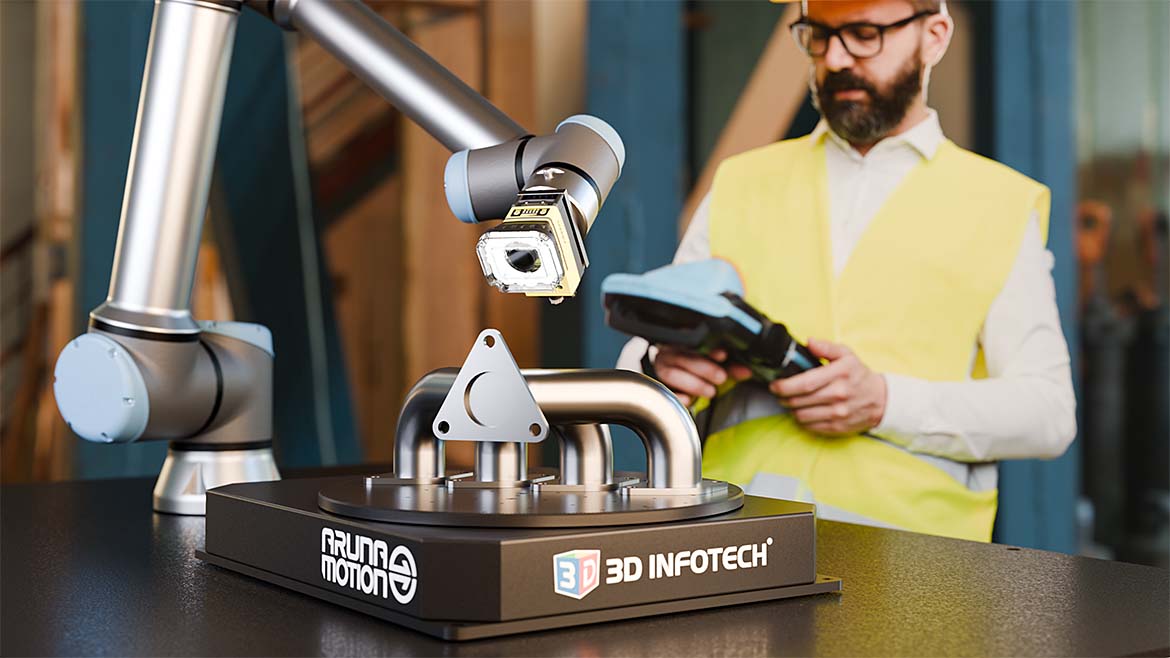
In oil drilling operations, polycrystalline diamond compact (PDC) drill bits are critical components subject to intense wear. Historically, operators manually imaged each cutter, uploaded pictures into reports, and classified wear types such as spalling, cracks, torsional breaks. Because cutters often exhibit multiple failure modes simultaneously, subjective disagreements between inspectors were common.
By integrating 2D cameras with robotics and deep learning models, inspection became more consistent and significantly faster. Training of the neural networks was based only on images where multiple inspectors agreed, ensuring reliable classification. Reports were generated automatically, complete with repair instructions tied to each cutter’s failure mode.
The impact went far beyond inspection speed. Post-run wear data was mapped against drilling parameters captured during operation, such as torque, pressure, RPM, and temperature. This linkage enabled engineers to:
- Identify cutter geometries best suited for different rock formations
- Refine cutter placement, orientation, and spacing
- Design bits to maximize rate of penetration (ROP) while minimizing vibration
- Predict bit life expectancy and optimize replacement schedules
What began as an inspection tool evolved into an engine for accelerated R&D and predictive maintenance, reducing downtime while improving product design.
Case Study 2: Automated Cable Inspection
Another challenge lies in the inspection of high-value cabling used in oil fields. Traditionally, operators manually inspected cables for damage, documenting defects by hand. This labor-intensive process was prone to error, and missed defects often led to catastrophic failures in the field, incurring significant downtime and replacement costs.
By integrating dual Allied Vision camera systems with deep learning into the spooling process, both the top and bottom surfaces of rectangular cables could be inspected simultaneously at high speed. Defects were not only detected but classified (e.g., broken armor, dents, blowouts), and the spooling system automatically unwound to each defect location for repair.
The results were substantial: throughput increased more than fourfold, labor requirements dropped, and return on investment was realized in just a few months. Just as importantly, detailed defect data revealed patterns tied to environmental conditions, guiding decisions about shielding materials for different regions.
Looking Ahead: From Detection to Prediction
The trajectory of machine vision in the energy sector is clear: inspection systems are becoming more intelligent, adaptive, and proactive. Several future-facing developments are on the horizon:
- Stereoscopic Sensors – Providing depth information to complement 2D imaging for more nuanced inspection tasks.
- Edge AI – Faster processors and lightweight AI models that allow systems to analyze data in real time, even in remote locations.
- Augmented Reality for Quality – Tablets and headsets with model-based tracking that turn any worker into a quality inspector with digital guidance.
- Autonomous Aerial and Ground Robots – Drones and rovers capable of scanning entire rigs or farms for cracks, corrosion, and other hazards.
The real breakthrough lies not only in defect detection but in defect anticipation. By combining vision data with contextual information such as operating conditions, material properties, and historical failure trends, future systems will shift from identifying problems after they occur to predicting them before they do.
Conclusion: The Vision Ahead
Inspection has always been about cost reduction - achieved by producing truth that represents a part’s ability to perform reliably and not fail under operational conditions. With the convergence of advanced optics, robotics, and deep learning, machine vision is moving from a supporting role in quality assurance to a central role in energy operations.
The energy sector’s challenges of remote locations, harsh environments, and high stakes are driving innovation that will ripple across industries. As inspection tools become faster, smarter, and more autonomous, they will do more than catch defects: they will generate insight, guide design improvements, and enable predictive strategies that keep critical infrastructure running longer and more efficiently.
The future of vision technology in energy is not just about seeing more clearly, it is about seeing ahead. And as these technologies mature, the line between inspection, maintenance, and innovation will blur, ushering in a new era where machine vision doesn’t just ensure quality, it helps define it.
Looking for a reprint of this article?
From high-res PDFs to custom plaques, order your copy today!