Management
From Prototype to Production: Overcoming 3D Printing’s Scalability Challenges
The scaling of 3D printing for production is fundamentally different from traditional manufacturing methods.
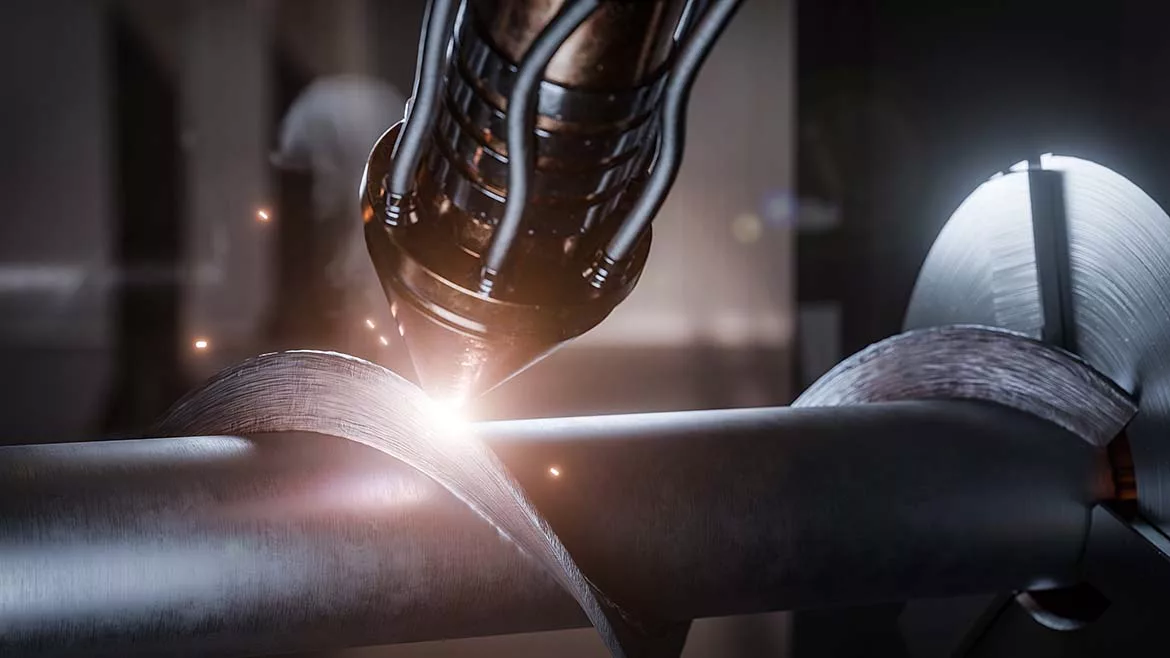
Additive manufacturing has matured from a prototyping tool to a production technology, but scaling into cost-effective, high-volume manufacturing poses challenges: from equipment, material, labor costs and process consistency, to regulatory and quality assurance. Current developments such as automation, closed-loop AI control, and new, faster technologies such as large-format DLP systems and democratization of measurement technologies, are overcoming these obstacles and cement a new era in industrial additive manufacturing.
Challenges in Scaling Additive Manufacturing
The scaling of 3D printing for production is fundamentally different from traditional manufacturing methods such as injection molding. The main bottlenecks are in labor, throughput, and quality control. With many additive workflows, many steps are fundamentally manual, from setting up parts to removing supports and finishing, which increases costs. According to various studies, for every six hours of printing, an hour is spent in post-processing¹. Manual operations limit scalability and consistency.
Throughput remains a bottleneck as well. Large builds are slow for manufacturers using older stereolithography and laser-based systems and often require multiple printers. Maintaining quality across machines introduces variability: environmental shifts, resin aging, or minor calibration drifts may yield inconsistent results². Defect rates of even 1% are expensive at production volumes.
Another choke point is in post-processing. Even with high-speed printers, slow cleaning or curing procedures create bottlenecks. To achieve the efficiency of mass production, the handling after printing must be automated and integrated into the same digital workflow driving the printing.
Automation and Closed-Loop Intelligence
Automation is now the key to scalable additive manufacturing. From print preparation to post-processing, automated workflows are minimizing human touchpoints. AI-driven nesting, automatic part orientation, and scheduling software distribute jobs across printer fleets³. Robotics handle build removal, washing, and curing, while calibration software keeps systems in tune across machines.
Modern print cells can run continuously, using robotic arms or AGVs to clear platforms and initiate new builds unsupervised. This ‘lights-out’ manufacturing concept greatly reduces labor requirements and maintains consistency. Some fully automated systems have proven to operate 24/7 with predictable part costs, which make additive manufacturing competitive for production volumes⁴.
Beyond physical automation, “closed-loop feedback” and AI systems are redefining quality control. Every layer of the print is captured by cameras, optical sensors, and thermal imaging. When deviations appear, software can make real-time changes to laser or LED power, exposure time, or temperature⁵. Unlike the older generation of open-loop machines, which rely on static settings, closed-loop machines make continuous adjustments, correcting issues before defects arise.
Machine learning adds a whole new dimension. Historical print data-driven AI algorithms can predict where errors are likely to occur, like “undercuring” in high-density areas or overheating near thin walls, and automatically adjust the parameters. This concept takes 3D printing away from being just a reactive process to being a self-optimizing process. Industry reports suggest AI-based tuning will soon become standard at the hardware level for consistent and repeatable results⁷.
Integrated Quality Assurance
Quality control defines the credibility of additive manufacturing as a production method. Conventional inspection techniques are poorly suited to complex geometries and internal cavities. To solve this, manufacturers are integrating advanced inspection into both the print process and post-production.
In-line monitoring with vision systems means every layer can be checked as it is printed, essentially combining production and inspection. After printing, automated optical systems scan surfaces and compare them to CAD models. Surfaces that vary from specifications by just a few microns can be flagged instantly⁸.
Perhaps the most transformative innovation is the rise of inexpensive “industrial CT scanning.” Where cost and speed once limited its use, next-generation X-ray CT systems now produce sub-second, high-resolution scans⁹. This allows for every printed part to be inspected in-line. Internal voids, delamination, or pockets of trapped resin become visible without opening up the part. Compact CT scanners, costing a fraction of legacy systems, are being deployed on factory floors to provide nondestructive validation for entire batches¹⁰.
Integrating CT data into feedback loops means that the process can be continually refined. Engineers can correlate defects to print data, then make changes to settings to prevent recurrences. A closed data cycle of design-print-inspection-learning continuously improves accuracy and builds confidence in the production process.
High-Speed and Modular Systems
Hardware advances are eliminating throughput limits. Modern resin systems using multiple synchronized DLP projectors can cure entire layers at once, rather than tracing them out point by point. These systems achieve print speeds up to ten times faster than traditional stereolithography¹¹. Large-format, modular DLP printers extend this capability across bigger build volumes, allowing dozens of parts to be fabricated in parallel without sacrificing precision¹².
Modular print-cell architecture scales production in a linear fashion. Each cell can operate autonomously or as part of a networked fleet, orchestrated by automation software. As demand increases, additional modules can be added without reengineering the process. Combined with robotics for part handling, modular arrays represent a bridge between prototyping and full-scale manufacturing.
The Road Ahead
What is making additive manufacturing truly industrial is automation, AI, and affordable inspection tools coming together. Automated workflows reduce human variability, AI-driven closed loops keep precision high at unprecedented speeds, while accessible CT scanners instill confidence in each and every part. Together, they address the core barriers: cost, throughput, and quality, that have long separated 3D printing from conventional production.
The factory of the future won't just print parts; it will print data. Every build will provide data that goes right back into designing and optimizing processes. Armed with these tools, additive stands poised to rival molding, machining, and casting in terms of digital flexibility and on-demand production at scale.
Sources
¹ BMF: *Industrial 3D Printing Costs* – https://bmf3d.com/blog/industrial-3d-printing-costs/
² Manufactur3D: *Quality Control Drives Scalable 3D Printing* – https://manufactur3dmag.com/quality-control-scalable-3d-printing-success/
³ Sinterit: *Automation in 3D Printing* – https://sinterit.com/3d-printing-guide/future-of-3d-printing/automation-3d-printing/
⁴ Protolabs: *3D Printing Trend Report 2024* – https://www.protolabs.com/resources/guides-and-trend-reports/3d-printing-trend-report/
⁵ PICANTE Today: *Closed Loop Print Process Adjustment Based on Real-Time Feedback* – https://picante.today/blog/2022/11/10/intrepid-automation-announces-continuation-of-key-patents/
⁶ Lumafield: *Industrial CT Case Studies* – https://www.lumafield.com/case-studies/lumafield-intrepid-automation-3d-printing-industrial-ct
⁷ Protolabs Trend Report – https://www.protolabs.com/resources/guides-and-trend-reports/3d-printing-trend-report/
⁸ Sinterit: *Future of 3D Printing Guide* – https://sinterit.com/3d-printing-guide/future-of-3d-printing/
⁹ 3DPrint.com: *Lumafield Triton CT for High-Volume QC* – https://3dprint.com/317010/lumafield-secures-75m-to-boost-ct-inspection-for-3d-printing-and-beyond/
¹⁰ Lumafield: *Industrial CT Scanning for Production* – https://www.lumafield.com/case-studies/lumafield-intrepid-automation-3d-printing-industrial-ct
¹¹ Business Wire: *High-Speed Modular DLP System Launch* – https://www.businesswire.com/news/home/20220917005018/en/Intrepid-Automation-introduces-Valkyrie-systems
¹² Business Wire: *Modular DLP Technology Overview* – https://www.businesswire.com/news/home/20220917005018/en/Intrepid-Automation-introduces-Valkyrie-systems
Looking for a reprint of this article?
From high-res PDFs to custom plaques, order your copy today!