Quality Magazine logo
search
cart
facebook twitter linkedin youtube
  • Sign In
  • Create Account
  • Sign Out
  • My Account
Quality Magazine logo
  • NEWS
  • PRODUCTS
    • FEATURED PRODUCTS
    • SUBMIT YOUR PRODUCT
  • CHANNELS
    • AUTOMATION
    • MANAGEMENT
    • MEASUREMENT
    • NDT
    • QUALITY 101
    • SOFTWARE
    • TEST & INSPECTION
    • VISION & SENSORS
  • MARKETS
    • AEROSPACE
    • AUTOMOTIVE
    • ENERGY
    • GREEN MANUFACTURING
    • MEDICAL
  • MEDIA
    • A WORD ON QUALITY PUZZLE
    • EBOOKS
    • PODCASTS
    • VIDEOS
    • WEBINARS
  • EVENTS
    • EVENT CALENDAR
    • IMTS
  • DIRECTORIES
    • BUYERS GUIDE >
      • Supplier Insights
    • NDT SOURCEBOOK
    • VISION & SENSORS
    • TAKE A TOUR
  • INFOCENTERS
    • Digital Quality Management Systems
    • NEXT GENERATION SPC & QUALITY ANALYTICS
  • AWARDS
    • ROOKIE OF THE YEAR
    • PLANT OF THE YEAR
    • PROFESSIONAL OF THE YEAR
  • MORE
    • Expert Columns
    • NEWSLETTERS
    • QUALITY STORE
    • INDUSTRY LINKS
    • SPONSOR INSIGHTS
  • EMAG
    • eMAGAZINE
    • ARCHIVES
    • CONTACT
    • ADVERTISE
  • SIGN UP!
Software

Software

Why is Manufacturing Data Different from Any Other Kind?

It must be properly integrated to optimize quality, efficiency, and profitability.

By Derek Neiding
Aircraft maintenance hangar with multiple business jets undergoing inspection, repair, and maintenance, supported by technicians, tools, and service equipment.
Source: Duncan Aviation

An aircraft hangar at Duncan Aviation. Custom design and fabrication generate massive amounts of data to be managed and integrated.

June 29, 2026

In our increasingly digitized age, manufacturing data remains unique for several reasons. Designing and making products happens in a highly structured environment. CAD files, work orders, change orders, serialization—all these elements are inexorably related to each other: when you alter one aspect there are repercussions across all of them.

What’s more, manufacturing data is generally revision controlled. A single part number may be linked to different versions due to revisions. Depending on who made what changes to a part’s geometry, different files for the same part number could be valid at the same time. For instance, if you have a change order for new production runs but are still planning to use up existing stock.

This is a whole other level of complexity compared to, say, accounting, where a single payment is recorded as a standalone item. Subsequent payments are tabulated and recorded but don’t affect the previous one. The record of each payment is what it is, and entries are never revised, only added to.

But when you are in a manufacturing environment it’s essential to accommodate the underlying structure of your data, the history of revisions, and the sheer complexity of the multi-stage processes needed to deliver a product. If you don’t do so your data becomes problematic.

The link between knowledge and quality

There are of course significant quality implications to controlling this volume of data—in production-quality intervention as well as quality forensics.

For example, it’s not just the overall details of a widget design, Part Number X. It’s about specific details of this widget X, at this revision, using these optional manufacturing toolsets, on this date, and maybe even at a specific time on that date. You need to be able to comprehend the entire DNA of that item to fully understand the scope of your data and how different phases in its evolution can impact the outcome.

Times have changed in the manufacturing world. At one point in the past, when just-in-time manufacturing was less of a thing, and we had warehouses full of 10-years’ worth of widgets, you could squirrel away a drawing of that widget in your desk drawer and it was fine forever.

Source: Razorleaf


That’s just not the case anymore; the way we make things today has changed dramatically. Now products are designed by teams—updated, improved, customized, discontinued—constantly changing status over time. Automation has certainly improved production speeds, but the challenges of making today’s products now extend to questions like “Are we getting this product data in real time?” and “Are we accessing it from the entire system of records to ensure we have the right items at the right revisions at the right time?”

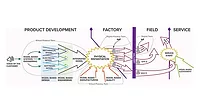
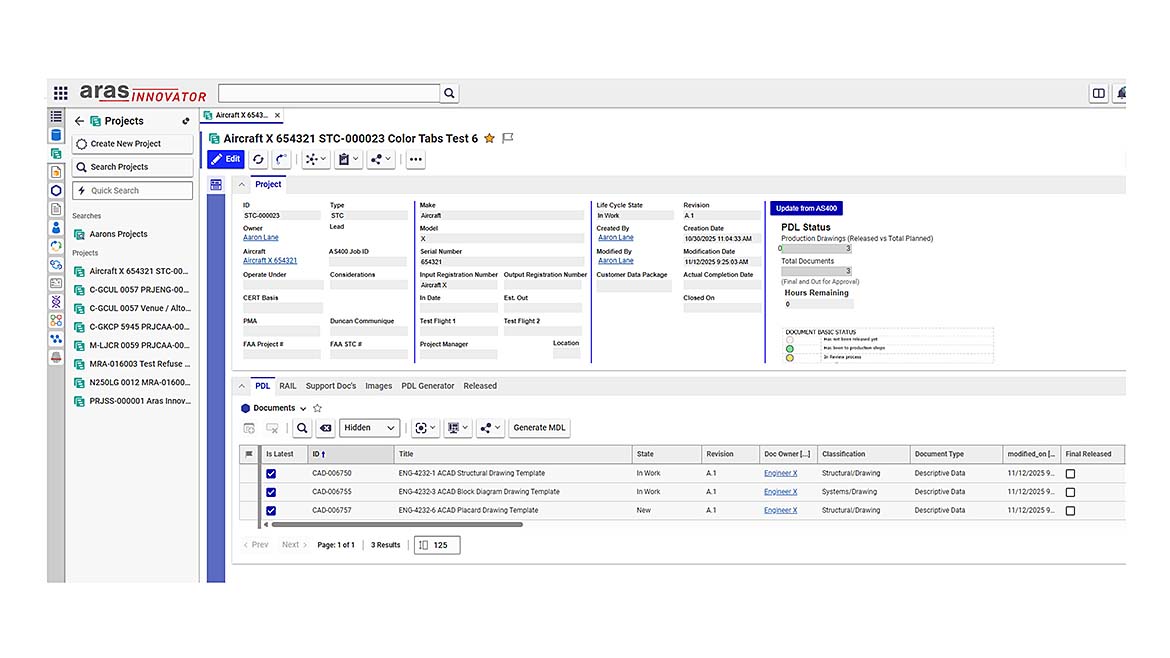
Digital software tools that enable the creation and capture of manufacturing data come in many flavors: CAD, PLM, ERP, MES, and more—these provide an enhanced foundation for thriving and competing as a manufacturing enterprise today. But if you don’t integrate these systems so they can accurately hand off information to each other, you may be creating internal inefficiencies, roadblocks and workarounds that will surely impact final product quality.
Source: Razorleaf
Source: Razorleaf

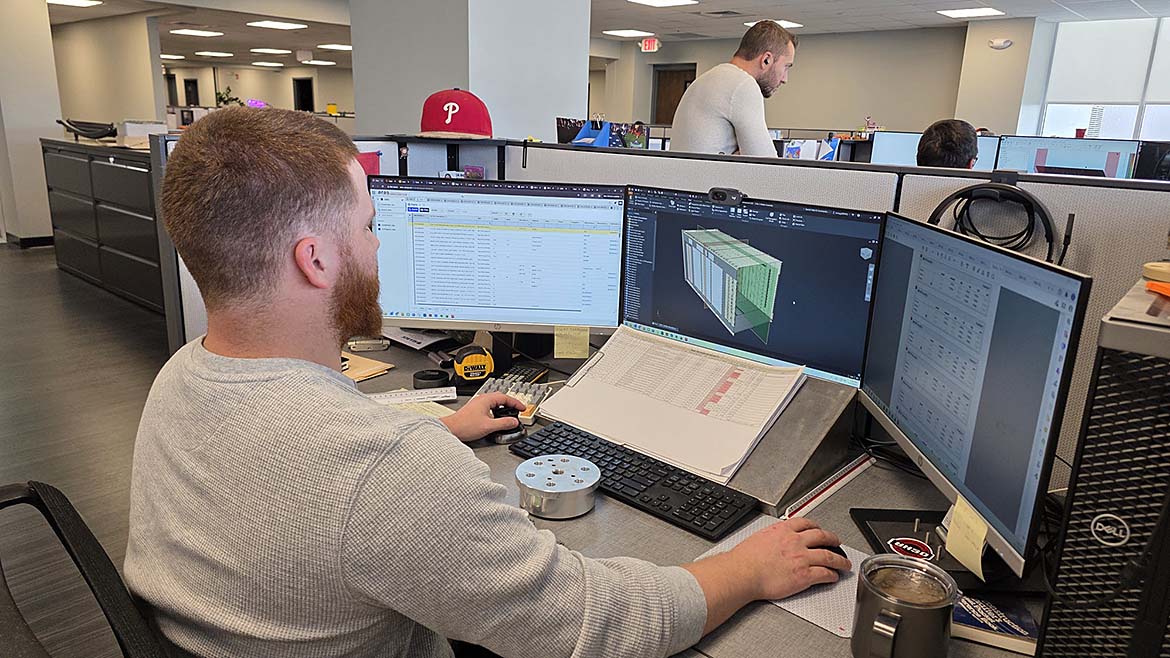
Sea Box mechanical engineer Korey Greene works on the CAD design of a custom container. Integrating their digital design tools with their PLM and ERP software is boosting ROI at the company. Source: Sea Box


Now, if you’re making wooden legs for a table—and that’s the only thing you make in your business—you can get around this need. But if you’re making anything more complex than a single piece of wood you need today’s digital tools—properly integrated to optimize your product.

Advanced tools are great—if they’re connected

Here’s a hypothetical example of a complex manufacturing enterprise that has begun embracing advanced digital tools. They’re using a CAD system for their design engineers. An enterprise resource planning (ERP) system that tracks finance, HR, supply chain, and inventory. There’s also an MES (manufacturing execution system) that monitors, tracks, and controls complex manufacturing systems and data flows on the shop floor in real-time. Sounds promising.

But now suppose the MES picks up data that says something’s not right in one of the work cells. A drilled hole isn’t big enough for a connector. Yet MES isn’t connected back to design to raise a change order. So someone makes a quick fix on the floor by simply changing a hole size out—and nobody else in the enterprise knows it happened.

Now you have a real problem. From a quality perspective, control has been lost; in the future there will be ongoing issues with this part because the original issue will not have registered upstream with design engineering, and the on-the-fly solution will not be known outside that single work cell. If the different disciplines are not fully connected, you are making decisions in a vacuum. This certainly affects throughput, and even your “product as a service” offerings, for which you need to be certain that what was designed for a specific customer is actually being built.

I remember an example of this from my early days in engineering. I would draw a product, create an exploded assembly, and go out on the shop floor to watch the team put it together. I’d say, “Hey, what are you doing, that’s not the way you’re supposed to route that wire harness.” And they’d say, “Pfft, you can’t route it the way you drew it so we’re doing it this way.”

Again, quality is being affected: because the design wasn’t followed, wires are chafing and we’re getting shorts. I designed the layout to avoid shorts but manufacturing can’t build it that way. Because there’s no communication between us, they just do what they think is best. Bless them for trying but meanwhile we don’t even know what product we’ve shipped out.

The imperative for middleware

At least there’s now general agreement among manufacturers that issues like these persist and must be addressed. And, as the complexity of systems has increased over the past several decades, a host of commercial “middleware” solutions have been created to help connect and integrate systems in a variety of industries.

But do these solutions truly understand the uniqueness and scope of manufacturing data? Can they track Bills of Materials (BOM) from a PLM system to an ERP system, starting with loading the “children” and then doing the sub-assemblies, then the higher-level assemblies and creating the links between them? Do they know that a revision is actually a facet of the part identifier, not just the part number? Given the parametric and associative relationships between families of CAD, beware the hazards of moving a single file without understanding what the impact of doing so will be.

What is needed is product-aware middleware for manufacturing. Yes, you have to connect your systems, but you must do that with tools that completely understand the nature of what’s being connected.

Source: Razorleaf

LEARN MORE

  • Making The Case For Automated Testing To Ensure PLM Success
  • What Happens When Quality “Co-Owns” the Digital Thread?
  • Data Collection Evolves
KEYWORDS: data collection enterprise resource planning (ERP) manufacturing metrology

Share This Story

Looking for a reprint of this article?
From high-res PDFs to custom plaques, order your copy today!

Derek Neiding has been with Razorleaf, a vendor-neutral PLM software provider, since its founding. He has held a variety of roles in Razorleaf’s PLM, SharePoint and ERP businesses. Over the course of his career, Derek has been tapped by the company’s software-vendor partners as a contract developer of core technologies, with his work eventually included in some of their end products. Derek oversees the creation of proposals and RFP responses, ensuring that projects are scoped accurately and that sales and service-delivery teams are aligned. Currently, Derek serves as Vice President of Sales, where he is responsible for Razorleaf’s growth and expansion of its products and services in key markets.

Recommended Content

JOIN TODAY
to unlock your recommendations.

Already have an account? Sign In

  • 2024 Quality Rookie of the Year Justin Wise 1440x750px banner with "Quality Rookie of the Year" logo inset

    Meet the 2024 Quality Rookie of the Year: Justin Wise

    Justin Wise is an exceptional individual who has been...
    Aerospace
    By: Michelle Bangert
  • Man with umbrella and coat stands outside while it rains at night looking at a building.

    Nondestructive Testing: Is there an ethics problem?

    I was a whistleblower who exposed fraudulent activities...
    NDT
    By: Dale Norwood
  • Unraveling Deflategate: Football stadium with closeup of football on field

    Unraveling the Tom Brady Deflategate

    The Deflategate scandal erupted following the 2014 AFC...
    Measurement
    By: Greg Cenker and Henry Zumbrun
Manage My Account
  • eMagazine Subscriptions
  • Newsletters
  • Online Registration
  • Subscription Customer Service
  • Manage My Preferences

More Videos

Sponsored Content

Sponsored Content is a special paid section where industry companies provide high quality, objective, non-commercial content around topics of interest to the Quality audience. All Sponsored Content is supplied by the advertising company and any opinions expressed in this article are those of the author and not necessarily reflect the views of Quality or its parent company, BNP Media. Interested in participating in our Sponsored Content section? Contact your local rep!

close
  • Key Takeaways for Quality Leaders
    Sponsored byComplianceQuest

    Key Takeaways for Quality Leaders from the 2026 Gartner Magic Quadrant™ for QMS

  • This image shows a person seated next to a Bobcat T66 compact track loader.
    Sponsored byPolyWorks by InnovMetric

    Supercharging Digital Gauging at Bobcat North America

  • Dorsey Calibration Lab photo by Tom LaBarbera Picture this Studios
    Sponsored byDorsey Metrology International

    Ensuring Product Quality in a Competitive Manufacturing Landscape

Popular Stories

iStock-1352825159-jpg.jpg

U.S. Should Substantially Boost Support for Manufacturing USA Program, Issue National Industrial Manufacturing Strategy, Says New Report

Two Individuals Using Quality Management Software

Quality’s Dirty Secret

Key Takeaways for Quality Leaders

Key Takeaways for Quality Leaders from the 2026 Gartner Magic Quadrant™ for QMS

2026 Quality Professional of the Year!

Events

July 14, 2026

Quality Leaders Forum: Better Communication, Better Quality Data

The Quality Leaders Forum is a quarterly, editor-moderated fireside chat series hosted by Quality Magazine, featuring candid conversations with senior manufacturing and operations executives shaping enterprise-level quality.

August 12, 2026

Eliminate Manual FAI Processes and Reduce Inspection Time by Up to 90%

Discover how advanced FAI software automates First Article Inspection workflows by generating inspection plans, validating results in real time, integrating 2D/3D data, and reducing quality escapes to improve efficiency and compliance.

View All Submit An Event

Products

Lean Manufacturing and Service Fundamentals, Applications, and Case Studies

Lean Manufacturing and Service Fundamentals, Applications, and Case Studies

See More Products
Rookie of the Year Custom Content

Related Articles

  • VS July 2021 Flex Trends Feature. Source: yangna/Creatas Video via Getty Images

    Why is Manufacturing Flexibility Important?

    See More
  • QM 0822 Text & Inspection 2 feature image

    Making The Case For Automated Testing To Ensure PLM Success

    See More
  • Other Dimensions: Different Data Disease

    See More

Related Products

See More Products
  • image.jpg

    Management Lessons from Taiichi Ohno: What Every Leader Can Learn from the Man who Invented the Toyota Production System

  • Reverse Engineering: 3D Data Capture DVD

See More Products

Events

View AllSubmit An Event
  • March 25, 2026

    Maximizing QC Options from Measurement through Data Acquisition

    On Demand This presentation will delve into the industry’s latest touchscreen indicator innovation, providing an easy-to-use, highly customizable, and rugged measuring solution.
View AllSubmit An Event

Related Directories

  • TAL Technologies Inc.

    TALtech's WinWedge® software collects data from electronic gauges, scales, meters, calipers and other electronic measuring instruments. WinWedge inputs the real-time measuring device readings into EXCEL, statistical software and any other Windows application or WEB FORM for real-time analysis. Collect data from RS232, USB and Ethernet-connected measuring devices. Perfect for quality control measurements and analysis. It's fully guaranteed with FREE 60-day technical support. Download the FREE trial version TODAY at WWW.TALTECH.COM
  • Data Optics Inc.

    Data Optics is a manufacturer of precision optical research equipment and a dealer / distributor of optical measurement instruments.
×

Stay in the know with Quality’s comprehensive coverage of
the manufacturing and metrology industries.

Newsletters | Website | eMagazine

JOIN TODAY!
  • RESOURCES
    • Advertise
    • Contact Us
    • Directories
    • Manufacturing Division
    • Store
    • Want More
  • SIGN UP TODAY
    • Create Account
    • eMagazine
    • Newsletters
    • Customer Service
    • Manage Preferences
  • SERVICES
    • Marketing Services
    • Market Research
    • Reprints
    • List Rental
    • Survey/Respondent Access
  • STAY CONNECTED
    • LinkedIn
    • Facebook
    • YouTube
    • X (Twitter)
  • PRIVACY
    • PRIVACY POLICY
    • TERMS & CONDITIONS
    • DO NOT SELL MY PERSONAL INFORMATION
    • PRIVACY REQUEST
    • ACCESSIBILITY

Copyright ©2026. All Rights Reserved BNP Media, Inc. and BNP Media II, LLC.

Design, CMS, Hosting & Web Development :: ePublishing