Software
The Journey Towards a True Digital Thread
Part 2 of “Why is Manufacturing Data Different from Any Other Kind?”
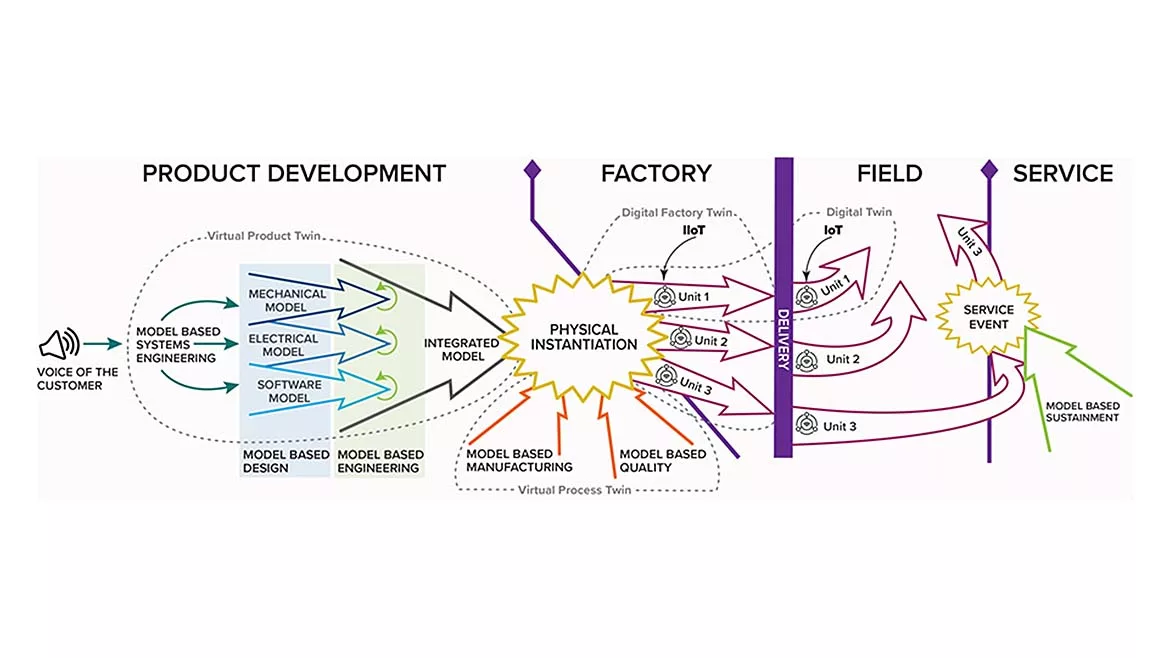
There’s now general agreement among manufacturers trying to implement a digital thread throughout their enterprise that certain issues [SEE PART 1] can arise, persist and must be addressed. As the complexity of systems has increased over the past several decades, a host of commercial “middleware” solutions have been created by software vendors to help connect and integrate systems in a variety of industries.
But here’s the rub: there is still no single tool that will tie together everything digital that the manufacturer needs. Everyone’s been talking about the digital thread for a while now—an enterprise-wide network that stitches all the information into a cohesive whole to optimize production. Most agree that it’s a journey worth pursuing but, meanwhile, they continue to solve internal roadblocks on the fly with point solutions to gain quick ROI. Not only does this move manufacturing back towards isolated silos, but it can also create other data-integration problems that further knot up your threads. You’ve gone after the symptoms, not the disease.
Recently, however, more farsighted manufacturers are beginning to understand the need to step back and consider the bigger picture, to cultivate a more holistic approach in their thinking about integration and the digital thread. This is where bringing in an outside advisor to provide a fresh, experience-based perspective can be so valuable.
An advisor isn’t married to your past, has no attachments to specific solutions, will point-blank tell you what is wrong, and can support your organization along the way to a wider view. Interesting things can happen: Your quality group might complain that a big-picture solution adds 25% to one team’s time—but it turns out that it will take 50% off a downstream team’s time when a connection has been optimized with a single mouse click—increasing efficiency for the entire production chain dramatically.
Real-world stories: Putting integration to work on the manufacturing floor
Here are a couple examples of companies adopting this kind of big-picture view, supported by outside advisors, and making progress on their journeys towards efficiency and quality:
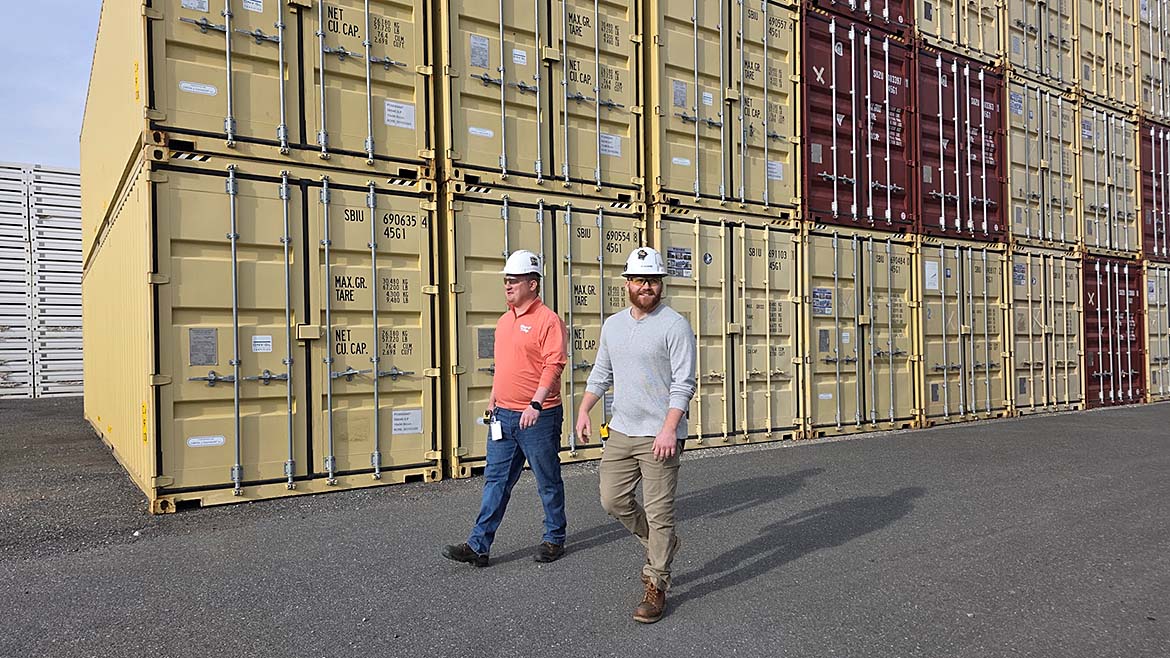
John Salyers and Korey Greene tour finished containers in the Sea Box yard. With better data integration from design to manufacturing, “I like that you can see your ideas go all the way to fruition,” says John. Source: Sea Box
Sea Box customizes standard shipping containers into unique box structures that serve as anything from a mobile military hospital to a nuclear-contamination-testing laboratory to a giant multicolored hotdog stand. Every job is different; change orders occur frequently as they work closely with customers to create and deliver exactly what they want.
As they grew, Sea Box realized their longtime engineering part number (EPN) database wasn’t providing the accuracy they needed to track all their data reliably; they needed to switch to a full-fledged PLM system. They didn’t have the in-house expertise to do this themselves and found an outside advisor that could show them which of their issues were complex and which had more simple solutions. Extensive data cleanup was performed, and a new PLM system linked to their ERP one, with staff training implemented in waves.
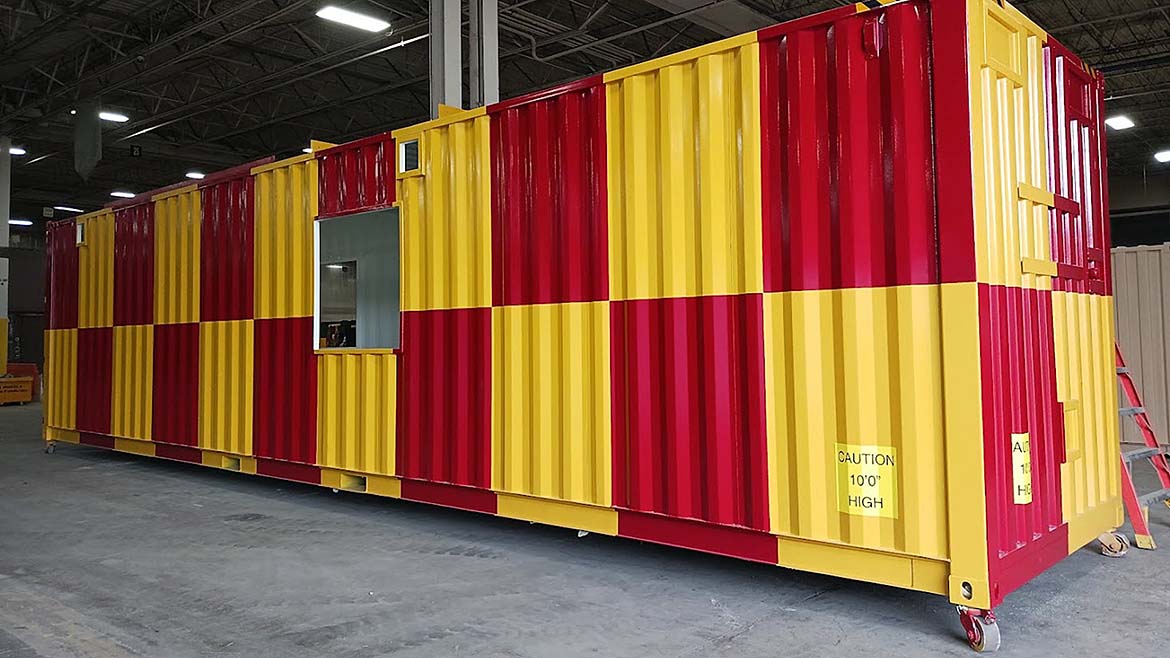
One of the more creative customization and paint jobs delivered by Sea Box: a 40-foot hot dog stand. Source: Sea Box
Next a major step: tying their CAD data files into their network with that all-important link to change-order management. Now all drawings and models are associated with revision tracking, benefiting both production staff and project managers. Underneath it all, a product-aware integration platform operates to support data flow between PLM ERP, CAD, and other programs
Sea Box employees are enthusiastic. “The bottom line is your ROI goes up exponentially when you cross-pollinate your CAD tools with your ERP system,” said one. “We’re starting to see the impact of improvements we’ve made that we couldn’t even envision before,” said another. “We can now harness our internal resources and be more creative so we can provide customers with whatever they ask us for next.”
Duncan Aviation is another example. Renowned for the quality of their aircraft customization, they provide nose-to-tail services for global private and commercial aircraft. Their Engineering and Certification group collaborates with innovative designers, using 3D CAD and ERP software to build exacting technical data for elaborate, high-end interiors. And everything needs to be validated at every level and FAA-certified for flight safety.
In the past, Duncan Aviation’s Product Data List (PDL) was created manually, with every element of a project entered by hand. It was clearly time to move to a more automated PLM system and product-aware middleware that could bridge digital domains between CAD, ERP and MES. Their advisors developed the underlying code and logic that automated Duncan’s workflow through templated pathways that captured requirements and streamlined PDL data entry.
Today 99 percent of Duncan’s documents and drawings have templates, with everything from CAD documents, flammability test plans, reports, analyses, instructions, and metadata now generated in efficient batches. Says a team member, “Time-savings wise, our productivity in managing the scope of projects has conservatively improved by 75 percent.” Their next phase targets BOM, procurement and more, reducing redundant system interactions and giving real-time visibility to every ongoing aircraft refurbishment project.
Embracing the Big Picture
Both these companies are working to connect their essential systems into an overall big picture that makes their data more visible, accessible, and integrated. Each was willing to step back, stop trying to solve problems on the fly, and say, “What’s the big picture and how can we embrace it?”
Because they were willing to have those conversations, the solutions they adopted weren’t just point solutions. It took some time, and outside expertise, but they are already reaping the benefits of wider digital-data integration.
Quality is a clear byproduct of these kinds of improvements in data efficiency. We get things done faster with more data when information is connected and accessible—and we can make better decisions and be more confident about those decisions. A lot of errors happen when things are shared between systems by manual entry. The more we can remove the human-error element, the better for quality. Why do we have an engineer manually list the BOM on a change order? He or she might list the data wrong, which means that when people approve it, they may not be aware that something else has changed as well.
Let the tools integrate, let them talk to each other. Humans are uniquely qualified to observe and evaluate. Let’s automate as much as possible to achieve the cleanest execution of a repeatable task.
There will be something wrong with the elevator
Knowledge has the power to deliver quality. I’m reminded of the IBM Watson commercial where a repairman walks up to the front-desk guard at a high rise building and says, “I’m here to fix the elevator.” And the guard says, “There’s nothing wrong with the elevator.” And the guy says, “There will be.”
The elevator’s sensors reported out that the motor was running too hot, so the repair man came to fix it before it broke down. That kind of big-picture knowledge can only happen through connection and integration.
Looking for a reprint of this article?
From high-res PDFs to custom plaques, order your copy today!