Case Study
How Precision Manufacturing and Verisurf Helped Power the Success of Artemis II
Despite the advanced technology involved, the Artemis II program underscored the importance of human expertise.
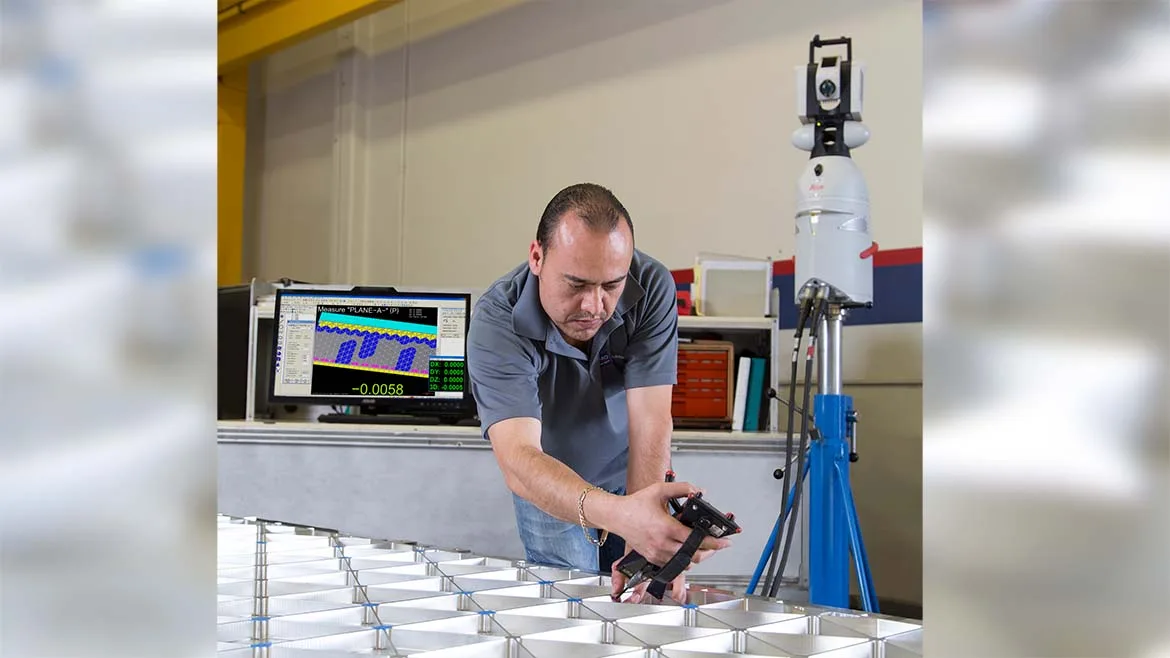
In 2016, AMRO Fabricating Corporation (AMRO), now part of Karman Space & Defense, and Verisurf Software collaborated on an article that offered a behind-the-scenes look at the manufacturing of rocket panels for NASA’s Space Launch System (SLS), the launch vehicle that would ultimately power the Artemis II mission. At the time, Artemis II was still years away from flight. The challenges were immense, timelines stretched far into the future, and success depended on a level of precision that left no room for error.
Ten years later, with the Artemis II mission now recognized as a complete success on every level, from launch performance to mission execution, that early article reads as both a technical snapshot and a prophetic blueprint. It captured the essential truth of modern spaceflight: success in orbit begins with precision on the factory floor.
Looking Back: Trust Built on Experience
In 2016, NASA made a strategic decision rooted in history and proven capability. The agency turned to Amro Fabrication, a company with decades of aerospace manufacturing expertise, including its critical role in producing fuel tank components for the Space Shuttle program.
This was not simply a vendor relationship; it was a continuation of trust built over generations of aerospace innovation.
Amro was tasked with manufacturing high-precision Isogrid and Orthogrid panels that would form the structural backbone of the SLS core stage. These panels would need to meet exacting standards for strength, weight, and dimensional accuracy; requirements that pushed the limits of manufacturing capability.
Amro Did Not Work Alone
To ensure that every component met NASA’s rigorous specifications, Amro relied on Verisurf Software for advanced measurement, inspection, and quality assurance. Verisurf’s role was to guide, validate, and document every step of the manufacturing process, creating a digital thread of quality that connected design intent to physical reality.
This layered dependency of NASA relying on Amro, and Amro relying on Verisurf, formed a tightly integrated ecosystem that would ultimately prove essential to mission success.
The Long Road to Launch
At the time of that 2016 article, the launch of Artemis II seemed a long way off, and for good reason. Large-scale aerospace programs typically require 8 to 12 years from initial concept to finished flight.
Artemis II followed that trajectory:
- Early Development (2015–2017): Concept validation, supplier selection, and initial design
- Engineering & Testing (2017–2021): Detailed design, material validation, and subsystem testing
- Production & Integration (2021–2025): Full-scale manufacturing of panels, stages, and systems
- Final Assembly & Launch (2025–2026): Integration, testing, and successful mission execution
This decade-long process reflects the complexity of building a launch system capable of surviving extreme forces while delivering precision performance in space.
Source: AMRO Fabricating Corp.
Cut Weight, Not Corners
One of the most striking insights from the 2016 article was the emphasis on weight reduction. In spaceflight, every pound matters. Lighter vehicles can carry heavier payloads, travel farther, and operate more efficiently.
But reducing weight is not as simple as removing material; it requires intelligent design and flawless execution.
Amro’s panels utilize Isogrid and Orthogrid structures, which remove large amounts of material while maintaining structural integrity. These intricate patterns create a lattice of ribs and pockets that distribute loads efficiently.
The tolerances involved were astonishing. A deviation of just 0.002 inches in a single rib could translate into hundreds of pounds of excess weight across the entire launch vehicle.
To illustrate the scale of this precision, engineers noted that if the SLS core stage were reduced to the size of a soda can, its walls would be ten times thinner than the aluminum of the can itself.
Engineering at the Edge of Possibility
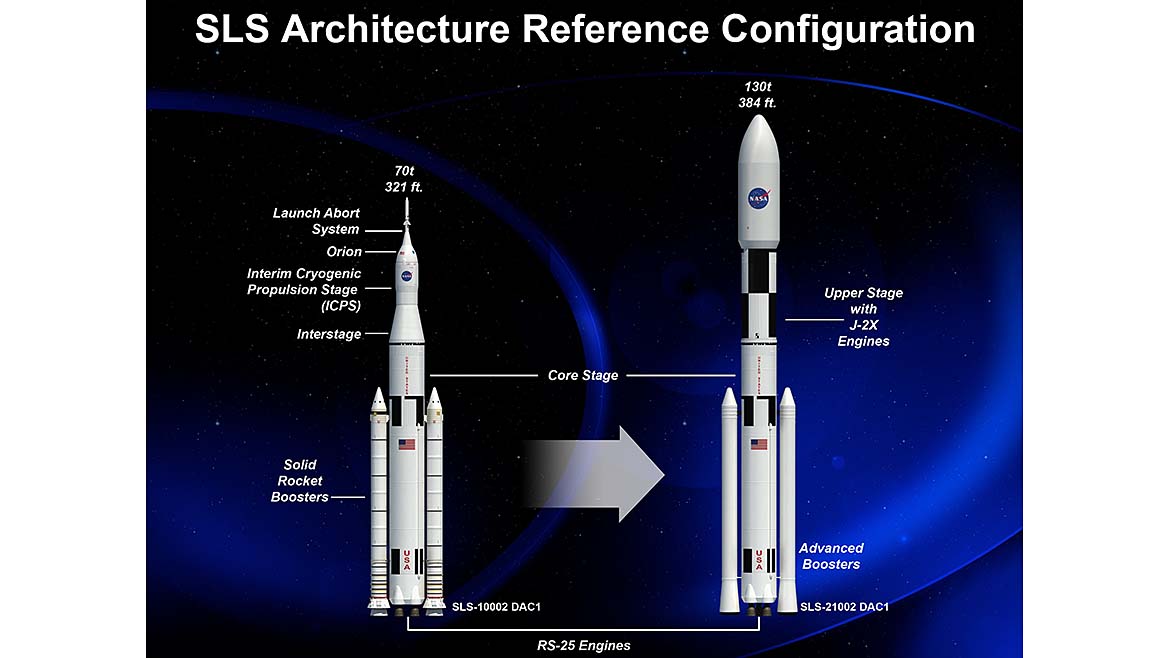
The core stage serves as the backbone of the rocket, supporting the weight of the payload, upper stage, and Orion spacecraft, as well as structurally supporting and carrying the thrust of its four RS-25 engines and two five-segment solid rocket boosters attached to the engine and intertank sections.
The core stage is the same diameter as the Space Shuttle external tank and is covered with an orange spray-on foam to insulate the cryogenic propellants. The stage is made up of 10 major barrel sections, four dome sections, and nine rings. Each cylindrical barrel section consists of eight aluminum panels that vary in length and height. Those components are welded to form five major components: the liquid hydrogen and liquid oxygen tanks, engine section, intertank, and forward skirt. Those five major components are joined to form the completed core stage.
Each structural panel produced by Amro was a feat of modern manufacturing. Measuring approximately 12 feet by 24 feet, these panels began as solid aluminum plates and were transformed through a multi-stage process:
- CNC Machining: Large volumes of material were removed to create the Isogrid/Orthogrid structure.
- In-Process Inspection: Thickness, geometry, and features were verified during machining.
- Flat Part Inspection: Laser trackers and probing systems confirmed dimensional accuracy.
- Forming: Panels were carefully rolled into curved profiles.
- Fixture Validation: Custom check fixtures ensured precise shape and fit.
- Final Inspection: Comprehensive validation before assembly.
Each panel was inspected more than 20 times before completion. Eight panels formed a ring, and multiple rings were stacked to create the SLS core stage—massive cylindrical structures that ultimately enabled the Artemis II mission.
Model-Based Enterprise
While Amro provided the manufacturing expertise, Verisurf provided the digital infrastructure that made consistent precision possible.
Verisurf’s Model-Based Definition (MBD) approach allowed all inspection processes to be driven directly from 3D CAD models. This eliminated reliance on traditional drawings and ambiguity across the production process.
Key Contributions from Verisurf
- Real-Time Inspection Feedback: Operators could see immediate visual confirmation of whether features were within tolerance, enabling rapid adjustments and reducing rework.
- Inspection of Complex Geometries: Portable probing systems allowed technicians to measure hard-to-reach areas—such as behind grid walls—without repositioning equipment.
- Digital Traceability: Automated AS9102 inspection reports provided complete documentation for every part, ensuring compliance and accountability.
- Tooling and Fixture Development: Verisurf’s reverse engineering capabilities enabled the creation of precision check fixtures that matched complex panel geometries, ensuring accurate forming and assembly.
Together, these capabilities created a seamless digital thread, from design to inspection, that ensured every component met exact specifications.
Human Experience Still Matters
Despite the advanced technology involved, the Artemis II program underscored the importance of human expertise.
Processes such as forming required careful management of material stress. Improper handling could result in warped components, compromising the entire structure.
Amro’s decades of experience, refined through programs like the Space Shuttle, played a critical role in overcoming these challenges. The combination of skilled craftsmanship and digital precision proved essential to achieving consistent results.
Mission Success: From Factory Floor to Deep Space
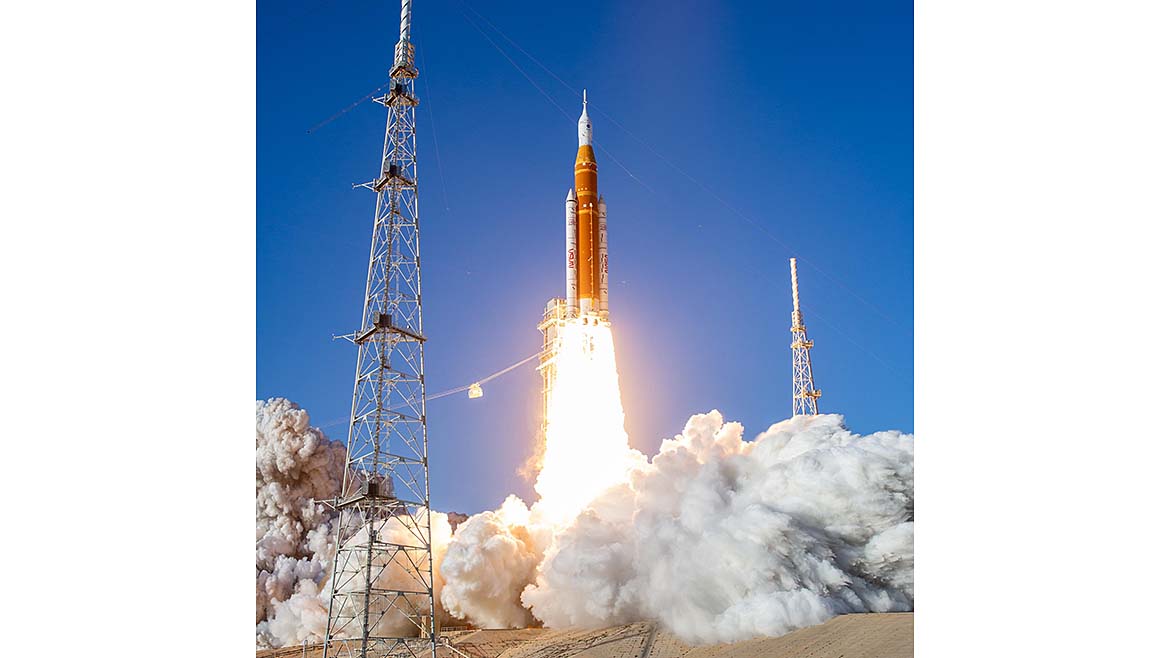
When Artemis II finally launched, it validated years of engineering, manufacturing, and collaboration.
The most critical phase of any launch, the first eight minutes, places immense stress on the vehicle as thrust and gravity forces collide. The success of Artemis II during this phase demonstrated the structural integrity of its design and the precision of its manufacturing.
The mission achieved:
- Flawless launch performance
- Structural reliability under extreme conditions
- Optimized weight for maximum payload efficiency
- Seamless integration of digital and physical processes
Interesting Facts About Artemis II
- The launch vehicle weighed millions of pounds at liftoff.
- Structural panels were machined from solid aluminum, removing the majority of material.
- Each panel underwent dozens of inspections before final approval.
- The rocket’s walls were extraordinarily thin relative to its size.
- The program took approximately a decade from concept to launch.
These facts highlight the extraordinary level of precision required to make the mission possible.
Source: AMRO Fabricating Corp.
Lessons Learned Over a Decade
- Precision is Mission-Critical.
- Small deviations can have large-scale consequences. Accuracy must be maintained at every step.
- Digital Transformation is Essential.
- Model-based workflows improve efficiency, reduce errors, and enhance traceability.
- Partnerships Drive Success.
- Experience Cannot Be Replaced.
Decades of manufacturing expertise remain invaluable, even in an era of advanced automation.
As NASA and its partners continue to push toward sustained lunar exploration and eventual missions to Mars, the processes refined during Artemis II will serve as a foundation.
The collaboration between Amro Fabrication and Verisurf Software, first documented in 2016, demonstrates how precision manufacturing and digital inspection can enable missions once thought impossible.
A Story of Precision and Partnership
Ten years ago, the Artemis II mission was a distant goal supported by engineering ambition and manufacturing expertise. Today, it stands as a powerful example of what can be achieved when precision, technology, and collaboration come together.
The original 2016 article captured a moment early in that journey, when success depended on getting every detail right.
A decade later, we can see the result: a mission that not only reached space, but redefined what is possible in aerospace manufacturing.
And at the heart of that success was a driving mandate, one that remains as relevant today as it was then: Cut weight, not corners.
Looking for a reprint of this article?
From high-res PDFs to custom plaques, order your copy today!