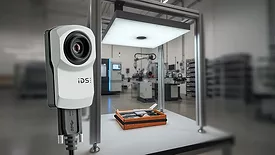
No matter the industry, every manufactured product carries critical information: specifications, safety warnings, regulatory markings and even serialized identifiers that are linked to traceability and quality control.
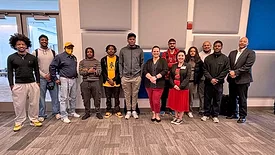
The North Carolina A&T State University College of Science and Technology, in collaboration with the ASQ Central North Carolina section 1109 and student branch, hosts an annual Sci-Tech Week Conference.
The sector’s future depends on employers’ ability to build cultures that value every worker, invest in skill development and create environments that attract and retain top talent.
The manufacturing sector faces a pivotal moment in 2026. Employers and HR leaders are confronted by a scarcity of skilled workers, an aging workforce and intensifying competition for talent.
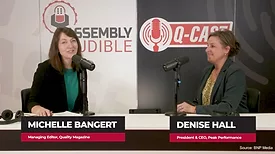
Denise Hall is the president and CEO of Peak Performance, which is a workforce training and consulting firm helping manufacturers achieve operational excellence.
Let’s explore what calibration actually guarantees, where it falls short, and why instruments can pass calibration yet still produce inconsistent results.
When physical test equipment passes calibration, most customers assume that their results are bulletproof. In practice, however, many quality teams are discovering that “in-spec” instruments are no longer enough to defend their data when auditors or customers start asking questions.
Manufacturers continue to invest heavily in automation, cloud platforms, and artificial intelligence, yet many leaders still struggle to articulate whether those investments are delivering meaningful value, particularly across quality teams and functions.
As part of National Welding Month in April, ESAB awarded $5,000 to support welding programs at Princeton High School and Lovelady High School, part of the Princeton Independent School District, through its ESAB Future Fabricators Charlie Monschke Welding Education Grant.