.webp?height=168&t=1720482044&width=275 "July 2024 Minitab Infocenter Topic 2 Medical Device Reliability")
Articles Tagged with ''Failure Mode and Effects Analysis (FMEA)''

Management
What the Coast Guard Can Teach Us About Quality
Preparing for these missions involves a series of quality related tools and practices, many of which might also be found in manufacturing.
Read More

Software
How FMEA is Adapting Over Time, Part 2
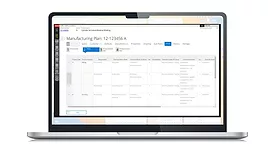
There’s a growing understanding that not all manufacturing or production jobs are the same, and thus, the application of FMEA should vary accordingly.
Read More


Software
How to Sharpen Your FMEA Skills, Part 1
Regular use of FMEA leads to continuous improvements in processes and products. By proactively addressing potential issues, it enhances reliability, safety, and overall quality.
Read More



Fast Engines for Fast Cars Faster than Ever
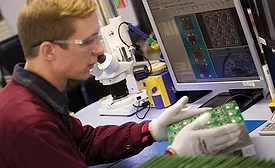
Using new systems has significantly improved measurement accuracy for tighter tolerance components like pistons, connecting rods, and valves.
Read More