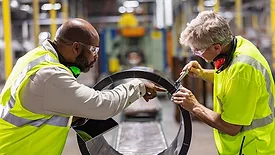
Instead of telling people what to do, learn how to guide them to the best decisions. Read a preview and listen to the full podcast with Lisa Weis, President of EngageExcellence, LLC, who has taught a course on this subject many times and says it can change the way you lead, work, and parent.
Tim McMahon has over 25 years of leadership experience implementing lean manufacturing. Here, he explains why kaizen is a valuable tool that many companies may not take full advantage of. If you want to analyze your process and uncover pain points, kaizen allows you to do just that.
The concept of Kaizen revolves around continuous improvement by making small changes on a regular basis. It involves every employee contributing improvement suggestions regularly, creating a culture focused on small, continuous improvements across the organization.
Earlier this year, AIAG released updated APQP and Control Plan reference guides, available at www.aiag.org. This release includes the stand-alone control plan document for completing control plans.
By establishing precise parameters for success from the outset and implementing proven strategies, manufacturers can proactively mitigate risks, streamline operations, and foster a culture of excellence.
Ensuring high quality in medical device manufacturing requires operational excellence, which optimizes efficiency and enhances product quality and compliance. Let’s explore some of the key elements and best practices.
Today, organizations face various risks like cyber-attacks, data breaches, system failures, service disruptions, and natural disasters. Identifying and managing these risks at acceptable levels is crucial. Failing to acknowledge these risks can leave organizations unprepared to handle their potential impact.
Most people have heard the phrase, “What gets measured gets done”; however, more than that, organizational excellence comes from having clear world-class performance measures that are consistently achieved.
In many production settings, machine operators are tasked with monitoring processes by taking samples and making adjustments as needed to maintain productivity. However, there's a question worth exploring: What if ignoring these data-driven adjustments and allowing the process to continue unchanged is a better strategy?
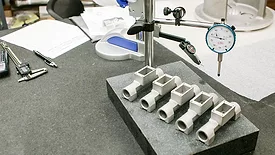
3D printing, or additive manufacturing (AM), revolutionizes part production by building them layer by layer from base materials, unlike traditional subtractive methods. In this article, we'll delve into the complexities of additive manufacturing inspection, highlighting the unique nuances of AM-produced parts.